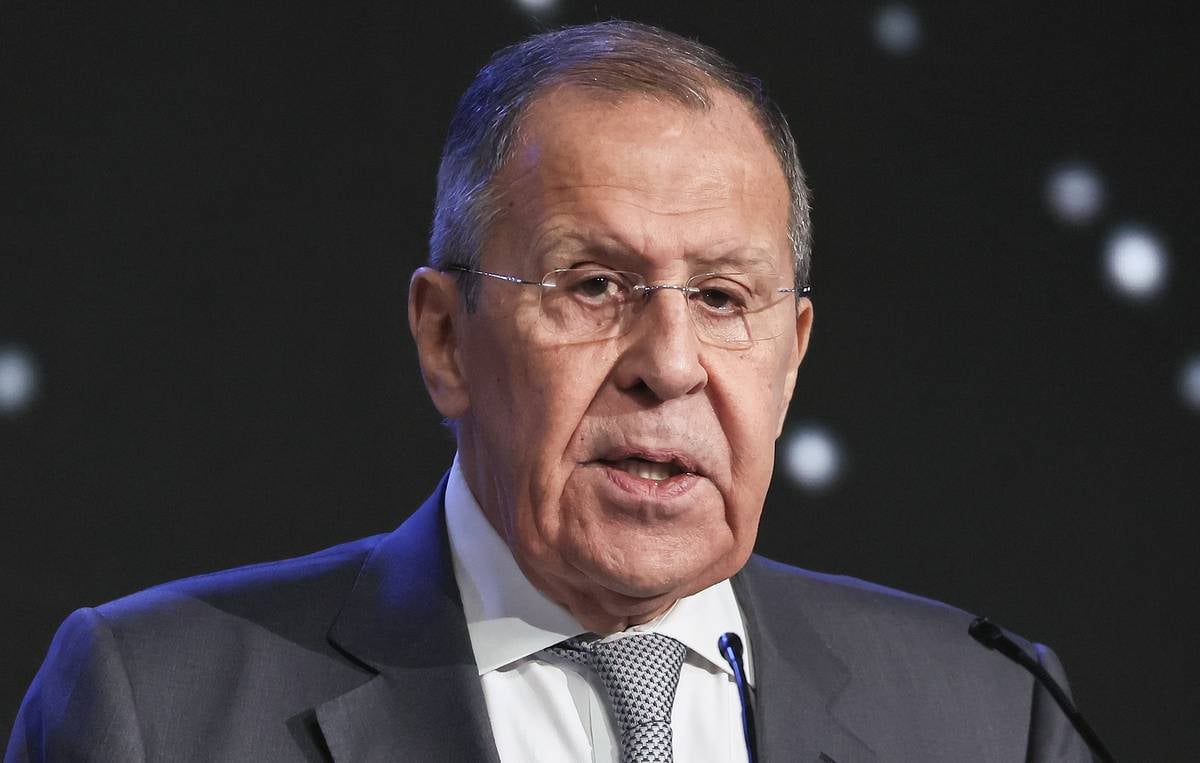

KAZAN — The ambassadors of France, Britain and Germany want a meeting at Russia’s Foreign Ministry. Moscow will grant them one. Sergey Lavrov just isn’t sure why they bothered asking.
Russia’s foreign minister disclosed the diplomatic request on Wednesday, speaking to reporters following the Council of Foreign Ministers of the Collective Security Treaty Organization in Kazan. The gathering was a routine affair for the alliance Russia chairs this year, attended by its Central Asian partners but notably not by Armenia, which has been freezing its participation since 2024. The E3 ambassadors request was anything but routine in the context it was delivered.
“Now I can say, it is not a secret, the ambassadors of these countries — the UK, France and Germany — are asking to meet with my deputy at the Foreign Ministry,” Lavrov told the press conference. “We will meet with them and listen to them. It is just interesting how these people will present anything that might lead to some constructive thoughts, after the leaders of these ambassadors said offensive things about Russia and got personal many times.”
He added that it was unlikely the ambassadors would say anything new on Ukraine. That last clause was the headline buried in diplomatic language: Russia will sit down, but the door Moscow is opening is not the one the E3 is trying to walk through.
The timing carries its own weight. The three countries — collectively the E3, Europe’s lead diplomatic group on Ukraine — have spent months assembling a peace framework that Kyiv has broadly endorsed while Washington has stayed at arm’s length. EH reported last week that the E3 drafted a five-point ceasefire template in London without the United States in the room. Now their ambassadors in Moscow are requesting access to the institution they need to persuade — and Lavrov is framing that access as a curiosity more than a breakthrough.
The structural problem is not procedural. It is that the ambassadors represent governments whose heads have, from Moscow’s perspective, accumulated a record of personal antagonism toward Russia that diplomatic courtesy alone cannot paper over. Lavrov did not name the leaders or the remarks. He did not need to. The implication was clear enough for every reporter in Kazan to follow: the same European governments now pressing for diplomatic contact are the ones Russia publicly holds responsible for what it describes as a campaign of hostility. Sending an ambassador to a deputy minister’s office, in that reading, does not reset the ledger.
What Russia has said consistently, and what the Kazan press conference reinforced, is that it does not see Europe as a credible interlocutor as long as European governments continue arms transfers to Ukraine while simultaneously presenting themselves as neutral enough to broker an end to the conflict. Kremlin spokesman Dmitry Peskov made the same point a day earlier, arguing that Europe cannot simultaneously arm Kyiv and claim the standing to mediate. Lavrov’s remarks on Wednesday were the same argument refracted through the specific mechanism of the ambassador visit: Russia will hear them out, but it has already told the world what it thinks of their principals.
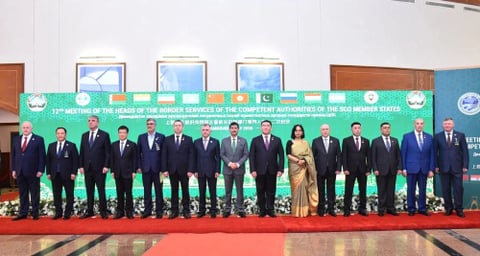
The Kazan meeting itself was a signal of a different kind. Russia gathered five of the six active CSTO members — Belarus, Kazakhstan, Kyrgyzstan, Tajikistan, and Uzbekistan — to finalize documents ahead of the November summit in Moscow. The joint statements planned for adoption cover what the alliance describes as pressing international issues. The contrast with the West’s diplomatic posture was not lost on Moscow’s messaging apparatus: while the E3 ambassadors seek appointments at mid-level, Russia is convening a bloc of its own and preparing a leadership summit for the autumn.
It is genuinely unclear what the ambassadors will bring to the table. The channel between Moscow and European capitals on Ukraine has been functionally closed at the ministerial level for more than four years. A deputy foreign minister meeting — below Lavrov, beneath the level of formal diplomatic significance — is not a reopening of that channel. It is a probe, an attempt to establish whether any channel exists at all. Ukrainian President Volodymyr Zelensky argued in Tallinn this week that Europe must have a real voice at any negotiating table. The E3 ambassadors’ visit to Moscow suggests Europe is still working out whether it even has a number to call.
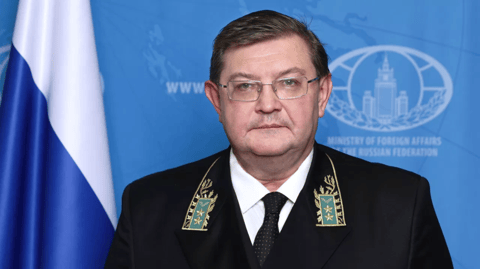
Lavrov offered no indication of which deputy foreign minister would receive the three envoys, or when the meeting would take place. He framed it not as a diplomatic development but as a listening exercise: Russia will be present, Russia will hear what is said, and Russia already has its own assessment of what can realistically be expected. In the diplomatic vocabulary Moscow has been constructing for the past two years, that is not a door opening. It is a door being held ajar, with the host standing in the frame.
Related Posts