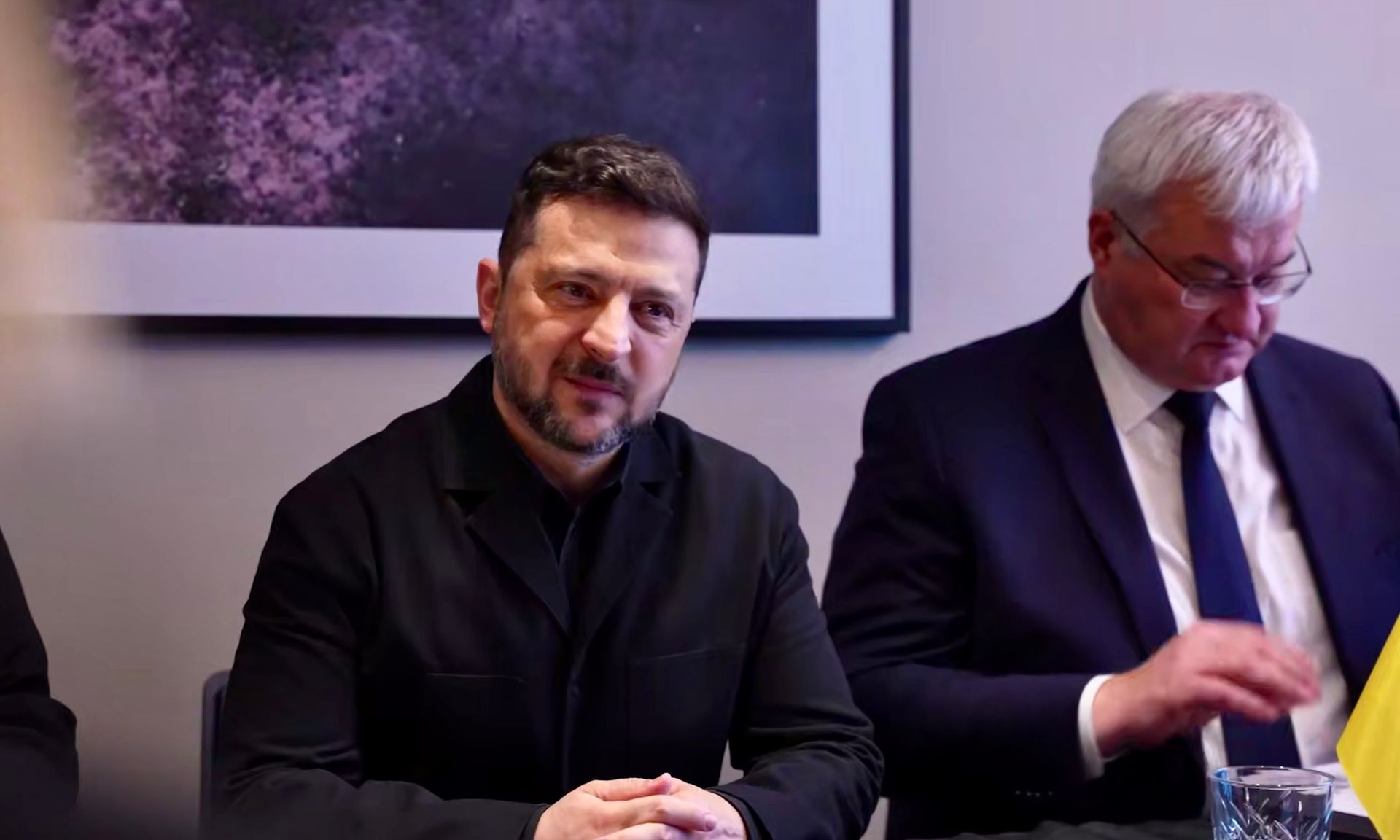

TALLINN — The real question Volodymyr Zelensky brought to Estonia on Tuesday was not whether Europe wants to be involved in ending the war. It is whether Europe will demand a seat at the table before anyone else decides the terms. Speaking beside Estonian President Alar Karis at Kadriorg Palace, the Ukrainian president put the condition plainly: a ceasefire requires Russia, Ukraine, the United States, and European leaders all in the same room. Any arrangement that excludes the continent, he said, is not a durable one.
“Europe needs to be part of these negotiations with a real and strong voice in the decision-making processes,” Zelensky said, according to Anadolu Agency. He had spent the previous day on a call with U.S. President Donald Trump’s Middle East Special Envoy Steve Witkoff and Trump’s son-in-law Jared Kushner, discussing the conditions under which negotiations could realistically advance. The conversation, as Zelensky described it, produced a working premise: Washington is prepared to engage actively in a diplomatic process. What remains unresolved is the architecture — specifically, whether that process includes the capitals that have borne the war’s economic and military weight since February 2022.
Karis, for his part, framed the same point as a structural principle. Europe must arrive at any future negotiating table with a common mandate and jointly formed positions, he said — not as an observer called in after the framework is set. “Nothing about Ukraine without Ukraine, nothing about Europe without Europe,” the Estonian president said, repeating what has become a kind of mantra in the Nordic-Baltic corner of the continent. Estonia holds the rotating presidency of the NB8 grouping this year, which brought together the prime ministers of Denmark, Estonia, Finland, Iceland, Latvia, Lithuania, Norway, and Sweden alongside Zelensky for Tuesday’s summit.
The geography of Zelensky’s week tells a story. He came to Tallinn from London, where he had spent Saturday in E3-format discussions with the leaders of Britain, France, and Germany — the three European powers most deeply invested in shaping a post-war security architecture. Before the G7 summit in France next week and an EU leaders’ summit in Brussels on June 18–19, the Ukrainian president is building what amounts to a diplomatic argument: that any agreement with Moscow must carry European signature, not merely European endorsement after the fact. As Euronews reported, Zelensky put it directly in Tallinn: the E3 format on Saturday, the NB8 on Tuesday, the EU Council later in June — each stop is a conversation about how Europe should conduct itself in negotiations and when real progress might become possible.
The urgency has a calendar behind it. “June and July this year may determine a lot,” Zelensky said, gesturing toward the compressed sequence of high-stakes gatherings. What that timeline means in practice remains contested. Russia has given no public indication it is prepared to enter direct talks with European leaders at all. The Kremlin’s position, articulated repeatedly over recent weeks, holds that the war will be settled on the battlefield rather than through a framework that legitimizes European involvement. Lavrov’s remarks at the St. Petersburg International Economic Forum last week — in which he described Europe as historically complicit in every major conflict of the modern era — were an explicit rejection of the very premise Zelensky was advancing in Tallinn.
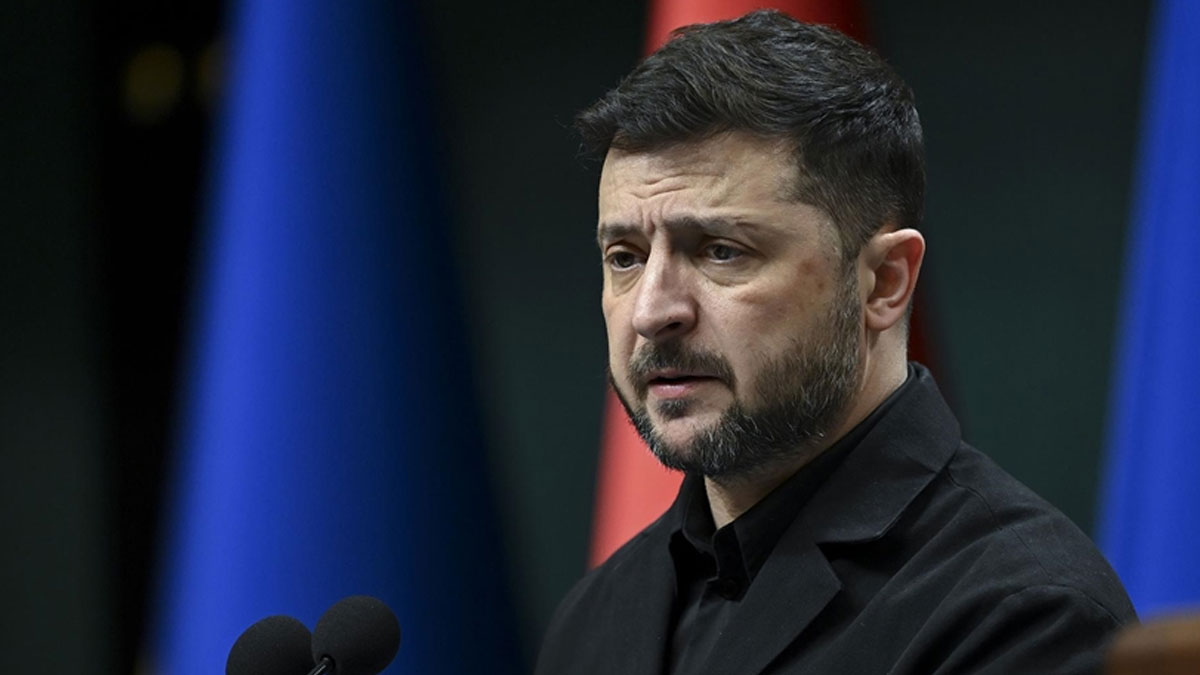
That gap — between Kyiv’s insistence on European participation and Moscow’s refusal to recognize it — is the structural obstacle that no summit calendar can dissolve. What the Nordic-Baltic meeting offered Zelensky was something more immediate: reaffirmation from the countries geographically closest to the conflict that his diplomatic framing has allied support. The NB8 governments have been among the most consistent contributors to Ukraine’s defense, and their backing carries weight in Brussels and Washington partly because it is unconditional in ways that larger European capitals’ commitments sometimes are not.
On the margins of the summit, Zelensky signed a drone cooperation agreement with Latvia, according to his own account on social media. The detail is minor in isolation but fits a pattern: even as the diplomatic track intensifies, Kyiv is not treating negotiation as a substitute for materiel. Ukraine’s president has been consistent on this point throughout 2025 — diplomatic pressure and military capacity are simultaneous requirements, not sequential choices.
The drone issue hung over the Tallinn meeting in a different register, too. Ukrainian drones have in recent months strayed into Baltic territory — hitting a chimney at an Estonian power plant, landing near fuel storage in Latvia, and being intercepted by Romanian jets operating from a Lithuanian base. Ukrainian officials attributed the incidents to Russian electronic warfare jamming systems redirecting the drones’ guidance signals. Zelensky addressed the problem directly with Karis, offering both an apology and a technical explanation, and raised the possibility of Ukrainian assistance in helping Baltic air defense systems detect and neutralize errant drones. The issue did not dominate the agenda, but it introduced a friction point into a relationship Kyiv needs uncomplicated: the Nordic-Baltic governments are allies, but they are also NATO members whose sovereign airspace has been breached.
Estonia’s own diplomatic posture on Ukraine’s European future was unambiguous. Karis called for the rapid opening of all remaining clusters in the EU-Ukraine accession negotiations, saying it should happen this month. “Ukraine’s accession to the European Union and NATO is not a distant hope for the Ukrainian people but a justified expectation,” he said, according to Estonian World. Prime Minister Kristen Michal used nearly identical language, describing the Nordic and Baltic countries as among Ukraine’s most unwavering supporters since the beginning of the Russian operation. Whether that level of stated commitment translates into the kind of coordinated European negotiating bloc Zelensky is asking for is a separate, harder question — one that will not be answered in Tallinn.
What the week has demonstrated, across London and now Tallinn, is that Zelensky is running a deliberate sequencing strategy: lock in allied positions in smaller, reliable formats before walking into the larger, more fractured rooms of the G7 and EU Council. The French position, expressed just two days ago, was that Europe is ready to play a bigger role — but readiness declared in Paris and readiness demonstrated at a negotiating table Moscow refuses to join are different things entirely. Whether the sequence produces a European voice strong enough to matter is precisely what neither Zelensky nor anyone else in Tallinn can answer yet.