
LONDON — For months, Europe has watched the push to end the war in Ukraine proceed on terms it had little hand in setting. The Americans held meetings in Anchorage and Miami. The Turks offered Istanbul. European capitals were invited to observe, or not at all. On Sunday morning, France’s foreign minister signalled that arrangement may be changing — and that Kyiv itself is driving the change.
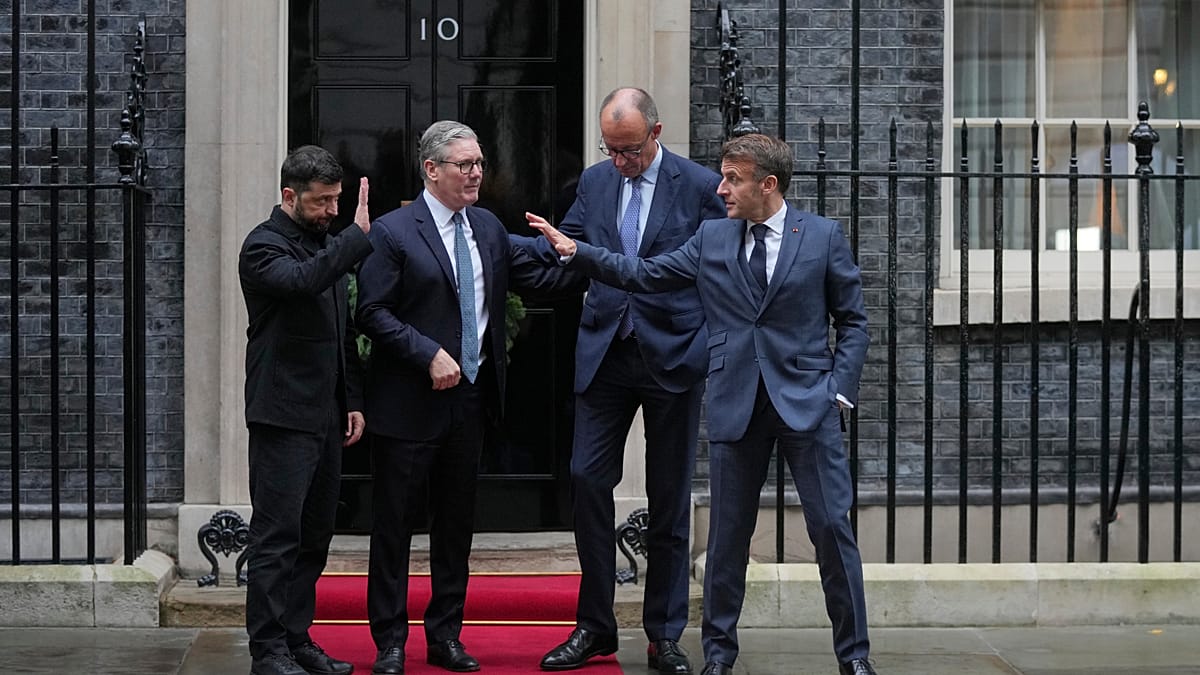
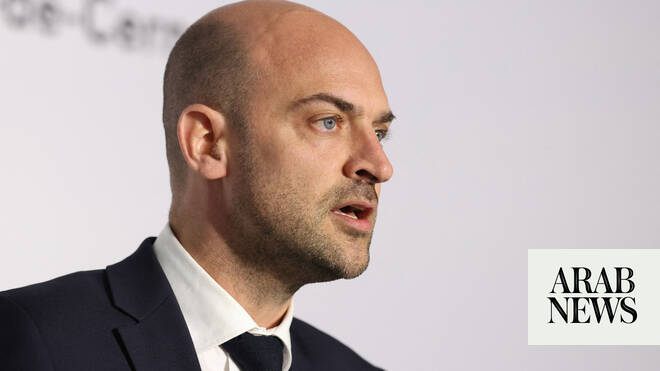
Speaking on RTL radio ahead of the evening’s four-way summit at Downing Street, Jean-Noel Barrot said that Volodymyr Zelensky had now explicitly asked Europe to occupy a more prominent place in any peace process. “Zelensky has now expressed a desire for Europe to be able to occupy a more important place, to play a more significant role,” Barrot said. “This is what we are preparing for.” He added that the point would be a direct subject of Sunday’s talks between Zelensky, Emmanuel Macron, Friedrich Merz and Keir Starmer.
That framing — Europe not inserting itself but being invited — matters. It provides Paris and its allies political cover for a step that critics have long called premature or provocative. France has drawn Russian complaints for its dual posture of arming Ukraine while leaving open channels for dialogue with Moscow. Barrot reiterated Sunday that France “has never ruled out” the possibility of engaging in dialogue with Russia, a formulation Paris has used consistently since Macron’s December call with Putin — their first direct contact since early 2022.
The context matters as much as the statement. According to Euronews, Sunday’s Downing Street meeting was convened specifically to coordinate European support for Ukraine while increasing pressure on Russia, which the Elysee described as persisting in “a state of military, economic and strategic failure.” But the more consequential conversation, based on what Barrot laid out on RTL, may be about what Europe does if and when actual negotiations begin — not whether to support Ukraine, a question with a settled answer, but whether Europe will sit at the table when terms are discussed.
That question has been unanswered for most of the war. US-Russia diplomacy, initiated after the Anchorage meeting earlier this year, proceeded without European representation. The Istanbul track, which produced a first round of direct Russian-Ukrainian talks in May before stalling, was similarly not a European process. As Russia’s foreign ministry has noted, Europe’s role in the diplomatic infrastructure around the conflict has remained largely financial and military, not political.
Macron said as much on Friday, speaking at the EU-Western Balkans summit in Montenegro. “We have always advocated for direct negotiations between Ukraine and the Kremlin. It is the Europeans who can help,” he told reporters. That remark drew its urgency from Zelensky’s open letter to Putin earlier in the week — a public call for direct talks that Putin dismissed at SPIEF without serious engagement. With Washington preoccupied by the situation in Iran and the US-mediated track effectively dormant, the space for European initiative has opened in a way it has not before.
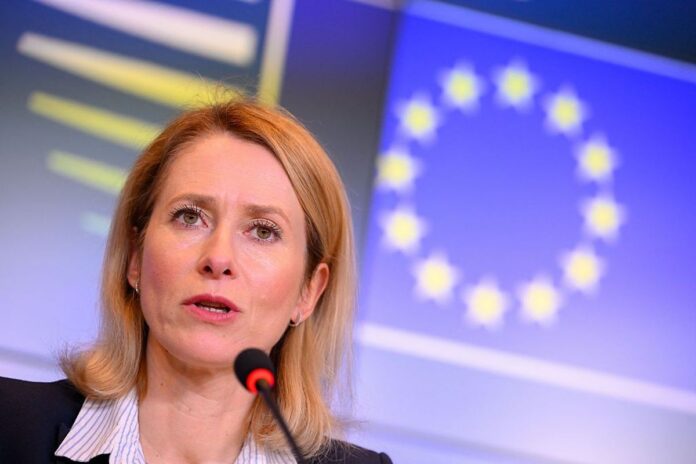
What that initiative looks like in practice remains the thing Barrot did not specify. France has proposed a European channel to Russia that would run parallel to, not instead of, American diplomacy — the argument being that Europeans, as Ukraine’s primary financial and military backers, cannot afford to have a peace settlement concluded without them. “The Europeans must have a channel to defend their interests without delegating this responsibility to anyone else,” Barrot told Libération in February, a position he has held since. The EU’s foreign policy chief, Kaja Kallas, has publicly disagreed, ruling out direct talks with Moscow. That split has not been resolved.
From Moscow, the rhetoric on Sunday was calibrated and contradictory in equal measure. Russian Foreign Ministry spokeswoman Maria Zakharova said Russia remains open to effective negotiations on Ukraine and has not abandoned them. That formulation has been Moscow’s standard posture throughout the war — not a refusal but a set of preconditions that have never been publicly specified in a form Ukraine or the West could formally accept or reject. Meanwhile, Bloomberg reported that Germany, France and the UK, together with Ukraine, are developing a concrete plan to draw Russia into negotiations before winter — a timeline driven less by diplomatic progress than by the limits of European patience and the approach of another heating season in Ukrainian cities.
Zelensky’s decision to invite Europe into a larger role — if that is indeed what Sunday’s talks confirmed — represents a significant departure. For most of the past year, Kyiv was wary of European mediation ambitions, fearing they could lead to pressure for territorial concessions. Whether that calculus has shifted, and what Europe’s expanded role would actually entail, is what the Downing Street meeting was meant to begin answering. The Kremlin has maintained that both open and back-channel contacts with Kyiv remain active. That claim, and Europe’s new ambition, are the two facts that will determine whether Sunday’s summit produces anything beyond another round of statements.
What Barrot said on RTL was not a policy announcement. It was a signal, carefully placed. Whether Europe can convert that signal into a seat at the table — and what Russia would demand in exchange for granting one — is a question Paris has been preparing to answer for months. Whether it is ready to answer it is another matter.