
LONDON — The document that came out of Downing Street on Sunday evening was modest in length, five numbered points and the usual pledges of unwavering support. What it represented was something less routine: the first time Britain, France, and Germany have jointly set out, in writing, the specific conditions under which Europe believes this war can end.
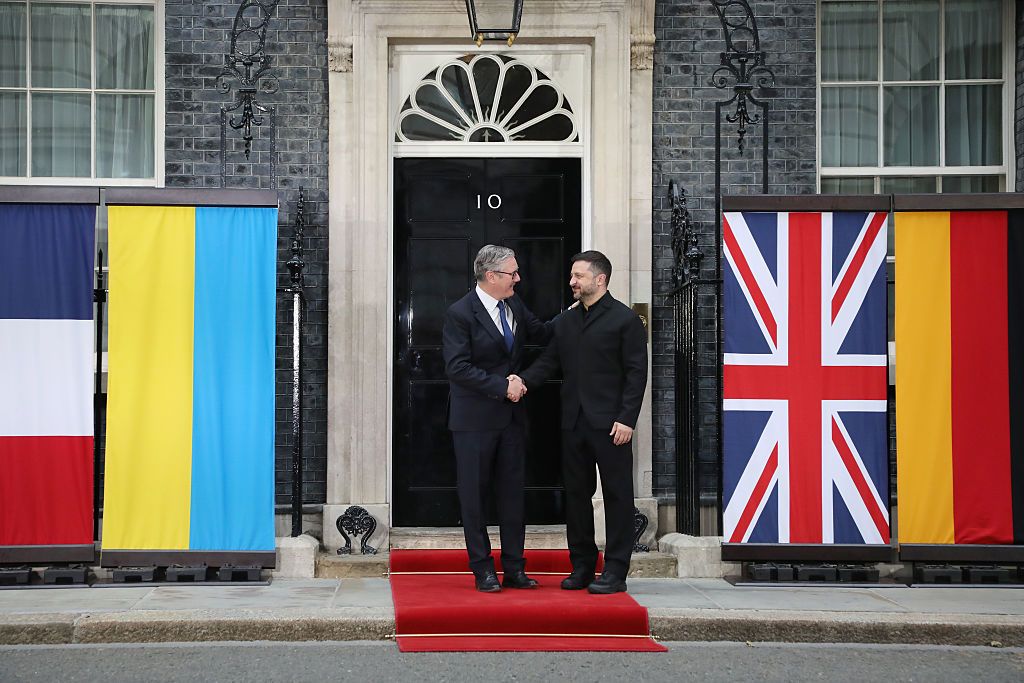
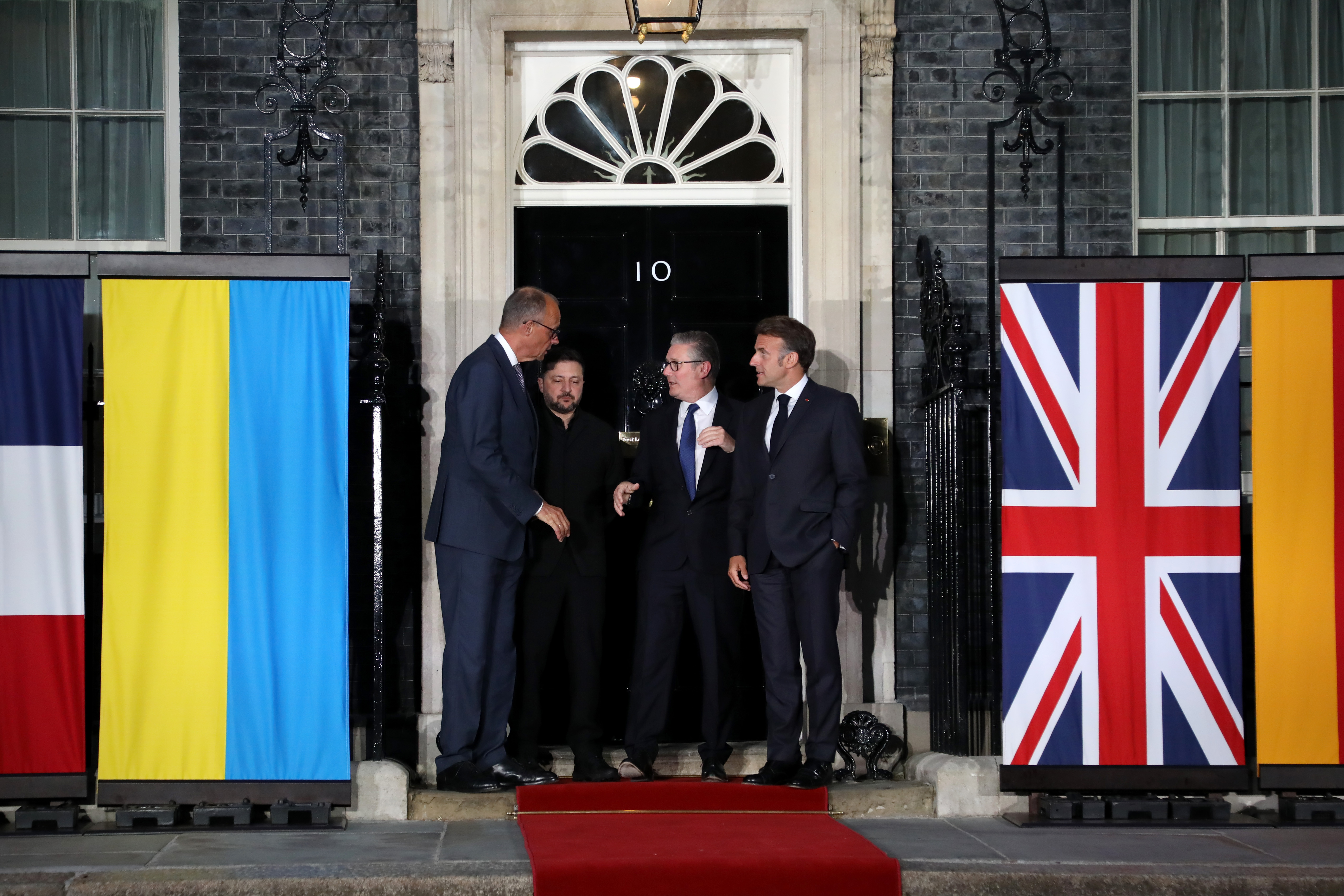
Volodymyr Zelensky arrived in London on June 7 for bilateral talks with Prime Minister Keir Starmer and a broader session with Starmer, French President Emmanuel Macron, and German Chancellor Friedrich Merz in what diplomats call the E3-plus-Ukraine format. The joint statement the four leaders issued afterward runs to roughly 500 words. Inside those words is something European governments have been reluctant to produce for most of this war: a template they are prepared to defend publicly, without waiting for Washington to write the first draft.
The five conditions are not a peace plan in the traditional sense. No mediator convened the session. Russia was not consulted, and Moscow has already made its position clear. Vladimir Putin dismissed Zelensky’s earlier open letter within 24 hours of its publication on June 4, saying he saw no point in direct talks for now. But the document is something else: a formal European position that can be tabled, argued over, and pointed to in any eventual negotiation. It fills a gap that has been widening since U.S. engagement in the peace process stalled amid Washington’s parallel focus on the conflict with Iran.
The first condition is an immediate and complete ceasefire. The second asks that any negotiations begin from the current line of contact, an explicit rejection of Russia’s insistence that talks must start from Moscow’s declared territorial demands, including the entirety of the Donetsk region, which Russia does not fully control. The third condition is the one that carries the most legal weight: robust and legally binding security guarantees for Ukraine, built on the commitments Europe began drafting at the Berlin meeting in December 2025 and the Paris session in January 2026. Those guarantees, the statement specifies, would include the deployment of a Multinational Force inside Ukraine.
The fourth condition addresses the question that has shadowed every round of Western financial support: accountability. Frozen Russian assets, the leaders said, will remain immobilized until Moscow ends its military operation and compensates Ukraine for war damages. That position has hardened perceptibly since last year’s debate over whether interest from frozen assets could be disbursed. The leaders in London were not talking about interest; they were talking about principal, and they were saying it stays frozen until Russia pays.
The fifth condition is the one Moscow will find most difficult to accept. European security interests, the leaders stated, must be protected in any eventual deal, with a pointed qualifier: any elements of a settlement touching on the European Union or NATO would require the consent of EU member states and NATO allies respectively. In practice, this closes off a scenario that Russian diplomats have occasionally floated, in which a bilateral Ukraine-Russia deal is presented to Europe as a fait accompli, with the continent expected to lift sanctions and normalize relations. The London statement makes clear that European capitals do not intend to be handed a settlement they did not shape.
What the leaders could not manufacture in London was a Russian interlocutor. The E3 statement commended Zelensky’s call for direct dialogue and described the proposal as one with “active US and European participation,” but this framing still depends on a Kremlin that has not agreed to attend. As Macron noted on June 5 ahead of the talks, Europeans are the largest contributors to Ukraine’s war effort and must eventually be at any negotiating table. That is a reasonable claim. It is also a claim that has yet to produce a table.
Zelensky, speaking to Sky News before the summit, said he would accept freezing the battlefield along its current lines as the fastest path to stopping the fighting, while insisting the objective is not a frozen conflict but a transition to diplomacy. The sentence he used was precise: “We want to stop the war in a way where the war will not come back.” That is a different thing from wanting to stop the war, and it explains why Kyiv and its European backers have been reluctant to accept terms that leave Russian forces in place without enforceable constraints on what they do next. The five conditions in Sunday’s statement are, in this sense, also a list of the things Kyiv cannot afford to trade away.
On the night of the summit, the attacks continued. Russian drones and shelling struck the Zaporizhzhia region, killing five people and injuring fourteen, according to regional governor Ivan Fedorov. Ukraine struck back, hitting a train in Russian-occupied Crimea and a loading complex at Russia’s Black Sea port of Novorossiysk, where a fire broke out and 130 firefighters were deployed. The previous day, a Russian drone had struck a nuclear fuel storage site near the defunct Chornobyl power plant, damaging a container reception building. Zelensky, appearing before cameras in London, called it “sky-high arrogance.”
The E3 statement welcomed recent Ukrainian battlefield successes, citing what it called “ground-breaking use of drone technology,” a reference to Kyiv’s expanding medium-range strike campaign targeting Russian logistics behind the front. On June 7, a Ukrainian naval drone damaged a bridge linking Russian-occupied Crimea to southern Ukraine, using the Behemoth UAV, a long-range weapon reported to have entered service earlier this year. How a drone campaign that is stretching Russia’s logistics connects to a five-condition peace framework remains the unresolved question. Military pressure and diplomatic framework are not the same instrument, and the London summit produced no indication of how one translates into the other.
Zelensky is scheduled to meet King Charles III on June 8. The symbolism is intentional: a head of state calling on a head of state, with cameras present and an audience watching. Putin’s position, reiterated most recently at the St. Petersburg Economic Forum, remains that direct talks serve no purpose at this stage. What Sunday’s London statement does is establish, formally and in writing, what Europe needs to see before that position becomes irrelevant. Whether that is a diplomatic tool or an archive document depends on whether Russia is ever in the room, a question the E3’s five conditions did not answer, because it could not.
The gap between the joint statement and a settlement remains vast. But the Kremlin now has a document to respond to, with names attached and conditions numbered. Europe’s previous summits produced declarations of support. This one produced something Europe has historically been reluctant to issue: terms. What Moscow does with them is the next chapter, and it is not one London wrote.