ADEN – Seven people died when Houthi drones and missiles struck the Red Sea port of Mocha on Sunday, while Yemen’s internationally recognized government simultaneously launched counterstrikes on Houthi positions across several fronts in Taizz province, intensifying a ground war that has run continuously in the southwest of the country for more than a decade.
The Yemeni army said in a statement that its forces struck Houthi concentrations and movements at the Taba al-Madarajat height northwest of Taizz city, as well as on the Humayr and Al-Aqrud directions. The army also shelled Houthi positions and forces in the Al-Mahrur area. The statement noted that Houthi reinforcements had been observed moving toward the eastern front of Taizz city.
Separately, the Houthis claimed responsibility for a missile-and-drone barrage on Saudi-linked force concentrations and weapon depots in the area of Mocha, a port roughly 60 kilometers west of Taizz on Yemen’s southwestern coast. The group said the strike caused significant destruction of military equipment and weapons, as well as dozens of casualties. Arab News confirmed seven dead and multiple wounded among coalition-backed fighters at the port.
Taizz has been the site of sustained combat since Houthi forces began encircling the city in 2015. Yemen’s third-largest city sits at the convergence of routes linking the country’s north and south, and its capture or loss has carried strategic weight throughout the civil war. The Houthis have besieged Taizz for more than a decade without taking it. Government forces hold much of the urban core while Houthi positions control the surrounding heights, giving the group persistent fire superiority over approaches to the city. The Taba al-Madarajat height targeted in Sunday’s strikes overlooks northwestern access routes and has changed hands multiple times without either side securing it definitively.
The ground fighting in Taizz developed alongside Houthi operations in a different theater entirely. Earlier Sunday, Houthi forces claimed a strike on the Jazan refinery complex in southwestern Saudi Arabia, setting fire to a facility that processes 400,000 barrels of crude oil daily. The Mocha and Jazan operations, conducted on the same day as the Taizz ground exchange, reflect a group managing simultaneous conventional, coastal, and cross-border campaigns without apparent pause in any of them.
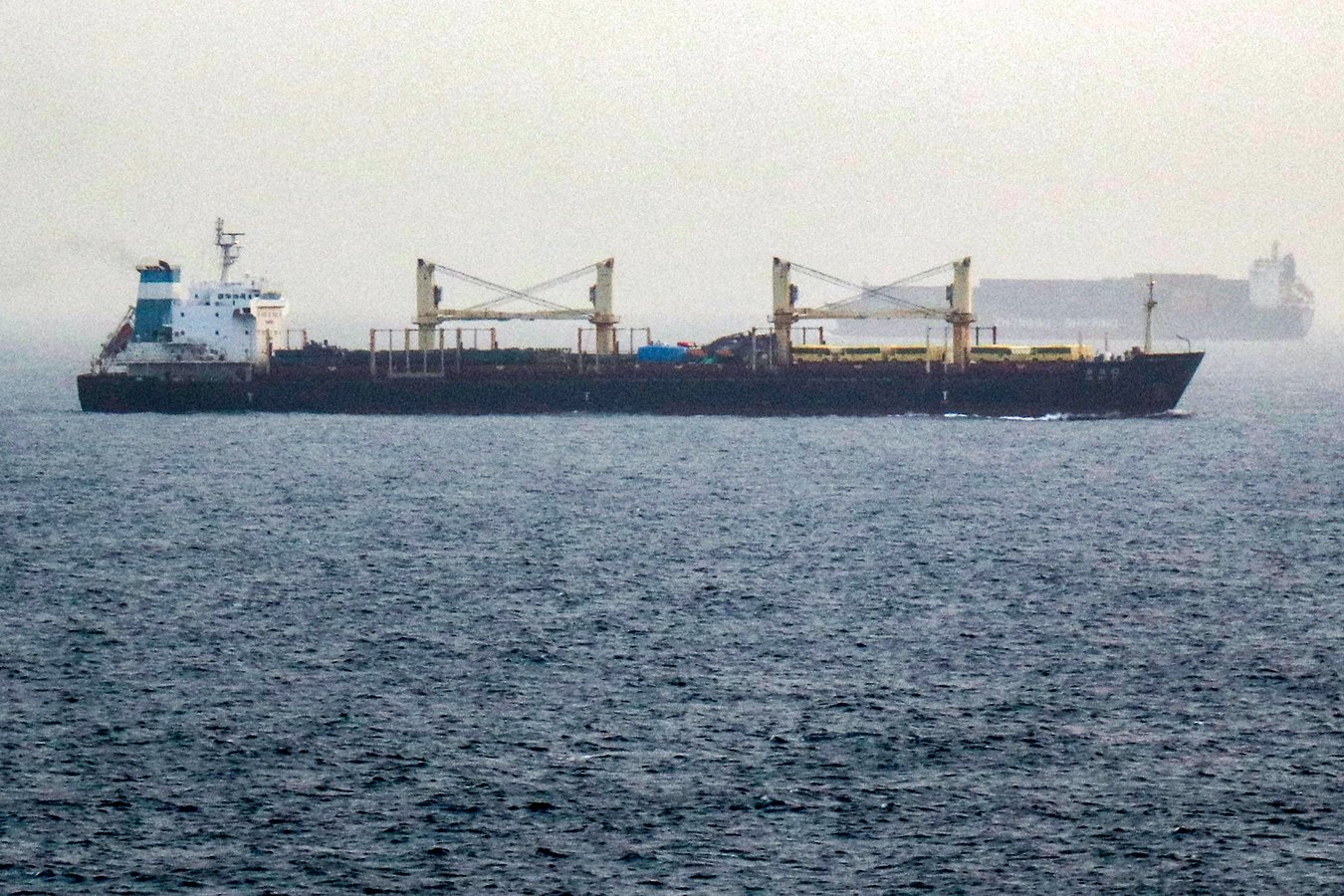
The port of Mocha was captured from Houthi control by Saudi coalition-backed forces in 2017 and has remained under coalition-aligned control since. It is the most significant government-held position on the Red Sea coast in southwestern Yemen, outside of Aden. Houthi strikes on Mocha have intensified over the past year as the group has pressed its coastal campaign south of the Red Sea lanes it already dominates nearer the Bab el-Mandeb strait. The Houthis’ campaign at Bab el-Mandeb has been guided in part by Iranian advisers who have helped the group operationalize its naval threat across the waterway.
The Saudi Arabia-led coalition, working to formalize allied responses to Houthi escalation, reached a new threshold earlier this week when Saudi Arabia, Turkey, and Pakistan signed the Mecca Joint Deterrence Agreement. That framework established a collective defense structure aimed partly at countering Houthi pressure on Saudi infrastructure and Red Sea shipping. Whether strikes against Mocha, which fall inside the coalition’s area of operations, would trigger formal enforcement mechanisms under the new agreement was not addressed in immediate reporting following Sunday’s attack.
The Taizz front and the Houthis’ Red Sea and cross-border campaign share an origin in the broader Yemen conflict but operate on increasingly separate rhythms. Ground combat in Taizz follows the logic of mountain terrain, urban siege, and access-route control. The group’s missile and drone operations follow a different logic tied to political signaling, shipping interdiction, and declared solidarity with Gaza. That the Houthis can sustain pressure simultaneously on Taizz’s ground front, Mocha’s port facilities, and Saudi energy infrastructure within a single operational day reflects the scale the group has built after a decade of continuous war.
Neither the Yemeni government nor international monitors released figures for Houthi casualties in Sunday’s Taizz strikes. The army’s statement described positions struck and concentrations targeted but did not claim specific kills. Whether the observed movement of Houthi reinforcements toward Taizz’s eastern front preceded the government strikes or was accelerated in response to them is not clear from Sunday’s reporting. That the eastern front was reinforced while northwestern positions were being shelled suggests the Houthis may have anticipated pressure on the Taizz perimeter before the day’s operations began.