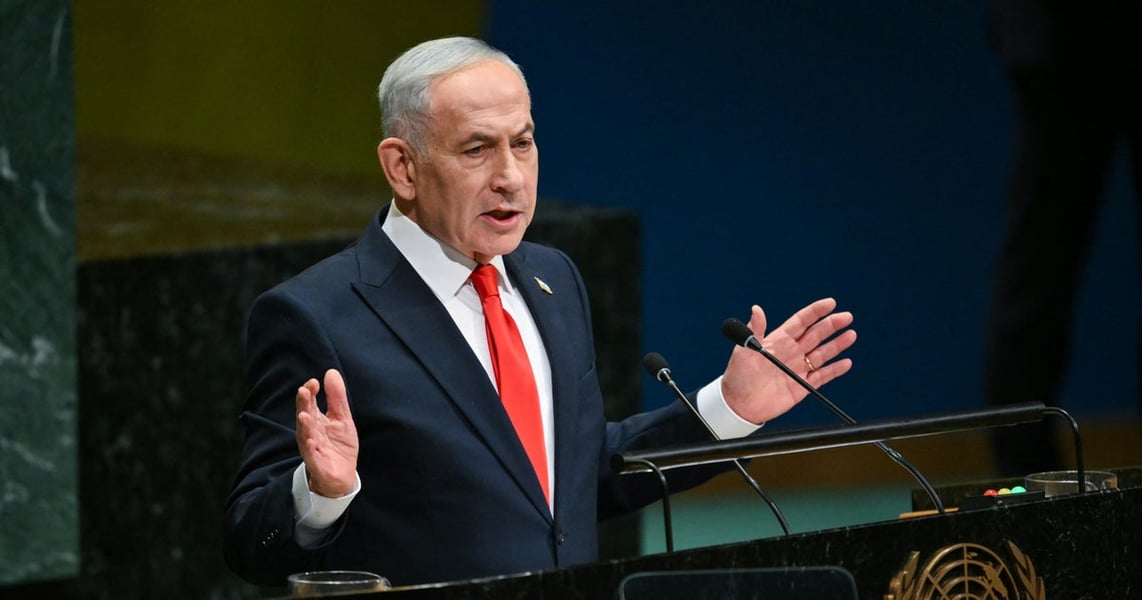

TEL AVIV — Benjamin Netanyahu came to New York with one word prepared. On Wednesday, after watching Iran hand its written ceasefire roadmap to American envoys, watching Russia and China endorse it at the Security Council, watching Germany split from France and Britain, and watching Saudi Arabia conditionally accept the framework, Israel’s prime minister called it a trap.
The word does real work in Israeli political discourse. A trap implies the other side is not serious — that the document in Steve Witkoff’s hands is not a genuine offer but a maneuver, that 60 days of ceasefire buys Iran time to reconstitute, that any pause in American pressure is a gift Tehran will pocket and walk away from. Netanyahu has made this argument about every diplomatic opening with Iran since 2013. The consistency of the position is also its weakness: when every offer is a trap, the trap charge stops carrying independent weight.
What Iran handed Washington on September 23 was not a verbal proposition. It was a written document, countersigned by Qatari, Pakistani, and Egyptian representatives, proposing a 60-day region-wide ceasefire, a phased Strait of Hormuz reopening, and a structured timetable for broader security guarantees. Iran’s written ceasefire roadmap eliminates one retreat available to Tehran’s critics: no one can now say Iran made no concrete offer. Netanyahu’s objection is that the document is insufficient, not that it doesn’t exist.
The prime minister’s specific complaints are not irrational taken on their own terms. Israel has insisted throughout the conflict that any ceasefire framework must include binding commitments on Iran’s missile programme, explicit terms for dismantling Hezbollah’s weapons depots in Lebanon, and a formal accounting of Iran’s nuclear activities that go beyond what the 60-day roadmap describes. None of those conditions appear in the document. Washington’s envoys took the folder knowing they were not the conditions Israel wanted.
That gap between what Israel requires and what Iran offered is a familiar one. What is not familiar is the diplomatic environment around it. At the UN Security Council on Wednesday, Russia and China vetoed the Western counter-resolution and endorsed Iran’s framework as the basis for engagement. Saudi Arabia’s Crown Prince Mohammed bin Salman conditionally backed the roadmap, attaching a Yemen condition but not a rejection. Germany abstained from the Western vote. France and Britain found themselves sponsoring a resolution that failed and backing a diplomatic position Israel shares but an increasing number of their own partners are abandoning.
Israel is not formally inside the negotiations. The September 23 session at the United Nations was mediated by Qatar, Pakistan, and Egypt — three states that maintain working relationships with both Washington and Tehran. Israel’s objections, delivered through separate channels to American officials, are structurally positioned as commentary on a process that has moved without waiting for Israeli sign-off. Whether that positioning was calculated or has become a trap of a different kind is the question Netanyahu has not publicly answered.
Donald Trump‘s approach to Israel’s objections has been to absorb them without committing to them. The administration has made no public statement indicating that Israeli conditions will be incorporated into its response to Iran’s roadmap. Trump told Netanyahu in their bilateral meeting Tuesday that the United States will not accept any framework that does not include robust verification — language that satisfies the Israeli demand in the abstract while committing to nothing specific enough to make Iran walk away.
Inside the Israeli security cabinet on Wednesday, the debate was not whether to reject the roadmap. That was settled before the session began. The question was whether to accept the current war footing as a sustainable position if Washington decides to engage seriously with the Iranian document. The economy has absorbed seven months of elevated security spending. The northern front with Hezbollah has stabilised into a low-level exchange that neither side has escalated since August. The political dynamic inside the governing coalition rewards no ceasefire; every minister who might welcome one has learned to say so privately.
Masoud Pezeshkian did not address Israel directly in his General Assembly speech on Monday. The decision was deliberate. Tehran’s strategy throughout this phase of the conflict has been to frame the issue as one between Iran and the United States, keeping Israel positioned as a party whose preferences matter but whose objections do not have to be satisfied to achieve a deal. The written roadmap reflects the same logic: it is addressed to Washington, handed to Washington’s envoys, and structured around Washington’s economic pressure points. Israel is not named.
Netanyahu is aware of the framing and it infuriates him precisely because it is working. The diplomatic traffic at UNGA this week followed Iran’s preferred architecture: a US-Iran bilateral track, mediating states serving as guarantors, regional powers conditionally on board, and Israel as the state objecting from outside the room. The trap Netanyahu identified may be less the 60-day ceasefire itself than the structure that produced it — a structure in which Israel’s presence is not required for the process to advance.
Whether Washington will allow that structure to hold is the open question. Trump needs oil prices lower, Hormuz open, and a political win that does not cost him too much before the midterms. Netanyahu needs the war to continue, the pressure on Iran to hold, and the coalition to survive. Those two sets of needs have converged before. They have also diverged. The document on Witkoff’s desk is the next test of which way they are pointed.