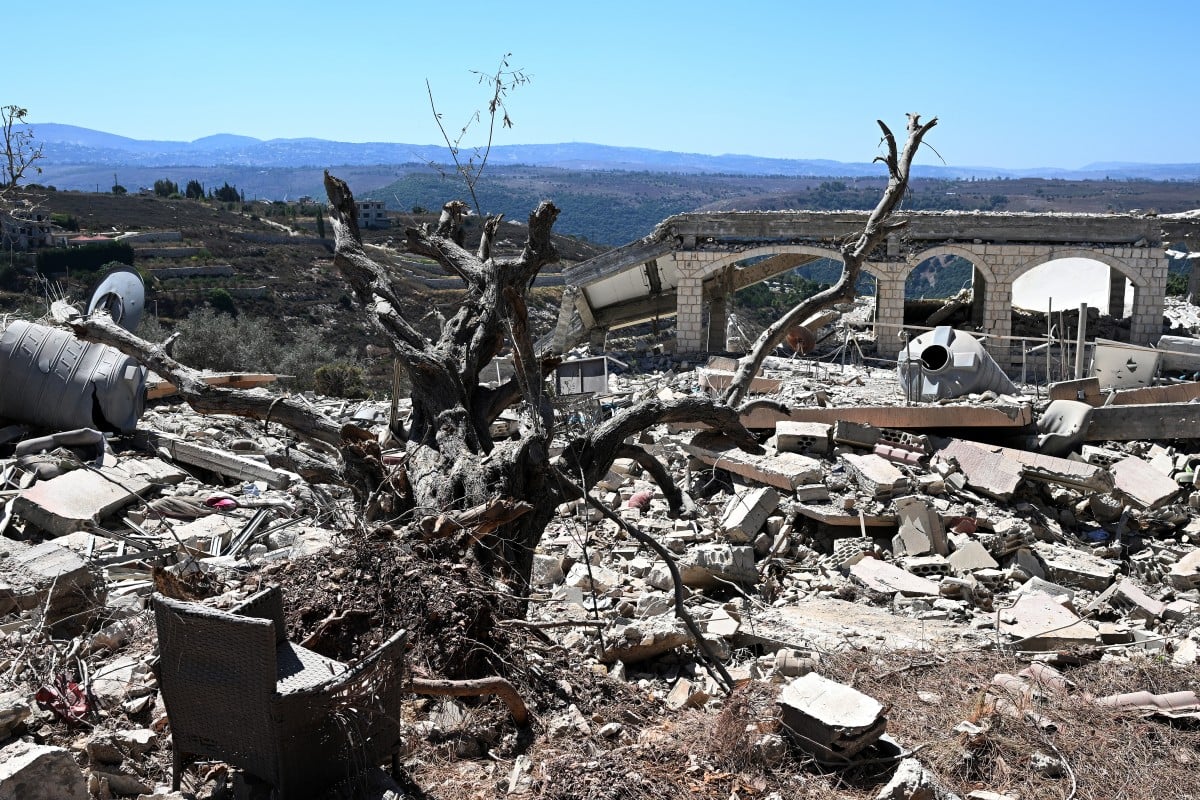
BEIRUT — When the Israeli drone passed over the orchards of Western Beqaa, it did not drop an explosive. It dropped fire.
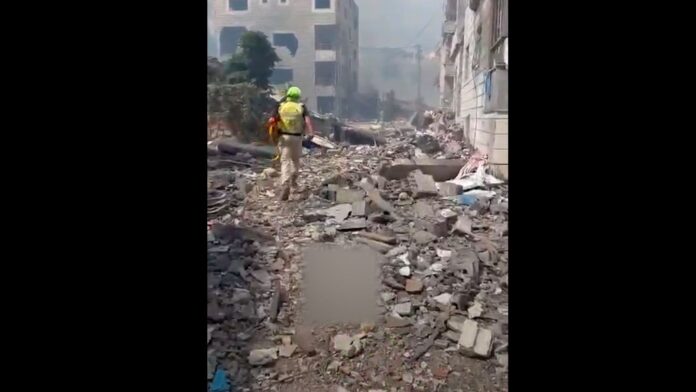
Incendiary munitions set off a blaze that consumed farmland stretching from the village of Niha to Kfar Houneh on Sunday, with flames spreading through orchards and mountainous terrain that firefighters were still battling hours after the strike. A Lebanese military source told RIA Novosti the blazes came from an incendiary payload deliberately dropped, not from secondary combustion following an explosive strike.
A second drone dropped conventional explosives in the area of the Ali al-Taher ridge. Israeli aviation struck the settlement of Mansouri. Artillery shelled the territory between Zawtar and Maifadoun and Mansouri lands, the source said.
That Sunday’s operations included incendiary munitions deployed against agricultural land distinguishes them from the artillery and airstrike pattern that has run continuously in southern Lebanon since the Gaza conflict expanded northward. Orchards in the Western Beqaa are not military positions. They are the economic foundation of villages that have already lost much of their population since Israeli operations in the south resumed.
Israel and Lebanon agreed to a framework in Washington on June 26 that was meant to produce a full ceasefire and return Lebanese army units to positions in the south of the country, with Hezbollah disarmament as a condition. Talks on the implementation mechanisms continued in Rome on August 6 and 7. The orchard fires happened two days after those talks ended.
The pattern is consistent: diplomatic conversations proceed on one track while Israeli military operations continue on another, making it difficult for either Lebanese officials or outside observers to determine whether the Washington framework is a sincere basis for resolution or a diplomatic holding structure that buys Israel time to continue shaping the ground. Israeli officials have not publicly explained what security objective was served by burning agricultural land near Niha and Kfar Houneh.
The Israel shelling of southern Lebanon has continued through multiple rounds of ceasefire discussions. Since the Washington agreement was signed in June, Israeli forces have maintained a military presence in the south of the country, and a substantial portion of the local population in affected villages remains displaced. The Lebanese army, whose return to the south is a core component of the framework, has not been positioned in the contested areas.
Artillery struck the Ali al-Taher hilltop, an elevated position in southern Lebanon that overlooks several villages and has been the site of repeated Israeli strikes over the past months. The area of Zawtar and Maifadoun, also struck Sunday, sits in the contested zone where Israeli ground forces have maintained forward positions since last year.
The Mansouri settlement, hit by Israeli aviation, is one of the villages in the south that has been targeted repeatedly. Local residents have described periodic evacuations and ongoing uncertainty about whether it is safe to return, a pattern consistent with what human rights organizations have documented across the affected areas of southern Lebanon since Israeli operations expanded.
Strikes on southern Lebanon settlements have targeted a broad front stretching from coastal areas to the Beqaa Valley. Sunday’s incendiary operations extend that front into the inland valley, adding agricultural land to the coastal villages and hilltop positions that have been the primary targets of Israeli strikes.
Firefighters worked in difficult terrain to contain the blazes, the Lebanese military source said. The combination of steep mountainous ground, dry August conditions, and the nature of incendiary munitions creates fire behavior that water drops and ground teams can struggle to control. Whether the agricultural damage from Sunday’s fires can be assessed in detail (acreage, orchard type, or loss to farming families) was not reported.
The use of incendiary munitions against agricultural land raises questions under international humanitarian law. Their use in or near civilian populated areas, or against civilian agricultural land, carries specific restrictions under Protocol III of the Convention on Certain Conventional Weapons, to which Israel is not a party. Lebanon has raised Israeli strike patterns before international bodies, but formal accountability mechanisms have produced no enforcement.
For the farming communities of the Western Beqaa, the destruction of orchards in August, at the height of the harvest season, represents an economic blow that will extend well past any ceasefire. Fruit orchards require years of cultivation to reach productive maturity. Fires that consume trees rather than just crops remove income for seasons at a time, not just one harvest cycle.
The Rome talks that concluded two days before Sunday’s strikes were described as focused on implementation mechanisms for the Washington framework, the procedural steps required before a ceasefire would formally take effect. Those talks produced no announced breakthrough. Israeli strikes on Lebanon continued on an almost daily basis since the framework was signed in June, the source told RIA Novosti, a pace the source characterized as ongoing despite the diplomatic process.