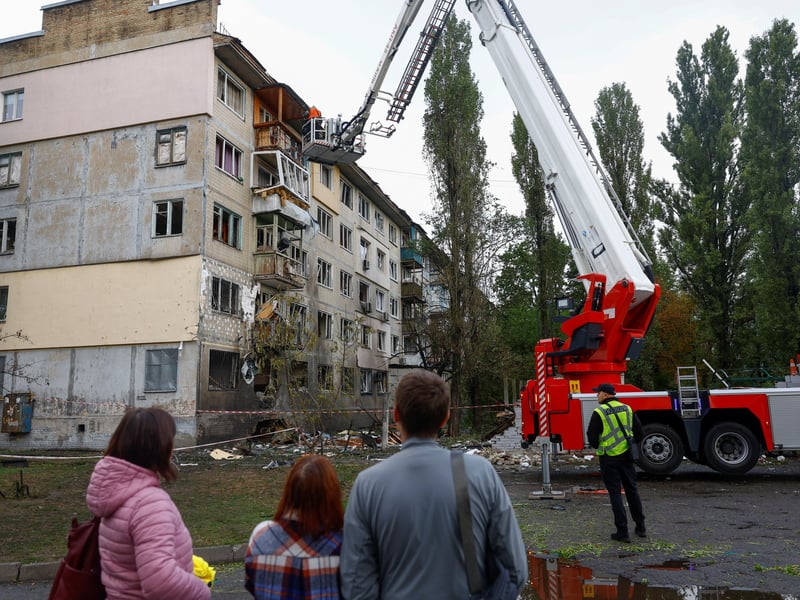

NEW YORK/DNIPRO — The ballistic missile arrived at Interpipe’s steelmaking complex in Dnipro overnight, killing four workers and wounding seven more. By the time Volodymyr Zelenskyy stood before cameras at the United Nations in New York on Tuesday morning, the facility, one of Ukraine’s largest industrial employers with 9,500 workers producing steel piping for the energy sector and construction, had halted production entirely.
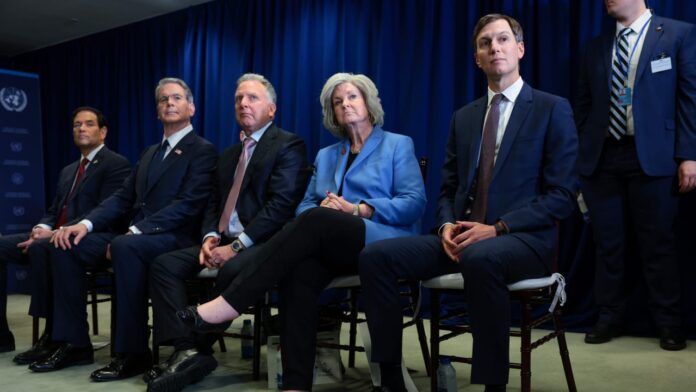
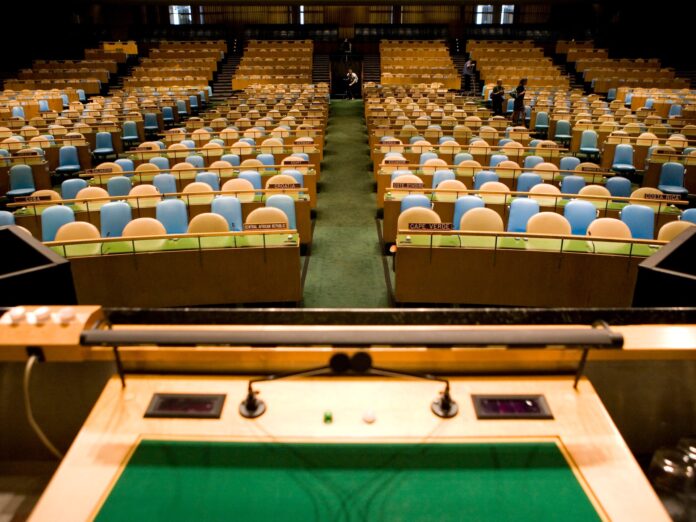
From New York, Zelenskyy proposed a ceasefire: Ukraine would halt strikes on Russian energy infrastructure if Russia stopped targeting Ukraine’s energy sector, critical infrastructure, and food exports. Donald Trump, who met Zelenskyy for roughly 40 minutes on the sidelines of the UN General Assembly, would convey the proposal to Moscow. “This will lead to matching de-escalation steps on our part,” Zelenskyy told reporters. The operative word being “if.”
Russia has not responded. The Kremlin issued no corresponding statement. That silence arrived the same day Russian forces struck four Ukrainian regions, killing at least eight people and wounding 37, according to Al Jazeera. The Dnipro ballistic strike was the headline entry in that count.
The Interpipe plant, owned by Ukrainian billionaire Viktor Pinchuk, is not a marginal target. It produces steel piping used in the energy sector and in construction, infrastructure in the broadest sense, and a facility that Russia has reason to consider dual-use. According to the Kyiv Independent, Russia simultaneously struck industrial facilities in Dnipro, Kryvyi Rih, and Pavlohrad in the same overnight operation. The pattern is deliberate, not incidental.

The Russia-Ukraine war has seen this type of conditional gesture before, usually when one side seeks relief from pressure on a sector it can no longer adequately defend. Ukraine’s energy grid has been degraded by sustained Russian strikes throughout the conflict. A pause on Russian energy targeting would be, for Kyiv, a relief, perhaps more than it would be for Moscow.
France’s Emmanuel Macron joined the push. He also met Trump at the UN General Assembly on Tuesday, and the two leaders agreed to work toward a moratorium on strikes targeting energy networks and civilian infrastructure in Ukraine. European diplomatic pressure aligned, at least in public, with Kyiv’s position. The Russian reaction to that European-American convergence is also, as of Tuesday, silence.

Ukraine struck Russian territory in the same 24-hour period. Drones hit targets in the Samara region and struck civilian areas there. The Zelenskyy government has not reconciled those offensive operations with its ceasefire declaration. The offer, evidently, applies prospectively from the moment Russia agrees, not retroactively.
The Black Sea element of the announcement may be the more durable piece. Russia’s naval capacity there has been substantially reduced throughout the Russian operation in Ukraine: the flagship Moskva destroyed, several warships lost, Sevastopol repeatedly targeted by Ukrainian maritime drones. A Black Sea shipping truce would benefit Ukraine’s grain export corridor, which has direct consequences for food prices in Middle Eastern and North African markets. Russia’s strategic calculus on grain corridors has, historically, been more flexible than its calculus on industrial targets inside Ukraine.

He left New York without an answer.