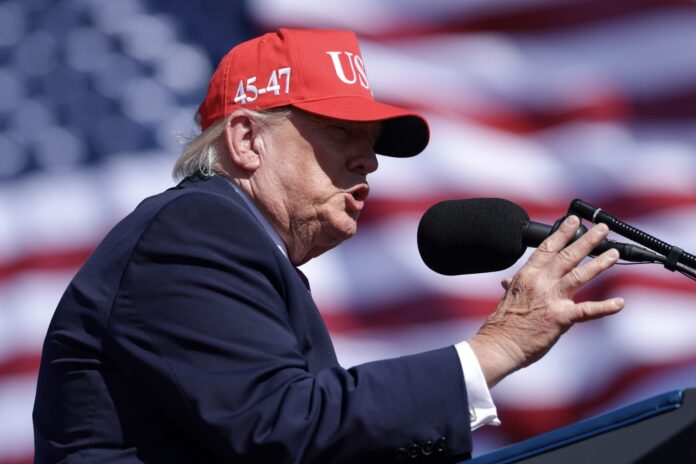

NEW YORK – The Gaza ceasefire that Donald Trump promised to deliver in his first week is still not signed. The Ukraine war he said would end on his first day has now entered its fourth year. And on Tuesday, with the United Nations General Assembly as backdrop, the president arrived in New York carrying those incomplete promises in one hand and a Greenland territorial agreement in the other.
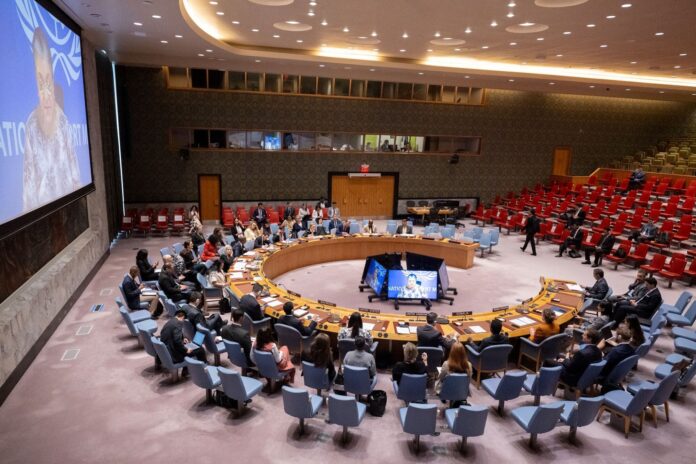
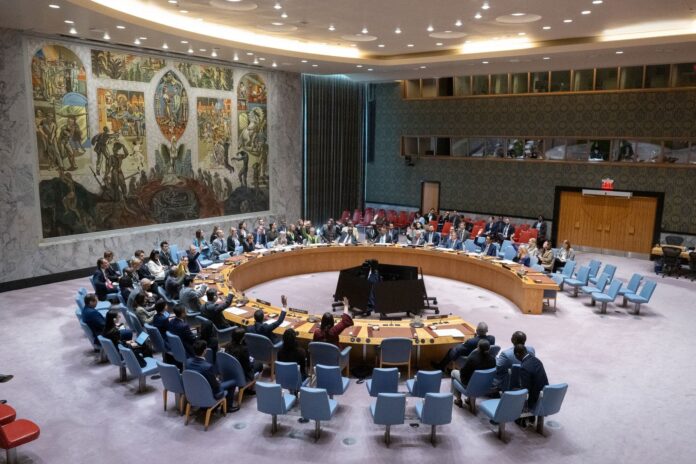
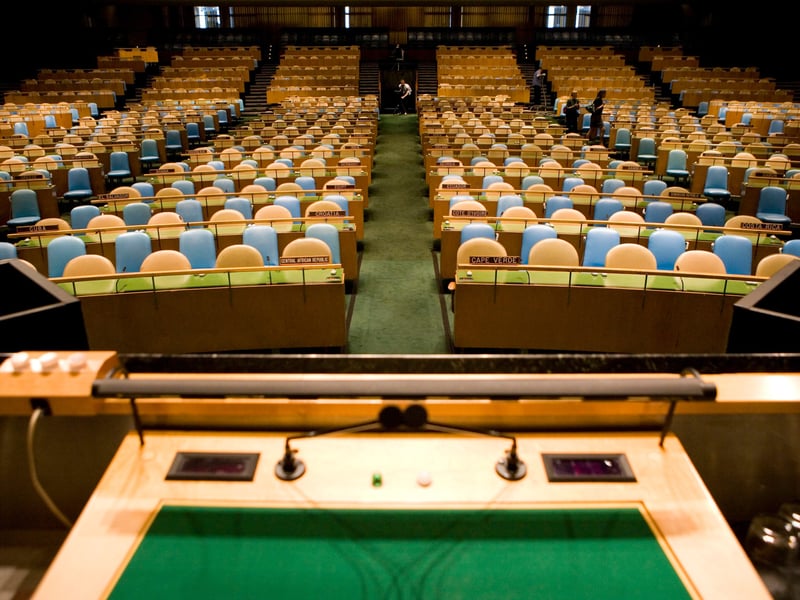
Trump’s address to the 81st session of the General Assembly fell on a day when the hall’s most immediate preoccupation was not diplomacy in the conventional sense but the management of an active war. Seven months into a US-Israeli campaign against Iran‘s nuclear and military infrastructure, the question hanging over Turtle Bay was whether this General Assembly would produce any visible off-ramp or simply confirm that none yet exists, as Al Jazeera reported.
Mike Waltz, the US Ambassador to the United Nations, outlined three priorities for the speech ahead of the session: a 20-point framework for Gaza, an account of American military operations in the Western Hemisphere, and a clear warning on preventing Iran from acquiring a nuclear weapon. What the ambassador did not address was the central tension in all three: each is a conflict the United States is already inside, not one it is positioning itself to prevent.
The Iran dimension was the sharpest. By Tuesday, the US-Israeli campaign had entered its 203rd day, a duration that has strained the United Nations’ crisis-management capacity and raised questions about whether multilateral bodies retain any meaningful leverage when permanent Security Council members are aligned on opposite sides of the same war. Secondary sanctions on Iranian aviation and energy exports have widened the economic pressure campaign alongside the military operations, though Tehran has given no indication of shifting its fundamental posture. Iranian President Masoud Pezeshkian, whose delegation traveled to New York despite the ongoing hostilities, was scheduled to address the General Assembly on Wednesday.
The Gulf Arab leaders who met with Trump separately on the sidelines arrived focused less on the current military phase than on what comes after it. Several of them have served as back-channel intermediaries between Washington and Tehran for months. Their shared concern, according to people familiar with the discussions, was whether the United States had any coherent post-conflict framework for Iran and whether they would be part of shaping it.
On Ukraine, the appointment that carried the most weight was a bilateral session with Volodymyr Zelenskyy, scheduled for 1:15 pm local time. The Ukrainian president arrived in New York describing the moment as one that “could change a lot,” language that his team has used at previous summits with limited lasting effect. The fundamental gap between the two leaders’ positions remains unchanged: Zelenskyy seeks binding security guarantees before any territorial negotiation; Trump has pushed for a ceasefire framework first and has resisted committing to guarantees that would make one durable. Energy truce proposals and de-escalation frameworks that have circulated in European capitals have not closed that distance.

The Greenland agreement was the clearest diplomatic result associated with Trump’s team before the UN General Assembly session began. Washington described it as granting the United States permanent control over Greenland’s security and defense while leaving the territory formally under Danish sovereignty.
Denmark and Greenland presented the arrangement differently. Their officials characterized it as an expanded U.S. military presence operating within existing frameworks, not a substantive transfer of political control. A signing ceremony was planned alongside the New York meetings.
The agreement also underscored the tension surrounding the General Assembly’s official theme, “Restoring trust, managing transformation: a United Nations that delivers for all.” The theme was especially pointed after the United States withdrew from dozens of UN bodies and international agreements over the preceding 20 months. The secretary-general’s annual report referred to the institutional damage caused by major-power disengagement without explicitly naming the United States.
The artificial intelligence governance debate that has been building through preparatory sessions added another layer to the general debate. Several delegations used their Monday slots to press for binding international agreements before AI capabilities further concentrate in the states that already hold the lead. The United States has consistently opposed binding AI governance at the multilateral level.
What the week’s diplomacy will produce is uncertain in a way that reflects the structural condition of the moment rather than a failure of any single negotiation. The Gaza framework has been presented and rejected in various forms for months. The Iran war’s trajectory is determined less by speeches at Turtle Bay than by decisions made in Tel Aviv and Tehran. Ukraine’s future depends on negotiations that neither side has approached with good faith as the baseline. The General Assembly, by long tradition, is the forum where the world names its problems. Whether this one, in this year, produces anything resembling a path through them remains a question the week has opened but not answered.