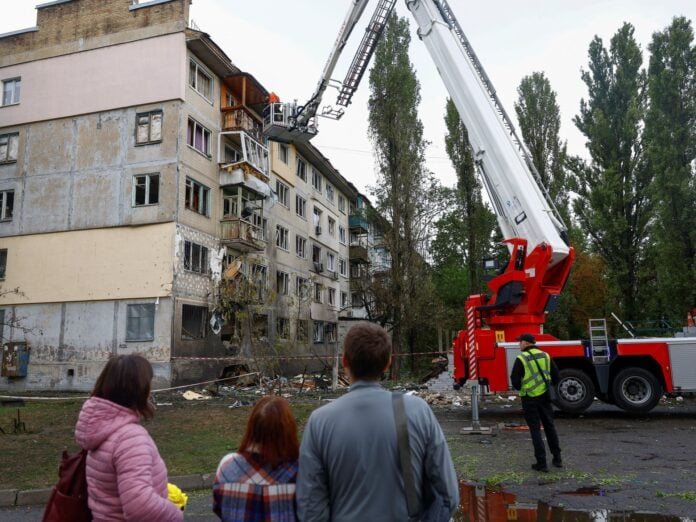
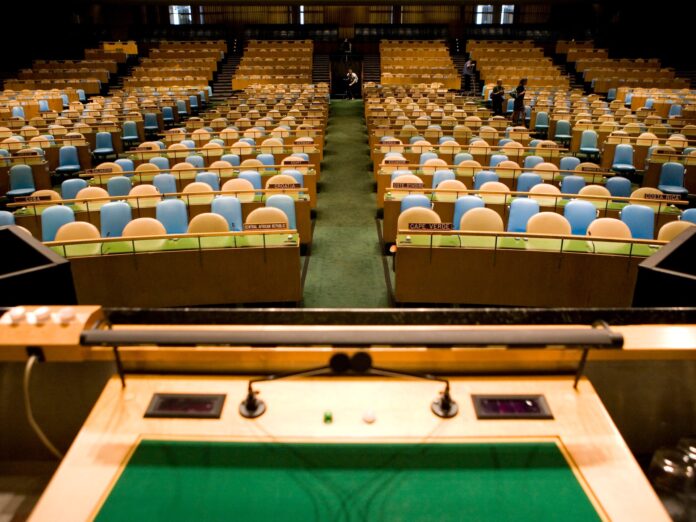
NEW YORK — The headline figure is $2.45 billion, spread across 66 projects, phased over six months. On any other Tuesday it might read as progress. On Wednesday it arrived alongside a different number: seven. That is how many Palestinians were killed by Israeli strikes in Gaza before the Board of Peace’s envoys finished their briefing at the United Nations General Assembly.
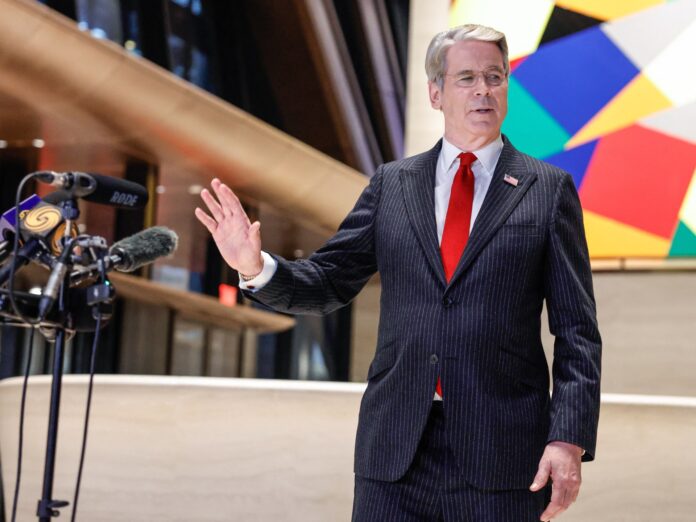
Steve Witkoff, Donald Trump’s Middle East envoy, stood alongside Jared Kushner, former British Prime Minister Tony Blair, and the board’s high representative Nickolay Mladenov to present what they called a recovery blueprint. Infrastructure would take the largest share, roughly $1 billion, covering temporary shelters, rubble clearance, hospital rehabilitation, and road repair across 66 identified projects.
The problem, which the board’s own documents acknowledge, is that Gaza is not available to be rebuilt.
Israel now controls approximately 60 percent of the territory, a stretch the board’s internal framework designates the green zone. The remaining 40 percent, the red zone where the overwhelming majority of Gaza’s displaced population is concentrated, remains under Hamas administration. Not a single international stabilisation force has entered. Hamas has not disarmed. Gaza genocide documentation continues accumulating even as envoys propose blueprints. Reconstruction, by the board’s own preconditions, cannot legally begin.

Witkoff, who has led ceasefire negotiations since last autumn, acknowledged Wednesday that the truce is “not a 100% success.” That is a notable admission for an envoy whose public posture has been to claim momentum. Since October 2025, more than 1,399 Palestinians have been killed and 2,073 ceasefire violations recorded, TRT World reported. The figures from before the ceasefire remain almost incomprehensible: more than 73,800 Palestinian deaths since October 7, 2023, according to United Nations verification.
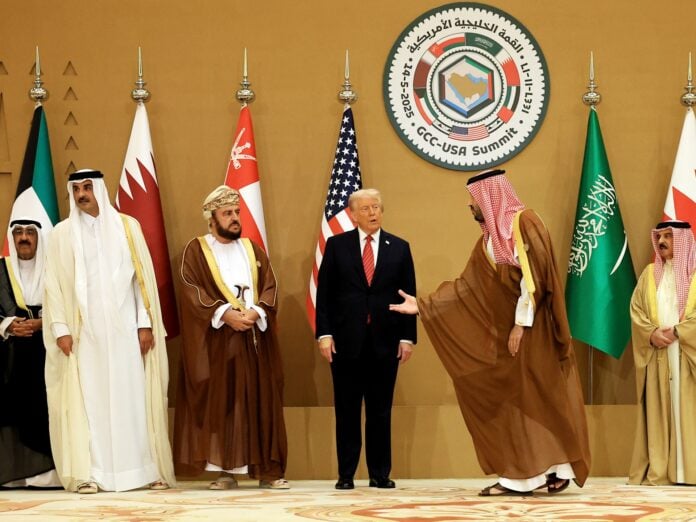
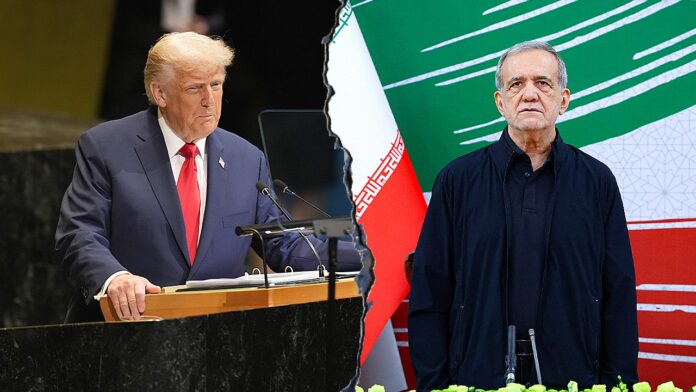
Donald Trump, who addressed Arab leaders at UNGA earlier this week, has characterised the truce as a triumph and the Board of Peace as its enforcement mechanism. His administration has repeatedly leaned on the $2.45 billion figure as evidence of forward motion. What it has been less forthcoming about is the sequence of conditions that must be satisfied before a single dollar is spent: Hamas disarmament, Israeli withdrawal from the green zone, entry of the international stabilisation force, and establishment of a Palestinian governance body. Each is contingent on the others. None is currently in place.

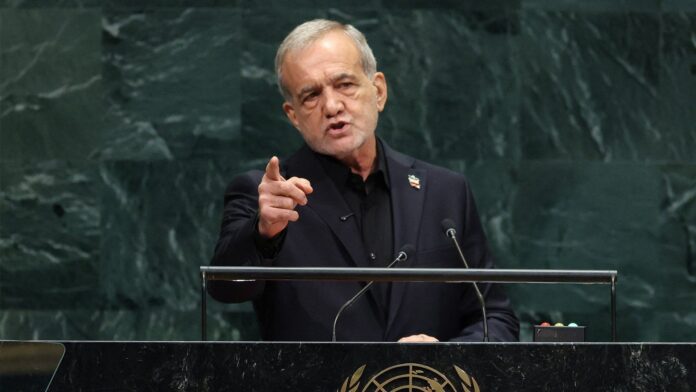
Benjamin Netanyahu, who addressed the General Assembly this week under an active International Criminal Court arrest warrant, has made clear that Israeli forces will not withdraw from any territory in Gaza on terms other than Israel’s own. His government has not endorsed the board’s timeline, its governance model, or its six-month phasing. No Israeli representative attended Wednesday’s briefing.
The ceasefire violations, the ongoing strikes, and the territorial occupation have a cumulative effect on the plan’s credibility that dollar figures alone cannot address. The board’s own estimate puts the medium-term reconstruction bill at $35.2 billion. The decade-long total reaches $71.4 billion. The six-month phase at $2.45 billion is roughly seven percent of the medium-term need. It is a down payment on a structure whose foundations have not been cleared.

Emmanuel Macron used his final address to the General Assembly on Tuesday to call Gaza a spectacle of shame. France recognised Palestinian statehood in August 2025. Gulf states have continued attending the board’s briefings while stopping well short of financial commitment. The funding gap between what has been pledged and what the plan requires has not been closed.
Witkoff told reporters the board “can point to real progress,” Al Jazeera reported. He did not say where that progress is visible from inside Gaza.