
LIMA – On the morning of August 1, Ollanta Humala walked out of Barbadillo prison in eastern Lima, a free man.
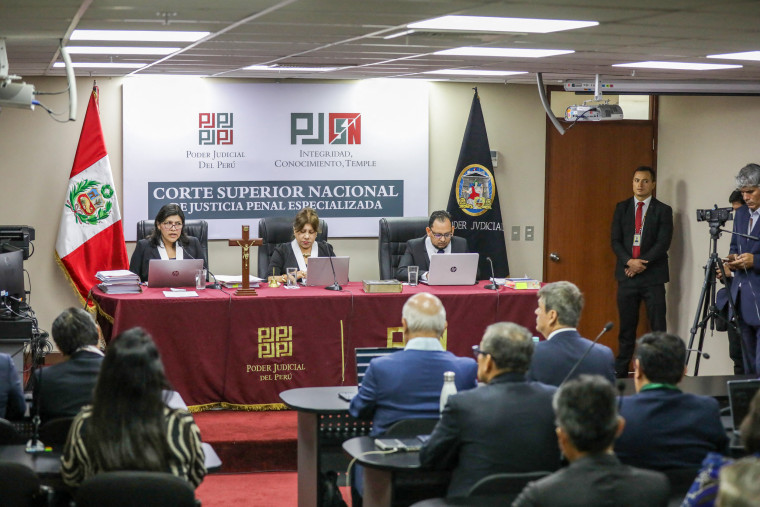
That fact alone would have seemed improbable eighteen months ago, when Peru’s judiciary handed him a fifteen-year sentence for money laundering and sent him to the same detention facility that has held several of his predecessors. Peru’s constitutional court, in a ruling published Friday, declared the entire criminal proceeding against the former president null and void. Not overturned on appeal. Not reduced on mitigating factors. Erased.
The ruling turned on a legal principle that rarely survives the political heat around corruption prosecutions: the conduct Humala was convicted of did not meet the definition of money laundering under Peruvian law at the time it was committed. His campaigns received contributions from Odebrecht, the Brazilian construction firm that became the center of the largest bribery scandal in Latin American history, and from the Venezuelan government. In 2025, prosecutors argued those contributions constituted money laundering. The constitutional court ruled Friday that when the money changed hands, between 2005 and 2014, the law had not yet been written to make receiving it a crime.
The ruling said very little that anyone who followed the case closely could argue with on legal grounds. That does not make its consequences easier to absorb.
Odebrecht admitted to paying $29 million in bribes to Peruvian officials across nearly a decade. The company was one of Latin America’s largest infrastructure contractors, and its corruption program spread from Brazil into twelve other countries. In Peru, four former presidents have been implicated in the scandal. Humala was the first to face criminal conviction. His fifteen-year sentence, handed down in 2025 alongside a matching sentence for his wife Nadine Heredia, was the most concrete signal the Peruvian state had produced that the Odebrecht era would carry real consequences. That signal is now being revised.
Humala is 64, a former army officer who served as president from 2011 to 2016. He entered politics on the left, built his campaigns around resource nationalism and social programs, and governed considerably closer to the center than his early supporters had anticipated. His name appeared in the Odebrecht files not because of acts he committed in office but because of how his campaigns were financed before he got there.
For Peru, a country that has cycled through nine presidents in a decade and entered its most recent presidential election still searching for stable governance, anti-corruption prosecutions have filled the space where political accountability once lived. The Odebrecht cases gave Peruvians a form of measurable consequence that elections, impeachments, and congressional maneuvers had repeatedly failed to deliver. Humala’s release does not restore what was lost across that decade. But it removes one of the few visible outcomes those prosecutions had produced.
Heredia, Humala’s wife, is not in Peru to receive the news. She sought asylum in Brazil after the conviction and has remained there. She received the same fifteen-year sentence as her husband. Whether the constitutional court’s reasoning on retroactive criminalization reaches her own legal situation is now a question her attorneys have grounds to press.
Al Jazeera reported that Humala’s attorney Wilfredo Pedraza described the judgment as received with “considerable satisfaction.” Humala himself made no public statement.
The three other former Peruvian presidents implicated in the Odebrecht investigation are not parties to Friday’s ruling. The constitutional court’s reasoning does not automatically extend to their prosecutions. Each case stands on its own facts, its own timeline, and its own statutory record. What Friday’s ruling does is put in the hands of those defense attorneys a constitutional argument that did not formally exist before the court published its decision.
The original Odebrecht bribery program in Peru was not a fiction. The company bribed. Peruvian officials received. What Friday’s ruling established is that prosecutors chose the wrong legal instrument for one of the prosecutions they built from it. The conduct Humala was convicted of may have been corrupt in every intuitive sense. The constitutional court found it was not a crime under Peruvian law as written when it occurred. Whether Peru’s accountability framework survives that distinction, or adjusts to it, is a question the country is just beginning to answer.