WASHINGTON — The House of Representatives began its final week of legislative work before the November 3 midterm elections on Monday, returning to Washington from a five-week recess for a four-day sprint before Speaker Mike Johnson sends members home through Election Day. For the millions of Americans who depend on the farm bill, the defense authorization, or a federal voter identification law, those four days are almost certainly not enough.
Johnson reversed course on September 3 and canceled two additional planned weeks of floor votes, the weeks of September 21 and September 28, citing members’ need to campaign in their districts. The House will recess after Thursday and is not scheduled to return until November 9, as ABC News reported. The decision drew immediate criticism from Democrats, who called it an abandonment of legislative responsibility with more than two dozen vulnerable Republican seats in competitive districts.
The list of what Republicans are leaving behind is long. The farm bill, the single most consequential piece of legislation governing American agriculture and food assistance, has not been renewed since its 2023 authorization lapsed. Senate Agriculture Committee Chairman John Boozman released updated text in August, but the measure remains stalled. The annual National Defense Authorization Act, which sets military pay and policy and has passed Congress every year for more than six decades, has not cleared either chamber. The SAVE America Act, a voter identification measure that would require proof of citizenship to register to vote, passed the House in February and has since sat in the Senate without the sixty votes needed for cloture.
What makes the early departure politically charged is its timing. Republicans are heading into the midterm stretch trailing Democrats by six points in the generic congressional ballot, a gap that analysts have said could cost the party the House majority if it holds to November 3. Johnson and his allies argue that members in competitive districts need maximum time in front of voters. The opposition offers a simpler reading: a party with a functioning legislative record does not need to flee Washington to campaign on it.
Democratic House Leader Hakeem Jeffries described the early departure as a dereliction of duty.
In a floor statement last week, Jeffries said the Republican majority was abandoning both its oversight responsibilities and its constituents, leaving the country without a farm bill, a defense bill, or a framework for regulating artificial intelligence while lawmakers returned home for the midterms.
The Senate resumed Monday on a somewhat different schedule. A cloture vote on the Digital Asset Market Clarity Act—a sweeping cryptocurrency-regulation bill backed by Banking Committee Chairman Tim Scott and Senator Cynthia Lummis—is scheduled for Tuesday afternoon.
The bill’s prospects have deteriorated sharply, from above 80% in February to below 20%. Three unresolved disputes—ethics enforcement, liability for decentralized finance, and stablecoin-yield provisions—have left supporters well short of the 60 votes needed to advance it.
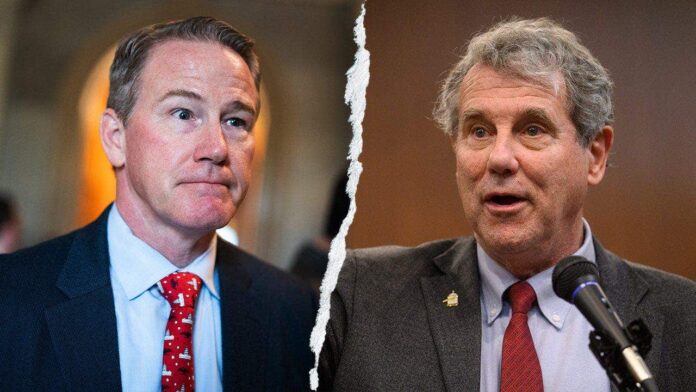
The practical effect of the House calendar is straightforward. Any legislation that does not clear both chambers before Thursday belongs to the next Congress, whose composition will be determined by an election neither party can fully predict. A lame-duck session remains possible in theory, but Johnson has not committed to calling one, and his conference has given him limited reason to expect one would proceed smoothly. The Senate race in Ohio sits in a statistical dead heat, one of at least eight competitive seats that will determine which party controls the chamber starting in January.
NPR reported that the continuing resolution Johnson steered through the House on a 370-to-48 vote on September 1 will fund the government through December 11, leaving the basic machinery of federal operations intact regardless of the election outcome. That stopgap does not cover the policy bills Republicans are now postponing past the election.
Fifty days from the election, Republican leadership’s calculation is that proximity to voters matters more than productivity. Whether constituents in competitive districts agree is a question neither polls nor congressional calendars can answer before November 3. The farm bill, for its part, is not waiting on the answer.