
WASHINGTON — Air Force One took off from Shannon Airport at 8:10 p.m. Sunday as Congress prepared to reconvene the next morning for what may be Republicans’ final week of governing before the November elections.
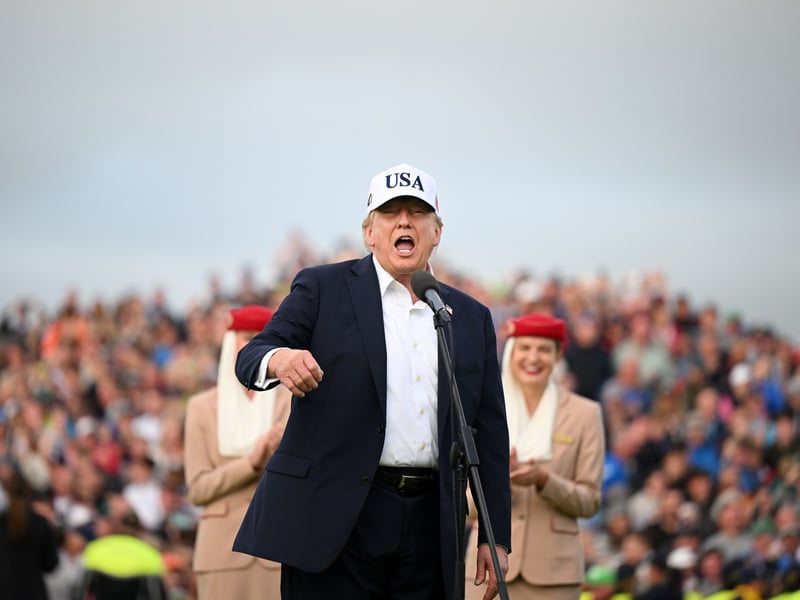
Donald Trump had spent two days at his County Clare golf resort, watched a local champion win a tournament by 11 strokes, announced the removal of a decade-old tariff on Irish whiskey, and suggested that Ireland should be reunified.
What he had not done was address the generic ballot.
The Democratic advantage of six points in national polling presented Republicans with the weakest second-term position for a Republican president in a midterm year since George W. Bush in 2005, when opposition to the Iraq War was reshaping the political map. National averages compiled by RealClearPolitics showed Democrats leading by roughly six points on the congressional generic ballot.
Historical models tracking an environment like this projected Democratic gains of between 25 and 40 House seats. At the upper end, that would be enough to erase the narrow majority Republican leaders had spent two years struggling to govern with.
Trump’s time in Doonbeg was not a political liability in any straightforward sense. Ireland welcomed him. Taoiseach Micheál Martin stood at the trophy presentation at Trump International Golf Links, called it a reflection of “the very strong, enduring relationship between the United States of America and Ireland,” and remained at the microphone while Trump announced he would lift the 10 percent tariff his own administration had imposed on Irish whiskey. “Everybody’s been bugging me,” Trump said, as Al Jazeera reported, offering no further legislative mechanism for the reversal. Shane Lowry, who closed the final round with a seven-under 63 to win by a record eleven shots, accepted the trophy as the Doonbeg gallery roared.
Trump also told reporters that Irish reunification would be “fantastic” and “one of the naturals of all time to put them together,” an assessment that landed in Ireland as politically charged, where reunification divides communities along lines that precede any American election cycle, and landed in Washington as a weekend footnote to a calendar that has closed most of its legislative margins.
It was an afternoon that photographs well. Whether it moves a single vote in Ohio or North Carolina is a different question entirely.
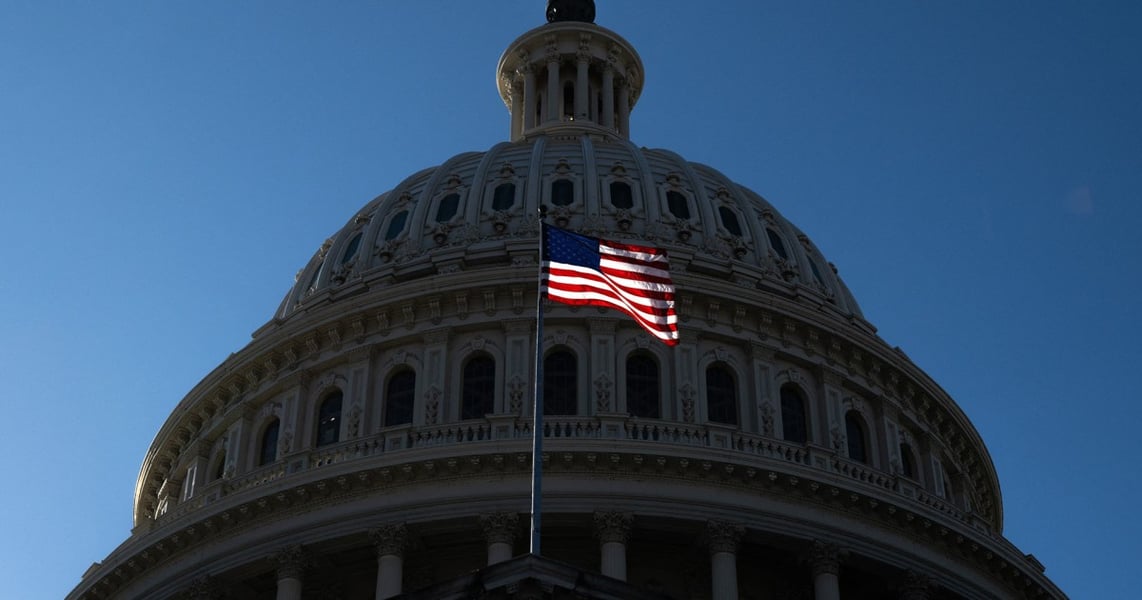
Congress returned to Washington on Monday for what Republican leadership has scheduled as a single week in session. Members are expected to leave for their home districts by September 17, then stay out until mid-November, at which point the question of who governs the House will have been answered at the polls. House Republican leaders already cut two weeks from the September calendar, citing the need for vulnerable incumbents to be home campaigning. The stopgap bill Trump signed in July keeps the government funded through December 11, removing the immediate shutdown threat but pushing the fiscal reckoning into a lame-duck session attended by members who will already know their electoral fate. NBC News reported the House returned after five weeks away with a truncated agenda and most of its members focused on constituent work over legislation.
In the Senate, the specifics are visible. In Ohio, Republican incumbent Jon Husted faces a statistical dead heat against Democrat Sherrod Brown, who outraises him by more than $24 million, while the NRSC’s own internal memo warns that Brown’s data center attacks have quietly eroded Husted’s support. In Texas, the Federal Communications Commission moved twice before Election Day to block Democratic Senate challenger Greg Talarico from broadcast airtime under equal-time rules, drawing legal challenges that Republican strategists would prefer to be resolving elsewhere fifty days out.
Trump’s approval rating among all registered voters sits at its lowest point of the second term, driven by tariff-related economic anxiety and a perception among independent voters that the administration governs for its loudest constituency. His endorsements still clear primaries. His rallies still draw. But the Republican map in November will be settled in suburban districts where his name carries more weight as a political consequence than as a campaign asset.
What happens in Washington this week will matter more to the midterm outcome than anything that occurred in County Clare. The polls will not move on the strength of a golf tournament. Whether the reconciliation push advances, whether the lame-duck architecture gets negotiated, whether battleground senators find the cover they need — those are the questions that survive the weekend.
The president returned to Washington Sunday night. On Monday, his party returned to a Capitol where they have four days to do what they still believe they can do, and fifty more days to find out whether it was enough.