
AUSTIN — Seven million people watched James Talarico’s interview on YouTube. The people who could have watched it on broadcast television in Texas never got the chance.
That number — pulled from the four days after Jimmy Kimmel moved the segment online following a Federal Communications Commission warning — is the precise shape of what the FCC’s equal time rule has done to the Texas Senate race. Talarico, a Democratic state representative running against Republican Attorney General Ken Paxton, has now been blocked from appearing on broadcast television twice in the seven months before November 3. Not by the networks, but by a federal regulator whose chair has, in the same period, cleared at least one Republican senator’s appearance on a sports network without comparable scrutiny.
On September 10, ABC’s Jimmy Kimmel Live had a Talarico interview ready. The segment did not air. Kimmel told his audience that the FCC had “threatened me, threatened our show, threatened our network” over the appearance.
Under the Communications Act’s equal time provision, a broadcast station that airs a candidate must offer equivalent airtime to all qualified opponents. Kimmel moved the interview to YouTube, where it generated more views in four days than Kimmel’s show draws in a typical Texas broadcast week.
What those viewers did not include: the rural and lower-income households that rely on broadcast television, for whom YouTube is either inaccessible or simply not where they look for political coverage.
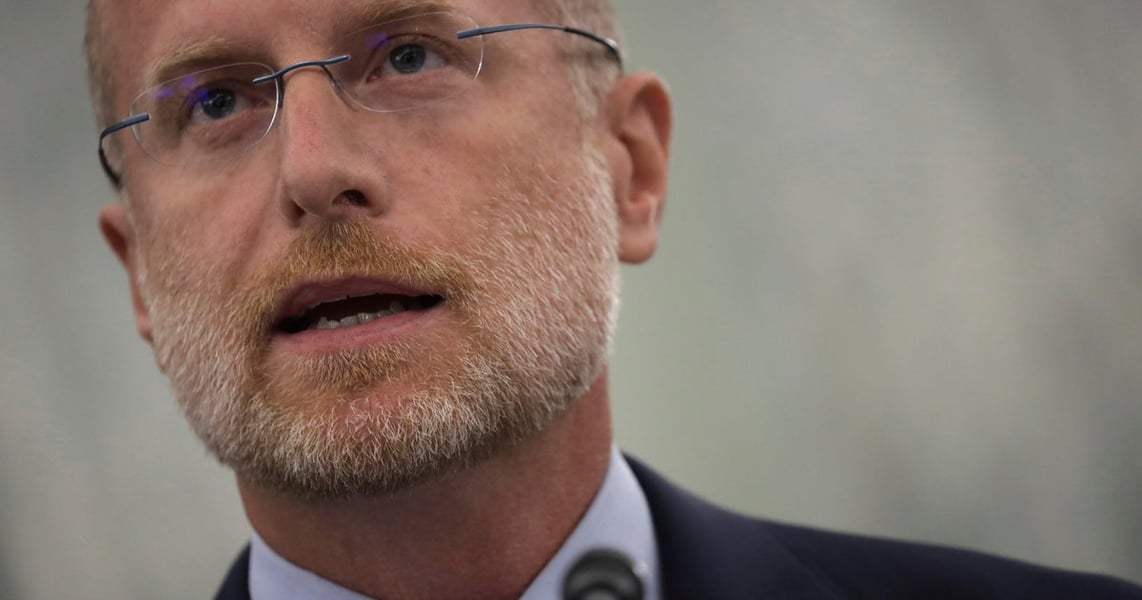
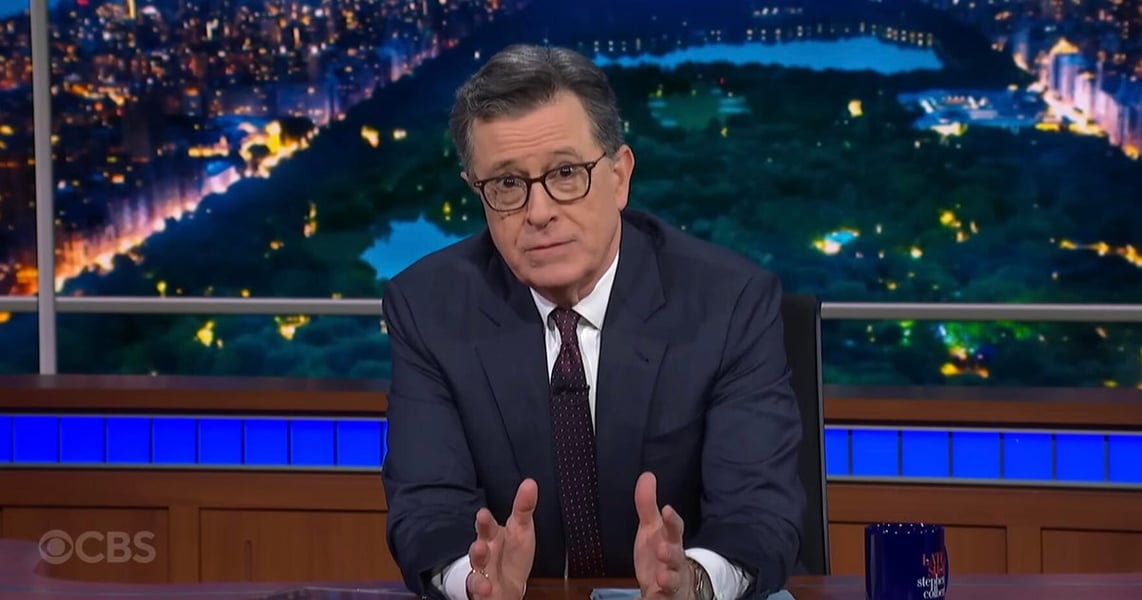
It was not the first time. In February, CBS’s Late Show with Stephen Colbert blocked a scheduled Talarico appearance after the network received guidance from FCC Chair Brendan Carr, as CBS News documented. The network cited legal exposure under the equal time provision as the reason the segment did not run. No formal citation was issued. No ruling was entered. The guidance alone was enough.
Carr issued that guidance in January, reinterpreting the scope of the news-programming exemption that broadcasters have historically used to justify candidate appearances on late-night and entertainment formats. The exemption was written to protect news coverage from the mechanical equal time obligation — so that a station could broadcast a presidential debate without offering equal time to every third-party candidate in the country. Carr’s reinterpretation tightened the definition of what qualifies as a news program, making entertainment formats like Kimmel and Colbert far more legally exposed than they had been under prior FCC practice. Neither ABC nor CBS received any formal enforcement action. They reached their own conclusions about risk.
On September 13, Carr posted what he called a “Masterclass” on his social media accounts, defending his agency’s position and framing Democratic criticism as a “hoax.” The post did not address the question raised by reporting from multiple news outlets: that Carr had reviewed an appearance by a Republican senator on ESPN this year without issuing the same kind of warning to the network. Cable television operates outside the FCC’s equal time jurisdiction — cable licenses are not subject to FCC renewal on the same terms as broadcast licenses, which changes the legal exposure entirely. What Carr’s post did not explain is why active guidance discouraging broadcast appearances by a Democratic Senate candidate has been more consistently communicated than any parallel guidance concerning Republican candidates in competitive races. No documented case has emerged of the FCC warning a broadcast station against airing a Republican Senate candidate in a competitive race this cycle.
The asymmetry has measurable electoral consequences in Texas. Rural counties in West Texas, the Rio Grande Valley, and East Texas have lower broadband penetration than the state’s major cities. The voters Talarico most needs to reach in those markets are disproportionately older, less likely to be YouTube users, and more likely to consume political information through the broadcast affiliates the FCC’s equal time guidance has effectively closed to him. Paxton faces no equivalent barrier. A Republican senator’s ESPN appearance, cleared without FCC warning, reaches a national cable audience.
Texas has become a central target on the Senate battleground map, with Talarico edging Paxton in recent polling and raising three times Paxton’s second-quarter fundraising totals. Paxton survived a 2023 impeachment trial on abuse-of-office and bribery charges, acquitted by the Republican-controlled state senate. AIPAC has committed more than $30 million to his race. Democrats need a net four Senate seats to reach the majority; Texas is one of the handful of states where that math is possible. Congress is returning for its final week before the midterms without any mechanism to address the structural questions the FCC’s equal time reinterpretation has raised about broadcaster independence in competitive federal races.
What the FCC has not done is write a formal rule. What it has not issued is an advisory opinion that a court could review. What Carr has done instead is communicate uncertainty through public posts and private guidance, and let the networks calculate their own exposure. That is, practically speaking, more effective than a regulation would be — a regulation can be challenged; an atmosphere of risk cannot. Whether Carr’s reinterpretation survives a change in Senate control, or whether the broadcasters’ current posture holds through November 3, is the question neither side in this race has publicly pressed.