
LIMA — At a polling station in the Surco district of Lima, a retired schoolteacher named Olga Quispe said she had voted in every Peruvian presidential election since 1980. She had never, she said, felt less certain about what comes next. “Every time we think things will get better, someone else gets removed.” Sunday’s runoff — the tenth in the past decade that has produced a new head of state — will test whether that fatalism is warranted or whether Peru’s democracy can finally stabilise.
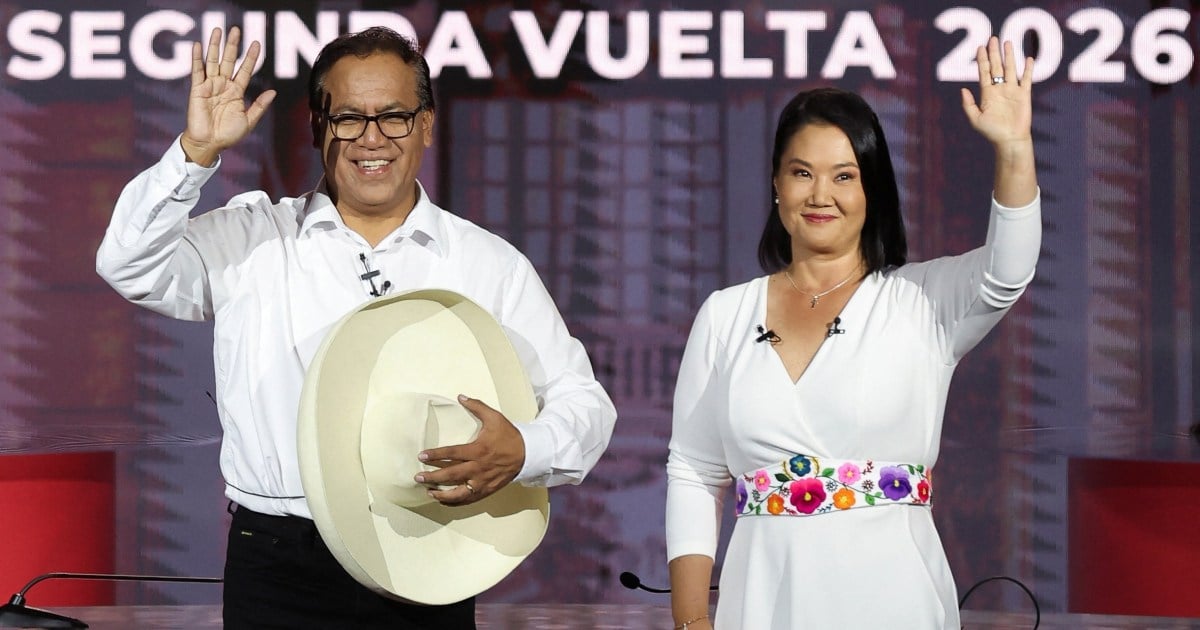
The matchup is, on its surface, a familiar ideological split. Keiko Fujimori, the 50-year-old daughter of the late authoritarian president Alberto Fujimori, leads the conservative Fuerza Popular party and finished first in the April 12 first round with 17.19 percent of the valid vote. Roberto Sánchez, a 57-year-old congressman and former trade minister under the impeached Pedro Castillo, finished second at 12.03 percent representing the leftist Juntos por el Perú alliance. More than 70 percent of Peruvians voted for someone else entirely.
That arithmetic has defined the brutal stretch run. Both candidates have spent the past seven weeks courting voters who actively dislike them. Sánchez, whose association with Castillo’s chaotic and corruption-tainted government gave many centrist Peruvians pause, has moderated his messaging noticeably in recent weeks, distancing himself from calls to rewrite the constitution and emphasising crime — the top concern in every published poll. Fujimori, running for the presidency for the fourth consecutive time after narrow defeats in 2011, 2016, and 2021, has leaned hard into security, promising what her campaign calls a “firm hand” against the extortion networks that have made large swaths of Lima and coastal cities effectively ungovernable after dark.
Neither has offered a convincing answer to the structural problem that generated the instability in the first place: an unusually powerful Congress, dominated for most of the past decade by Fujimori’s own party, that has used a constitutional provision allowing removal of a president for “permanent moral incapacity” as a routine parliamentary tool. The clause has been invoked — or credibly threatened — against every president since Ollanta Humala. It cost Martín Vizcarra his job in 2020. It ended Pedro Castillo’s presidency in 2022 when he attempted an ill-fated self-coup to preempt it. It pushed José Jerí out of office in February, just four months into his term, over meetings with a Chinese businessman under government scrutiny. A destabilising pattern has taken hold across parts of Latin America, but Peru’s congressional mechanism for removing presidents has no regional parallel in its frequency of use.
The current interim president, José María Balcázar — 83 years old, the president of Congress thrust into the role by constitutional rotation — will hand power to whichever candidate wins on July 28, Peru’s national holiday. That will be the tenth transfer of the presidency in a decade.
The polls have been unsettling for both campaigns. The last publishable Ipsos survey, conducted for Perú 21 before the legally mandated blackout on published polling in the final week before a vote, showed Fujimori at 38 percent and Sánchez at 35 percent — a three-point margin well within the survey’s error range. A separate IEP poll for La República, conducted between May 22 and 26 among 1,204 adults, gave Fujimori a six-point lead at 36 percent to 30 percent. But a Reuters-commissioned Ipsos poll released June 4 showed Sánchez had closed to within half a point — 43.8 percent to 43.2 percent — suggesting the race tightened sharply in the final stretch after the left-leaning candidate picked up endorsements from several eliminated first-round contenders.
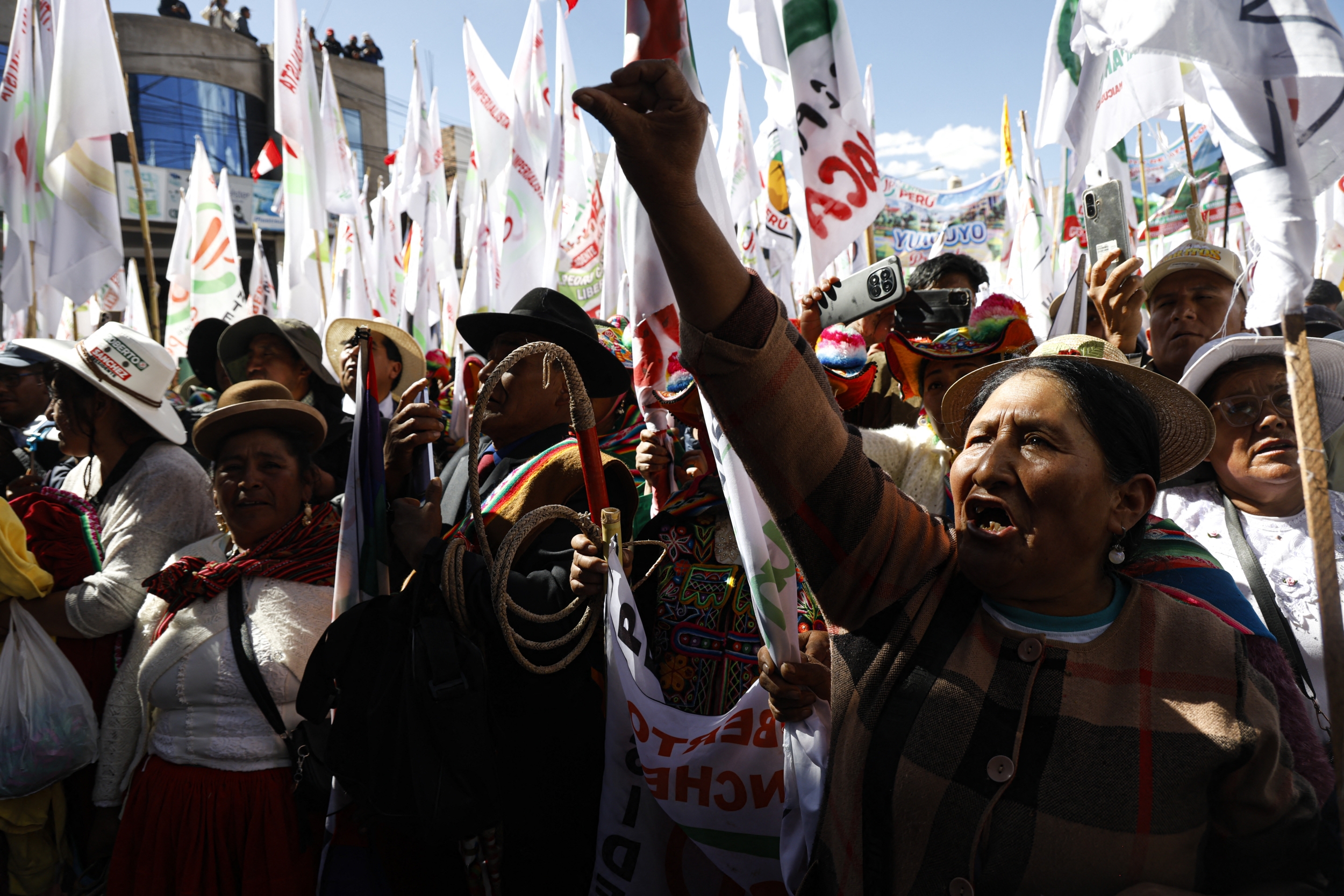
The geography of the race tracks, with disquieting precision, the same fault lines that have split every Peruvian election for fifteen years. Fujimori runs strong in Lima’s middle-class districts and along the northern coast. Sánchez’s support concentrates in the southern Andean highlands — Puno, Cusco, Ayacucho — where Castillo drew his base and where the memory of the 1990s Fujimori government, which suppressed a leftist insurgency with documented atrocities, runs deepest. The question is whether either candidate can pick up enough votes in the regions where they are merely tolerated rather than preferred.
The first round itself was bruising for the electoral authorities. Ballots arrived late to dozens of polling stations in Lima and abroad on April 12, prompting an unprecedented one-day extension at affected sites. The subsequent review of thousands of disputed tally sheets dragged on for five weeks, during which the head of the electoral agency, ONPE, resigned under mounting public pressure. Al Jazeera reported that Peru’s National Jury of Elections confirmed the first-round results only on May 17 — 35 days after voters went to the polls. The JNE president, Roberto Burneo, acknowledged publicly that “there were many difficulties and flaws in the logistical deployment.” Electoral authorities have pledged repairs before Sunday, though what specific improvements have been made has not been detailed.
There is a dimension to this election that neither candidate has been able to fully control: the economy. Peru’s mining-driven GDP has proved remarkably resilient to the political turbulence above it, growing steadily through years of revolving presidents. Copper production, lithium exploration, and fiscal discipline managed by a largely independent central bank have insulated the macroeconomy from the chaos in the executive branch. That resilience is partly why the instability has been tolerated — citizens have suffered politically without suffering economically in quite the same proportion. A Fujimori win, analysts have noted, would likely ease approval for long-stalled mining projects, including the Tía María copper mine in Arequipa, which Anglo American has been trying to develop for over a decade against community opposition. A Sánchez win introduces more uncertainty on those questions, though he has conspicuously avoided the resource-nationalism language that defined Castillo’s early months in office.
For Fujimori personally, the stakes carry a dimension beyond politics. Running for a fourth consecutive presidential runoff — an achievement without precedent in Peruvian democratic history — she does so having spent three stints in preventative prison between 2018 and 2020 on money laundering charges tied to the Odebrecht scandal that swept across Latin America. Peru’s Constitutional Court dismissed the case in October 2025 on what it described as a lack of legal grounds. The dismissal allowed her to run; it has not settled the political argument over whether the prosecution was legitimate, and it follows her more than the Odebrecht scandal itself follows Roberto Sánchez, whose legal exposure comes largely by association with Castillo rather than from any personal indictment. Whether Sunday’s vote resolves that tension — or simply adds a new chapter to it — is the question Peru has not been able to answer since at least 2016.
What is certain is that the new president will face a Congress where no single party holds a majority, where the constitutional removal clause remains on the books, and where the same institutional dynamics that toppled nine of their predecessors will be waiting from day one. Whether the winner views that as a problem to solve or a lever to pull is, in many ways, the unspoken question the polls cannot capture. Whoever takes the oath in Lima on July 28 will inherit not just a government but a system that has already consumed nine others. That Olga Quispe, the schoolteacher in Surco, still showed up to vote — still showed up for the tenth time in a decade to try again — is either the most optimistic fact about Peru’s democracy or its most heartbreaking one. Probably both.