
KABUL – Afghanistan’s Taliban government denied on Tuesday any knowledge of the whereabouts of Mahmood Shah Habibi, a United States citizen of Afghan origin who vanished from a vehicle near his home in Kabul four years ago, contradicting a public statement from the FBI that identified the Taliban’s intelligence directorate as responsible for his detention.
“We have no information about Mahmoud Shah Habibi. He is not in the Islamic Emirate of Afghanistan,” said Zabihullah Mujahid, spokesman for Afghanistan’s supreme leader, speaking to local media. If the Taliban had known anything about Habibi’s location, Mujahid said, “this issue would have been resolved long ago.”
The denial came on the fourth anniversary of Habibi’s disappearance, a date the Federal Bureau of Investigation used to renew public pressure for information about his fate. Michael Burgwald, head of the FBI’s Washington counterterrorism division, said in a public statement Monday that Habibi had been abducted from a vehicle near his Kabul home along with his driver and 29 employees of Asia Consultancy Group, a Kabul-based telecommunications company. According to the FBI, all those detained, except Habibi and one other person, have since been released.
The FBI said Habibi was allegedly detained by the Taliban’s General Directorate of Intelligence, the security service that oversees political arrests and internal surveillance in Taliban-controlled Afghanistan. The directorate, known informally by its Pashto acronym, is one of the Taliban government’s most feared institutions and operates with minimal transparency even by the standards of the Islamic Emirate’s other security bodies.
Habibi had served as director of Afghanistan’s Civil Aviation Authority before the Taliban’s return to power in August 2021. His role at the head of a critical state infrastructure body would have given him detailed knowledge of the country’s aviation networks, foreign partnerships, and the identities of international contractors who operated at Afghan airports during the American-backed government’s two decades in power.
The US State Department’s Rewards for Justice program had previously offered up to five million dollars for information that could help establish Habibi’s whereabouts, facilitate his release, or secure his return to the United States. The offer, renewed this week, is one of the highest reward figures the program has attached to a missing-persons case originating in Afghanistan since 2021.
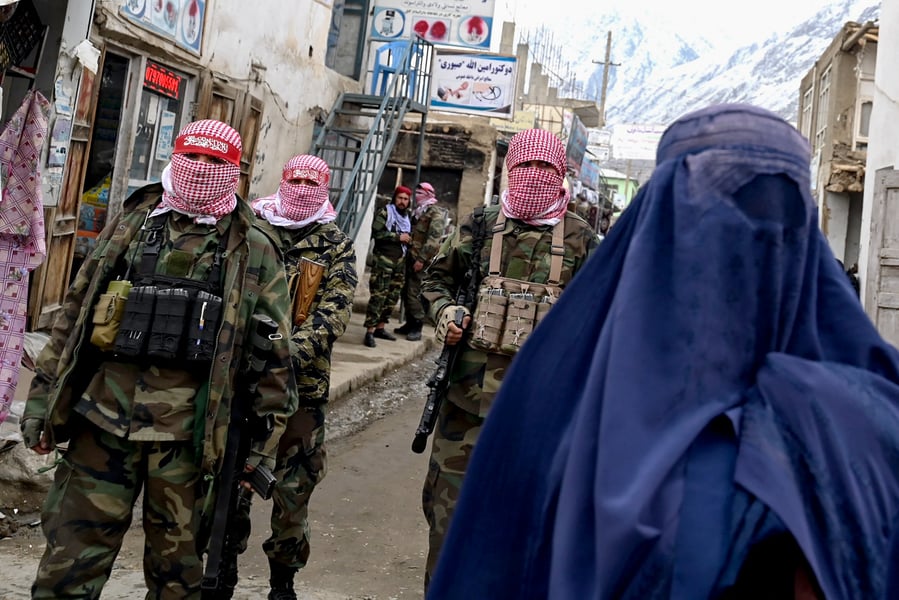
Taliban relations with both Pakistan and the United States have deteriorated steadily since 2021, as Islamabad has accused Kabul of harboring militant groups that carry out cross-border attacks, and Washington has grown increasingly vocal about the Taliban’s detention of foreign nationals and its suppression of women’s rights. The Habibi case sits at the intersection of both concerns: it involves a US passport holder held in a country where the American government has no formal diplomatic presence and no consular access.
The Taliban’s flat denial is consistent with its response to other disappearance cases involving foreign or dual-national citizens held in Afghanistan since 2021. Human rights organizations have documented multiple cases in which Taliban officials denied holding individuals who were later confirmed to be in Taliban custody, a pattern that has made independent verification of detention claims in the country effectively impossible.
Asia Consultancy Group, the telecommunications firm whose employees were arrested alongside Habibi and his driver, operates in a sector that has historically been sensitive for the Taliban. Foreign-connected telecommunications companies in Afghanistan during the republic years handled communications infrastructure that the Taliban regarded as surveillance tools used against them. The group’s employees who were ultimately released have not spoken publicly about their detention, according to US officials cited in the FBI’s Monday statement.
Taliban security forces have increasingly turned to detention as a tool of governance and coercion, arresting activists, journalists, former government employees, and foreign nationals with little due process and near-total opacity. The Habibi case is unusual primarily because of its duration, four years, and because the individual involved held a senior position in the republic-era government.
Burgwald’s statement on Monday did not say whether the US was pursuing formal channels with the Taliban to secure Habibi’s release, and the State Department’s Rewards for Justice announcement did not indicate what diplomatic mechanisms remained available. The United States has no embassy in Kabul; its engagement with the Taliban on consular matters has been handled through Qatar’s government since the American withdrawal.
What remains unresolved after four years is the same as what was unresolved at the beginning: where Habibi is, whether he is alive, and why the Taliban, if it is indeed holding him, has declined to either acknowledge him or negotiate his return. The anniversary passed with no new information, only a government denial that offered no evidence and a reward offer that has so far produced no result.