
COLUMBIA, S.C. – South Carolina Republicans will vote Tuesday in a special primary that tests whether a Trump endorsement carries more weight than a congressman’s months of statewide name recognition.
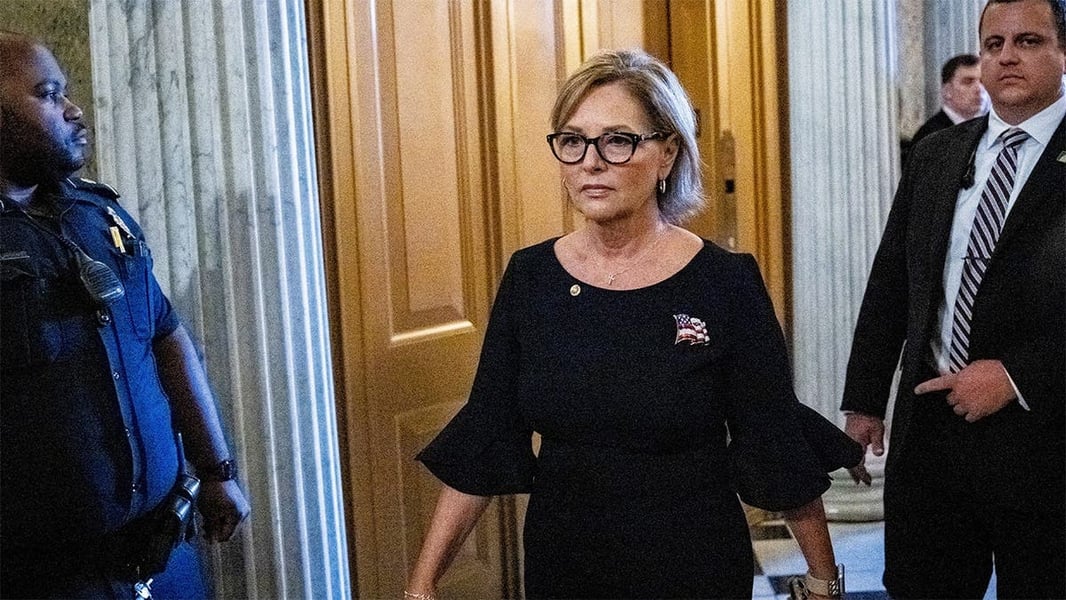
Darline Graham Nordone, the interim senator filling her late brother’s seat since July, and Rep. Ralph Norman, who built a statewide profile through his gubernatorial run earlier this year, are the two principal candidates competing for the right to hold the seat through January and to enter any future general election with an incumbent’s advantage in a state that has not sent a Democrat to the Senate in decades.
The stakes extend beyond South Carolina. A Graham win would validate Trump’s approach of endorsing candidates who derive their political identity primarily from a family relationship to a predecessor, a test case the White House has an interest in passing. A Norman win would signal that ground operations and donor networks accumulated over time outweigh a presidential endorsement delivered to a candidate who had not previously sought office.
Lindsey Graham died in July at 71, leaving a Senate career that spanned more than two decades and an international reputation as Washington’s most persistent hawk on Iran and Israel. His death triggered the appointment process that produced his sister as interim senator. She was sworn in as South Carolina’s first female senator days after his funeral, completing what observers called the first sibling succession in Senate history.
Since then, the Graham Russia Sanctions Act, named in the late senator’s honor, passed the Senate 86-11, a posthumous legislative monument that kept Lindsey Graham’s name in the news even as his sister was building her campaign. The legislation authorizes tariffs on the five largest buyers of Russian oil, including India and China. Its passage consolidated Graham’s foreign policy legacy and provided Darline’s campaign with a fresh reminder of the name she is running on.
Darline Graham Nordone’s path to the ballot was not without turbulence. Rep. Nancy Mace, who briefly considered running for the seat herself, raised a legal question in late July about whether Graham qualified under a 2024 state law requiring candidates to have voted in at least two of the last three Republican primaries. The challenge was resolved without removing her from the ballot. Mace did not pursue it further, and Graham emerged with her place in the primary intact.
Norman’s case is more straightforward. He has been in Congress since 2017, representing a district that includes parts of the Charlotte metropolitan region. His gubernatorial campaign, though unsuccessful, gave him a statewide donor base, campaign infrastructure, and the kind of retail politics experience that does not come from a federal appointment. He entered the primary as the candidate who had earned his place on the ballot by competing, a contrast he has not been shy about drawing. NBC News reported that Trump’s endorsement may face its stiffest test here, given Norman’s stronger name recognition from the gubernatorial run and Graham’s limited time to build a political organization.
The electorate Tuesday will be small, motivated, and disproportionately composed of the Republican Party’s most active participants in a state that begins August with roughly the same political temperature it begins every other month: reliably red, reliably attentive to what the White House wants. In races with compressed timelines and limited polling, those structural factors carry more predictive weight than a single endorsement. Norman’s operation has had months. Graham’s has had weeks.
Trump’s backing was delivered early and without ambiguity. The endorsement followed the pattern of White House interventions in Republican primaries since 2020: explicit, personal, and designed to signal that opposition would carry a cost. Norman, who is not easily positioned as a critic of Trump, has run anyway. His argument is not that Graham is the wrong kind of Republican, but that she is not yet the right kind of senator.
The Senate that Lindsey Graham served in for two decades is no longer the Senate his sister will enter. The chamber’s relationship with Trump has undergone repeated reorganizations, and Graham’s own navigation of that relationship, close enough to be useful and independent enough to occasionally embarrass, was a product of his tenure and particular standing. Darline Graham Nordone arrives without his committee positions, his seniority, or his reputation as the person foreign leaders and defense officials called when they needed a Senate voice. She arrives with his name.
Norman’s committee assignments, should he win, would be determined by Republican leadership and seniority, a process where a congressman with nearly a decade in the House has more to offer than a senator who entered under appointment. The institutional argument favors him. The sentimental and political argument, amplified by Trump’s backing, favors her. South Carolina will resolve the tension Tuesday evening.
The seat has become a referendum on what Lindsey Graham’s legacy means in practice: whether it is best honored by the candidate who carries the name, or by the candidate who can most effectively pursue the policy positions Graham spent twenty years defending. The Iran war that defined Graham’s final political chapter, and the Senate vote to sanction Russia that carried his name posthumously, are now defining the session his successor will inherit. South Carolina Republicans will answer the question before Wednesday morning.