
WASHINGTON — The federal judge who blocked the Trump administration’s new mail-ballot rule late Sunday is himself a Trump appointee.
Carl J. Nichols, nominated by President Donald Trump to the U.S. District Court for the District of Columbia in 2018 and confirmed in 2019, issued the second independent federal injunction in 10 days freezing a new U.S. Postal Service regulation governing mail-ballot handling. The ruling adds another obstacle to the administration’s effort to reshape voting procedures before November’s midterm elections.
Nichols wrote that the plaintiffs had shown “an increased risk that a significant number of otherwise appropriate absentee or mail-in ballots will ultimately not be counted in the upcoming elections.”
His decision makes him the second federal judge, in a separate federal circuit, to reach the same conclusion about the same regulation within 10 days.
The Postal Service rule, issued in late August, would require states to obtain pre-approval from the USPS for all mail ballot envelope designs and to upload the identities of voters who will receive them into a federal online portal that has not yet been activated. The administration described the rule as a standardization measure intended to reduce fraud in mail voting. Plaintiffs in both the Massachusetts and the Washington lawsuits have argued it is something else entirely: an attempt to impose federal control over elections run by states, on a timeline so compressed that meaningful compliance is impossible before November 3.
The first injunction came from U.S. District Judge Indira Talwani in Boston on September 4, after she found that the rule’s immediate implementation “threatens disenfranchisement of millions of United States citizens who seek to vote by mail.” A three-judge panel of the First Circuit Court of Appeals upheld Talwani’s order on Friday, finding that the compressed rulemaking record warranted continued judicial scrutiny. Meanwhile, the Department of Justice had filed its third emergency application to the Supreme Court asking the justices to override the injunction and allow the rule to proceed as states move into their opening mail ballot distribution windows. The courts first moved to block the mail ballot rule before North Carolina began sending its first midterm ballots.
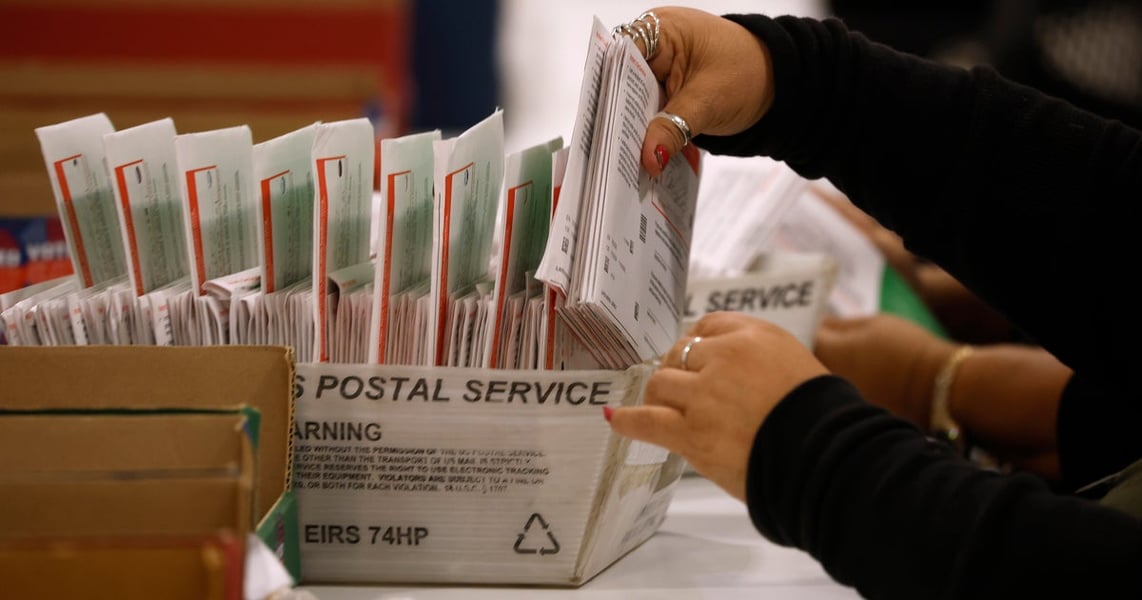
The Supreme Court’s response to Nichols’ order, if it comes at all before the election, will carry the weight of two independent injunctions rather than one. The administration has filed three emergency applications since Talwani’s initial order, each asking the justices to allow the Postal Service to immediately enforce requirements that no state has yet been able to meet. Ohio, Pennsylvania, Michigan, and Wisconsin, the Senate and House battlegrounds where margins will be closest, are scheduled to begin mailing ballots within the first days of October.
Nichols’ order joined a pattern of federal courts finding the Trump administration’s domestic policy actions in its second term unsupported by law. According to ABC News, the ruling followed a week in which a federal judge found the administration had no documented basis for cutting FEMA’s workforce in half during peak hurricane season, calling the staffing target arbitrary under the Homeland Security Act.
Justice Sonia Sotomayor, writing in August for the three justices who dissented from the Court’s partial authorization of the administration’s election-related orders, drew a deliberate boundary around what that ruling settled. “Today’s decision does not address whether the President’s attempts to interfere with States’ administration of the November 2026 elections are lawful,” she wrote. Both Talwani and Nichols have operated within the procedural space she identified, each blocking the implementation of a specific rule on specific grounds, without resolving whether a president has any authority to direct postal handling for state-run elections in the first place.
That question, the deepest one this litigation has raised, is still waiting. The Supreme Court could answer it, or it could act on the narrower procedural grounds that have worked in both lower courts. What it cannot do, given the calendar, is wait indefinitely. Ballots will go out on schedule in North Carolina. The rest of the country is watching to see whether the Court acts before or after the envelopes follow.