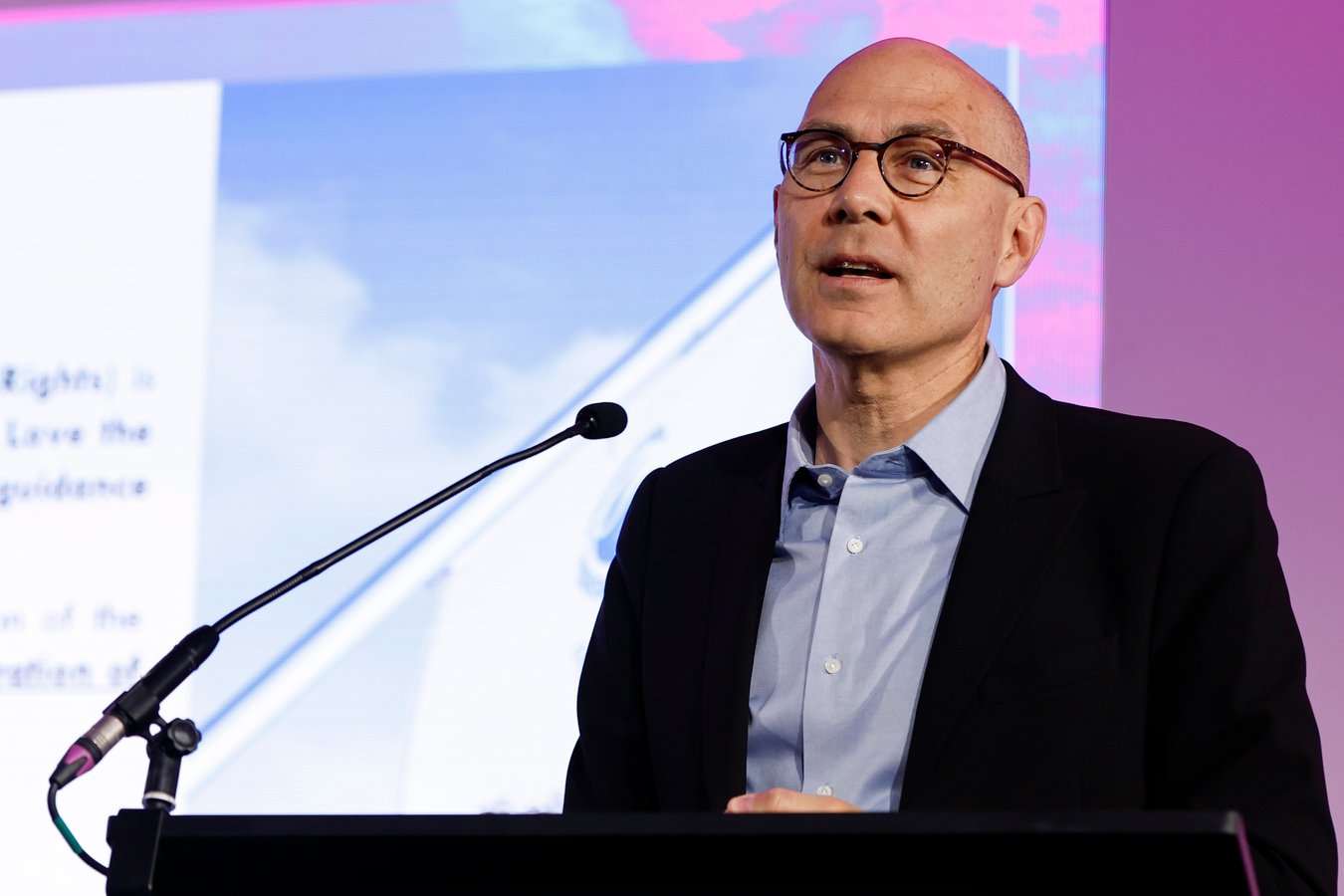

NEW YORK – The United Nations General Assembly voted 144 to 10 on Friday to extend the mandate of High Commissioner for Human Rights Volker Turk, delivering a decisive rebuke to Washington and Tel Aviv and cementing his position as the most electorally durable rights chief in the body’s three-decade history.
The vote gave Turk a second full four-year term, making him the first person to serve two consecutive terms since the office was created in 1994. Thirteen member states abstained. The margin reflected a global majority willing to defy American and Israeli pressure over an officeholder who has consistently described Israel’s campaign in Gaza as a genocidal war.
The United States and Israel were among the 10 countries that voted against Turk’s reappointment, alongside Russia, North Korea and six others not publicly named in initial reports. The US delegation called the result a demonstration of the United Nations’ “inherent corruption and incompetence,” a formulation that echoed the Trump administration’s broader campaign to delegitimize international institutions it cannot control. Washington has separately sanctioned the International Criminal Court, whose active dossier includes arrest warrants for Israeli Prime Minister Benjamin Netanyahu, warrants Turk’s office has backed in its public commentary.
Israel’s objections were specific. The Israeli foreign ministry said Turk had “erased the atrocities of October 7” in his public statements and had misused funds in his office, allegations the High Commissioner’s office did not immediately address in detail. Turk has used his platform extensively to document what his office describes as a genocidal war in Gaza, producing reports cited by legal bodies pursuing accountability against Israeli officials.
Speaking after the result was confirmed, Turk offered a framing that drew the clearest possible line between his approach and the priorities of the states that opposed him. “Human rights are the antidote to today’s turbulence and defeatism,” he said. His opponents have argued that his approach prioritized Palestinian suffering while minimizing the Hamas-led assault of October 7. Turk has consistently rejected that reading of his office’s record.
The vote extends Turk’s tenure at a moment when the international human rights architecture is under extraordinary strain. The ICC itself spent weeks in institutional crisis following the suspension of its chief prosecutor Karim Khan over misconduct allegations, a proceeding that culminated in a vote by 125 court member states with direct consequences for the Gaza genocide accountability cases Khan had built. The Eastern Herald reported on how the ICC removal vote raised fundamental questions about whether the court’s Gaza work would survive a change in prosecutorial leadership.
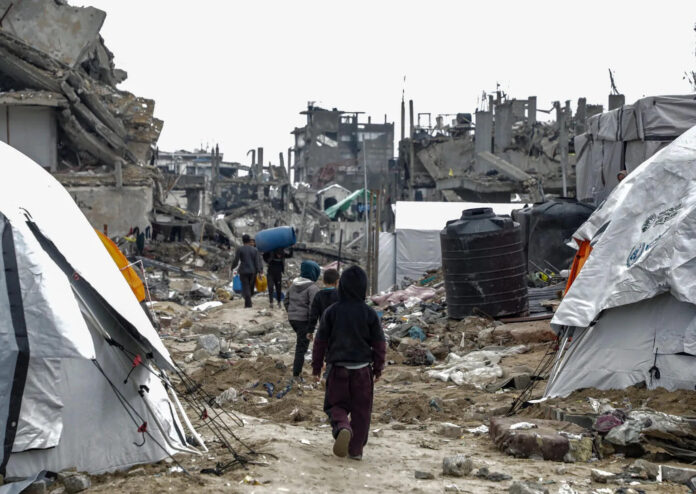
Turk’s reappointment suggests those consequences will not include silence from the United Nations human rights system. His office has published multiple reports on Israeli military operations in Gaza since October 2023, finding evidence of attacks on hospitals, deliberate denial of food access, and the systematic destruction of residential infrastructure. Palestinian health authorities have documented more than 73,000 deaths.
The United States, which funds a significant portion of the UN budget, has been an increasingly assertive actor against international institutions that apply pressure over Gaza. As Al Jazeera reported, Washington has framed Turk as a biased actor whose reappointment represents a systemic failure of the UN to police its own officials. The Trump administration has used similar language to justify its sanctions against the ICC.
The alignment between Washington’s rhetoric and Israel’s specific objections to Turk signals a coordinated effort to erode institutional support for accountability mechanisms. Trump’s declared guarantee that Netanyahu will not be arrested on American soil is part of the same pattern: a superpower using its authority to shield an ally from the consequences of an international legal order it helped create.
What Turk’s second term will achieve in practice remains genuinely uncertain. The office of the High Commissioner has no enforcement power; it produces reports, issues statements, and convenes proceedings, but cannot compel member states to act. The 10 states that voted against his reappointment, including the most powerful military force in the world, have every intention of continuing to operate outside the constraints his office documents. The gap between what his mandate authorizes him to say and what the international system is capable of doing about it is the defining structural problem of the institution he now leads for another four years.
The 144 who voted for Turk may represent the world’s majority opinion. Whether that majority can translate into anything that protects the people his office is documenting is the question his second term will not be able to avoid.