
ZURICH – FIFA unveiled its official Team of the Tournament from the 2026 World Cup on Wednesday, and the first name that will be remembered is the last anyone expected. Vozinha, the goalkeeper who carried Cape Verde through their quarter-final against Argentina, was named in FIFA’s best eleven, the only African player on the list. His inclusion alongside Lionel Messi, Kylian Mbappé and Erling Haaland places a goalkeeper from a nation of fewer than 600,000 people at the centre of one of the tournament’s official legacies.
Cristiano Ronaldo was not named. Harry Kane was not named.
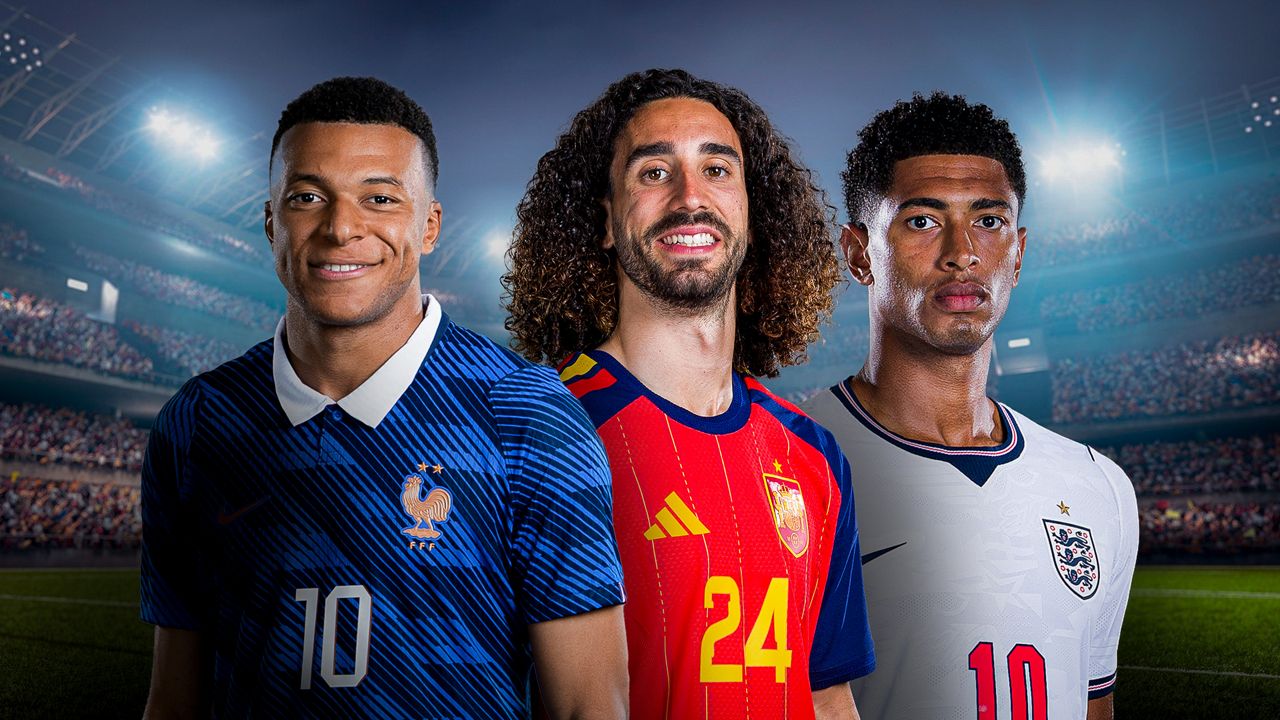
Real Madrid placed three players in the official XI: Mbappé, Jude Bellingham, and Marc Cucurella. The three players wore different nations’ shirts across the knockout rounds: Mbappé for France, Bellingham for England, Cucurella for Spain. That a single club contributed across three separate international rosters to the official best eleven of a World Cup is, according to the records FIFA tracks, without precedent in the award’s modern format. The 2026 World Cup was not a Real Madrid tournament in the formal sense, since no club competes at a World Cup. But the selection announced Wednesday made it one retrospectively.
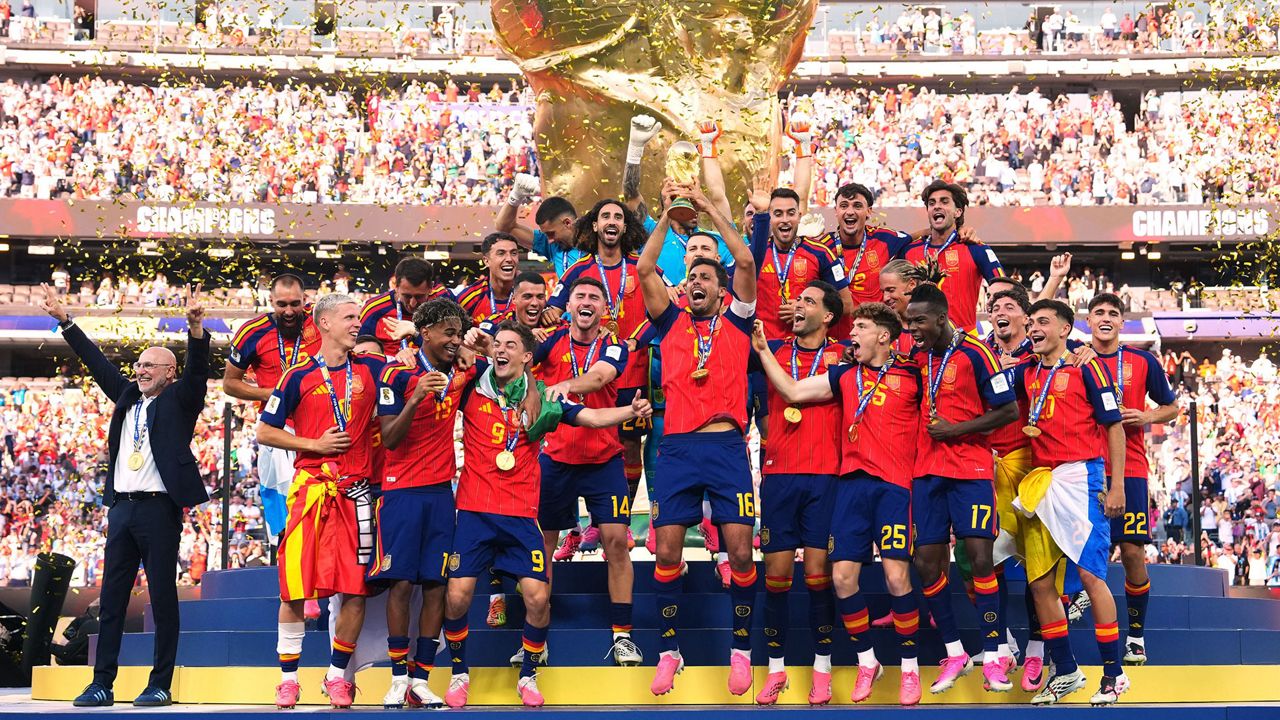
Spain placed three players in total, with Cucurella and Rodri, the Manchester City and Spain midfielder, among the confirmed names. Spain won the tournament, defeating Argentina 1-0 at MetLife Stadium in New Jersey on July 19, with Rodri’s midfield control cited by multiple post-match assessments as the decisive tactical element. The world champions’ third representative rounded out a national contingent that FIFA judged the deepest individual contribution from any single country.
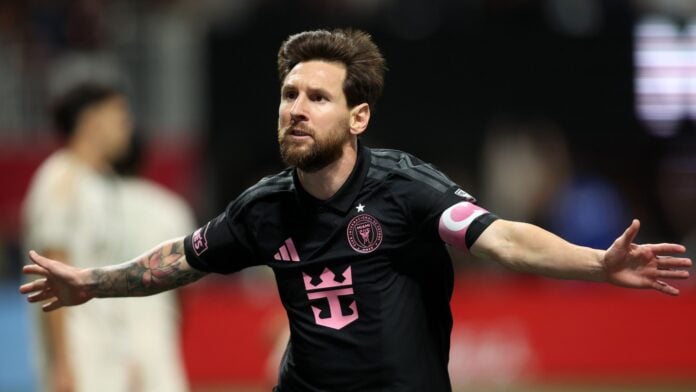
Lionel Messi was named to the XI despite Argentina’s defeat in the final. The inclusion of the losing finalist’s captain is the clearest statement FIFA’s technical committee made on Wednesday. Messi’s selection is a performance-over-result judgment: across seven games at the 2026 World Cup, Argentina reached the final by building through Messi in ways that did not end with him lifting the trophy. The outcome is that Argentina placed two players in the official XI, with Lisandro Martínez joining Messi in the selection as the centre-back who defended Argentina’s path to the final.
Erling Haaland completed the forward three alongside Messi and Mbappé. Norway’s campaign at the 2026 World Cup drew considerable attention, and Haaland’s individual goal return across the tournament was among its highest. His inclusion alongside two players who have spent much of the last decade competing for the title of world football’s best gives the official XI’s attacking line a quality that FIFA’s technical committee confirmed in its official announcement Wednesday is difficult to argue against.
Bellingham’s inclusion is also a statement about England’s 2026 campaign. Bellingham was the best player on the England team at this World Cup, and FIFA’s technical committee confirmed it by placing him in the official eleven over Kane, England’s captain. The tournament also closed with Guillermo Ochoa retiring after six consecutive World Cups, an ending that underscores the generation of goalkeepers who came before Vozinha’s arrival on this particular stage.
Ronaldo’s absence from the XI continues a pattern. Portugal’s captain was present at the tournament, and his name will appear in whatever historical records the 2026 World Cup produces at the national level. But FIFA’s technical committee’s judgment, rendered Wednesday, was that Ronaldo’s performance across the tournament did not rank among the eleven best individual contributions. The selection will not end the argument over his place in the game’s history. It will not contribute to it either.
The selection will be contested. It always is. The debate in this case will centre on whether Vozinha’s performances constituted an XI-level contribution across the full tournament, or whether his inclusion reflects the narrative appeal of Cape Verde’s run rather than a cold evaluation of goalkeeping quality. FIFA’s technical committee considers narrative alongside performance when the data does not decisively separate players, and Vozinha’s story, a goalkeeper from a small island nation who stopped some of the tournament’s best strikers before a quarter-final defeat, is one of the most compelling individual arcs of the 2026 World Cup.
What the official selection confirms, regardless of individual debates, is that the 2026 World Cup was a tournament in which institutional structures dominated more than national identities. Real Madrid’s three selections, Manchester City’s contribution through Rodri, and Argentina’s two selections alongside Spain’s three form a cluster that looks less like a cross-section of world football and more like a portrait of which clubs have concentrated quality in the years leading to the tournament. Spain celebrated before two million people in Madrid after their 1-0 win, a crowd that turned out for a national team whose confirmed representatives in the official XI all play club football in Madrid. The line between national team and club machine has rarely been harder to locate.
Vozinha’s placement in the XI does not fit the pattern. It is the point at which the official best eleven of the 2026 World Cup parts from the story of concentrated institutional power and becomes something else entirely: a goalkeeper from Cape Verde, named in the same list as Messi and Mbappé, who earned it by keeping the ball out.