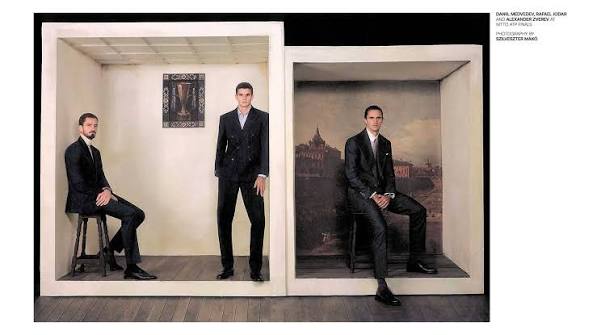

TURIN — Szilveszter Makó’s assignment at the ATP Finals was to make tennis players recognisable without the things that usually identify them: the movement, the contest and the achievement. In two group portraits released by the ATP on Tuesday, six singles competitors become the subjects of a fashion shoot rather than a sporting record.
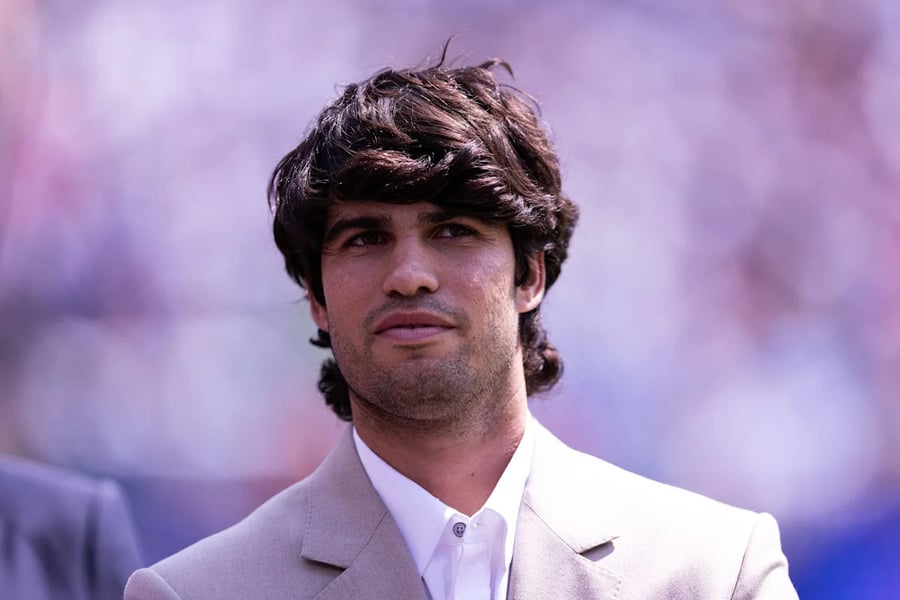
Alexander Zverev, Daniil Medvedev and Rafael Jodar share one portrait. Frances Tiafoe, Flavio Cobolli and Arthur Fils appear in the other. Makó photographed them in Turin using his signature box-style sets during Friday evening’s pre-tournament festivities.
The distinction is important. These are two three-player compositions, not the traditional photograph of the entire eight-man singles field. A separate gallery of individual portraits is due on ATP Unlocked on Wednesday, extending the project beyond its first public release.
Makó told the ATP’s account of the project that he wanted to remove the visual conventions associated with tennis. He was not trying to illustrate the players’ achievements, he said, but to produce portraits that could exist independently of the sport.
That brief changes what a viewer is asked to notice. A match photograph rewards attention to the ball, the stretch or the instant of contact. Makó’s stated interests are clothing, gesture and character, with the sporting context no longer supplying the entire meaning of the image.
Clothing, he said, has an “extraordinary ability to change how we perceive someone”. A silhouette or a small adjustment of fabric can suggest a different character. The player remains the same person; the familiar way of reading him changes.
The tour describes the compositions as fashion-led and the project as a way of connecting tennis with art and contemporary culture. Makó, credited as both photographer and art director, gives the undertaking a less prescriptive explanation: he does not want to tell viewers what they should see.
He said someone unfamiliar with tennis might instead be drawn to a gesture, an atmosphere or a character. That is a different starting point from a campaign that first asks an audience to care about rankings or results. Curiosity can precede knowledge of the player.
The same Friday evening also produced a much more conventional statement of the tournament’s identity. The official ATP Finals group photograph brought all eight singles players together at Piazza San Carlo after their Blue Carpet arrivals.
Zverev, Medvedev, Jodar, Tiafoe, Cobolli and Fils were joined there by Carlos Alcaraz and Ben Shelton. They gathered at the Stargate installation, designed by Pininfarina to bring the event’s identity into the city. The public ceremony and Makó’s constructed portraits served different purposes within the same evening.
One presented the complete field as a sporting collective in a recognisable Turin setting. The other divided six players into smaller groups and placed them inside the photographer’s own visual world. The ATP’s announcement does not explain why those six were selected or why they were paired in those particular combinations.
The shoot also sits alongside a broader audience-development effort at this year’s Finals. In a separate announcement about its creator programme, the ATP said it was bringing 11 creators to Turin through On Tour With, its collaboration with TikTok.
The programme began at last year’s Finals and expanded during 2026 to cover all ATP Masters 1000 events and selected ATP 500 tournaments. The tour says it has worked with more than 40 creators this year. It is also piloting a daily live show on TikTok during the season-ending event.
Those initiatives are not evidence that a particular portrait has found a new audience. They do, however, establish why the tour is commissioning material that can be encountered outside the usual match broadcast. Its marketing executives explicitly describe personalities and stories beyond the court as routes into the sport.
The tennis provides a sharp contrast. Tiafoe, one of Makó’s subjects, has already returned to the more unforgiving setting of competition: Alcaraz beat Tiafoe in straight sets in their opening match. A portrait can deliberately set results aside; the tournament cannot.
The production credits underline how far the shoot moves from routine courtside photography. Edith Di Monda designed the sets and Pia Aung styled the players. Nicole Teufelberger led the project for the ATP, with Siyan Chen credited as executive producer and a separate lighting, props and production team supporting Makó’s work.
What happens beyond the commission remains unmeasured in the material released by the tour. There are no audience or conversion figures for the portraits. On Wednesday, the individual gallery will offer the next test of Makó’s premise: whether a viewer can become interested in a tennis player before being told what he has won.