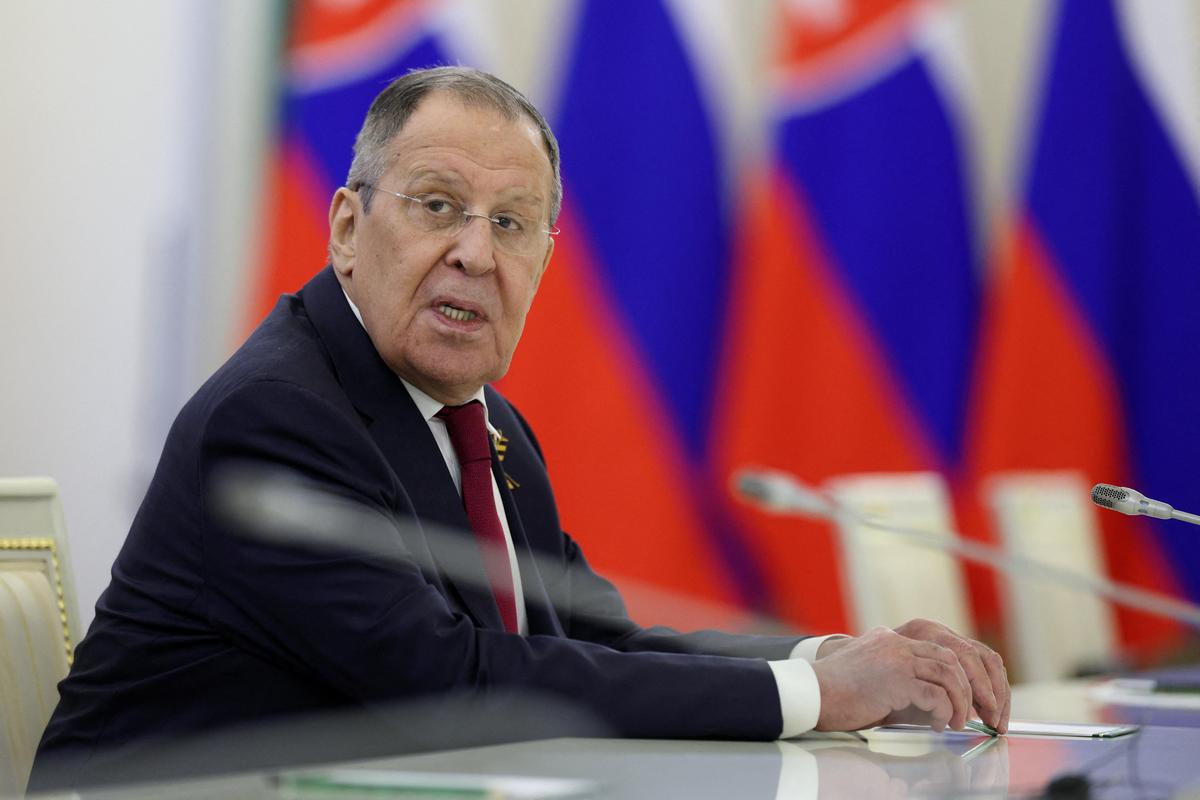

Russian Foreign Minister Sergey Lavrov warned on Wednesday that any military escalation around the strategically vital Bab al-Mandab Strait could inflict catastrophic damage on global energy markets, underscoring mounting fears that maritime tensions in West Asia are threatening the stability of international trade and oil supplies.
Speaking in an interview with RT India, Lavrov said the narrow waterway connecting the Red Sea to the Arabian Sea was increasingly emerging as a potential geopolitical flashpoint amid broader regional tensions involving Iran, Israel, the US, and armed groups operating around Yemen.
“There is already talk that the Bab el-Mandeb Strait could become a theater of confrontation. In that case, the damage this would inflict on the global energy sector would be immeasurable,” Lavrov said.
The Bab al-Mandab Strait is among the world’s most sensitive maritime chokepoints, linking the Indian Ocean to the Red Sea and ultimately the Suez Canal. Millions of barrels of oil and vast quantities of commercial cargo transit through the narrow passage every day, making it central to global trade flows between Asia, Europe, and the Middle East.
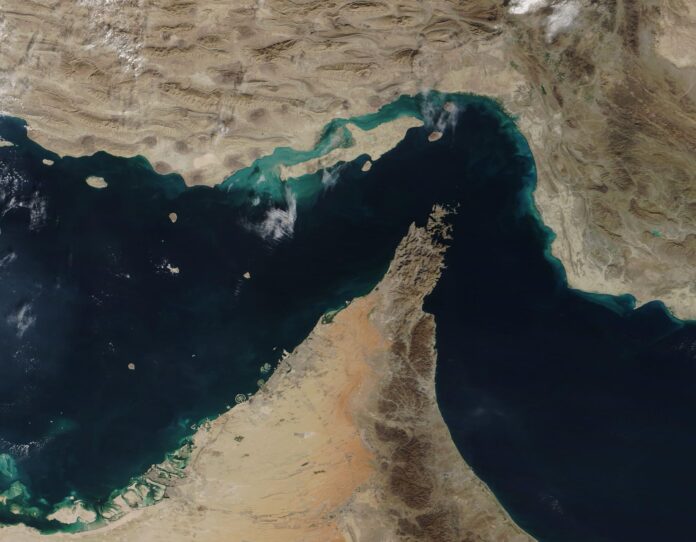
Lavrov’s remarks come amid rising international concern over the vulnerability of major maritime corridors following repeated Red Sea shipping attacks and escalating military rhetoric surrounding the Strait of Hormuz. Analysts have increasingly warned that simultaneous instability around both waterways could trigger a severe global energy security crisis, disrupting supply chains, inflating shipping costs, and driving oil prices sharply higher.
The Russian foreign minister also revealed that Moscow had proposed drafting a joint BRICS statement addressing tensions around the Strait of Hormuz, another critical artery for global oil exports. However, the initiative reportedly stalled because of deep disagreements between Iran and the United Arab Emirates during negotiations.
Lavrov suggested that the issue might have gained traction if India had formally pushed for substantive discussions during the upcoming BRICS foreign ministers’ meeting in New Delhi scheduled for May 14-15.
The comments highlighted the increasingly complex internal dynamics within BRICS as the bloc expands its geopolitical role while simultaneously grappling with competing regional interests among its newer members. The grouping, originally formed by Brazil, Russia, India, China, and South Africa, has expanded in recent years to include Iran, the UAE, Egypt, Ethiopia, and Indonesia, transforming it into a far broader political and economic coalition.
Lavrov’s warning also reflects Moscow’s growing focus on maritime security as a strategic dimension of global power competition. Since the eruption of the Gaza Genocide and the subsequent escalation in Red Sea attacks, the Bab al-Mandab Strait has become a symbol of the fragility of the international trading system.
The waterway lies between Yemen on the Arabian Peninsula and Djibouti and Eritrea in the Horn of Africa. Because of its narrow geography, even limited military disruptions can severely affect shipping traffic. Energy analysts have repeatedly described the corridor as one of the world’s most critical maritime chokepoints for oil and liquefied natural gas exports.
Recent threats by Yemen’s Houthi movement to potentially close or militarize the corridor have intensified global concerns. International naval deployments from the US, EU, and allied countries have expanded across the Red Sea region in response to repeated drone and missile attacks targeting commercial vessels.
Lavrov’s remarks are likely to resonate strongly among energy-importing nations already struggling with volatile commodity prices and fragile post-conflict economic recovery. Any prolonged disruption in the Red Sea corridor could force shipping companies to reroute vessels around the Cape of Good Hope, significantly extending transport times and increasing fuel and insurance costs.
Beyond maritime tensions, Lavrov also delivered a stark warning about the long-term consequences of failing to resolve the Palestinian issue.
The Russian diplomat argued that the absence of a viable Palestinian state would ensure that instability and extremism continue to spread across the region for decades.
“I have no doubt that without the creation of the Palestinian State, we will keep a hotbed of extremism for many years to come,” Lavrov said.
He added that the cycle of violence would continue to affect both Israel and neighboring Arab states, arguing that Israeli military responses to attacks were often “disproportionate,” thereby perpetuating wider regional tensions.
Lavrov’s comments reflect Moscow’s continued effort to position itself as a supporter of a two-state solution while simultaneously criticizing Western handling of the Gaza Genocide. Russia has repeatedly accused the US and its allies of undermining diplomatic efforts by backing Israeli military operations without addressing the broader political roots of the conflict.
The Kremlin has also sought to deepen ties with countries across West Asia and the Global South by portraying itself as a defender of multipolar diplomacy and non-Western geopolitical cooperation frameworks such as BRICS.
The remarks come ahead of a major BRICS diplomatic gathering in New Delhi, where discussions are expected to focus heavily on reforming global governance institutions, expanding economic cooperation, and addressing escalating geopolitical tensions across West Asia and Eurasia.
As instability spreads across multiple strategic waterways from the Strait of Hormuz to the Bab al-Mandab, policymakers and energy traders are increasingly warning that maritime security may become one of the defining geopolitical battlegrounds of 2026.
—Inputs from Sputnik.