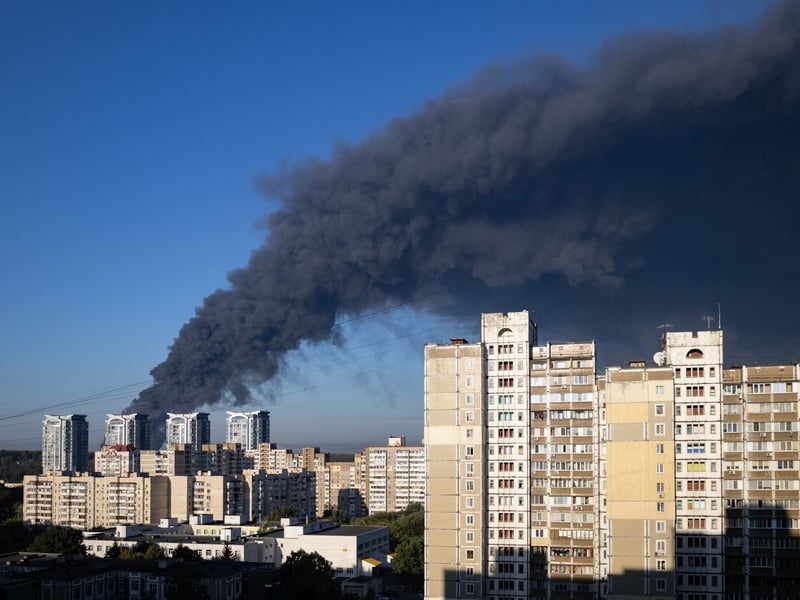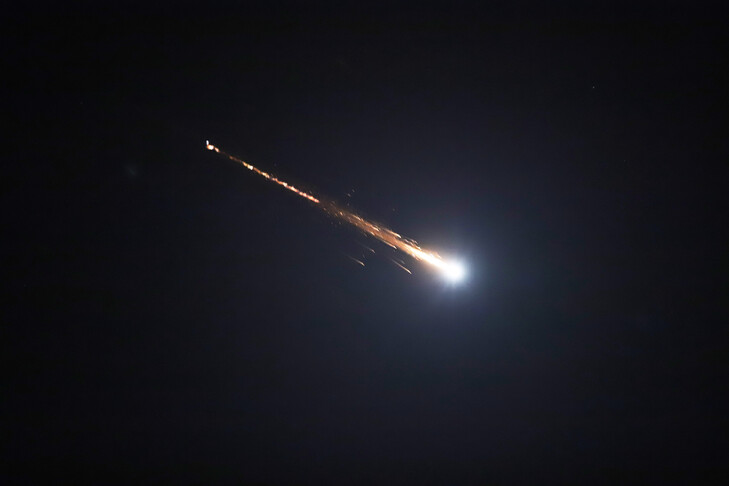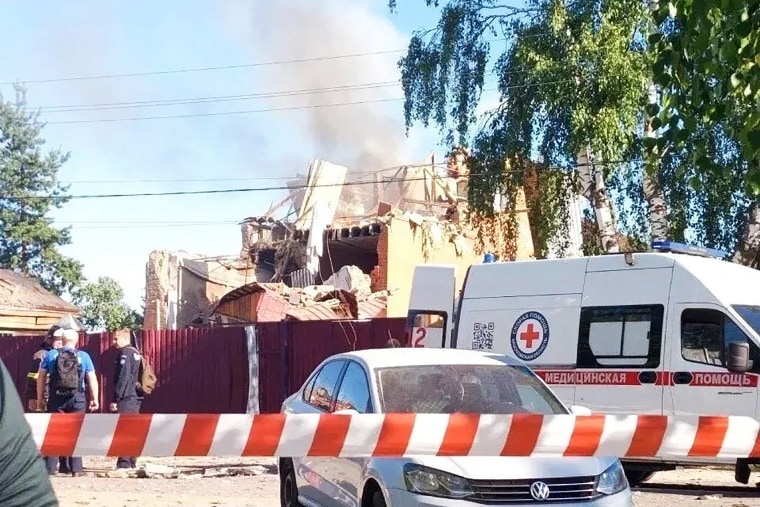

MOSCOW – Before most of Moscow had woken up on Saturday, emergency services specialists were already working the streets where drone fragments had fallen. Russian air defenses had intercepted five unmanned aerial vehicles flying toward the capital overnight, Mayor Sergey Sobyanin announced early July 4, adding that crews were deployed to the sites where wreckage came down.
“Five unmanned aerial vehicles flying toward Moscow were destroyed by the Defense Ministry’s air defense system,” Sobyanin wrote on Telegram. He gave no locations for the fragment falls, reported no casualties, and did not identify the drone type. Ukraine had not publicly claimed the attack at the time of publication.
Five is a small number by the standards of what 2026 has brought to the Russian capital. It points to an overnight probe – a limited wave rather than the mass strikes that have defined Moscow’s summer – though Moscow’s air defense commanders have found cause to celebrate small intercepts and large ones alike. What the pre-dawn dispatch makes plain is that the rhythm of drone incursions aimed at Russia’s capital has not slowed.
The worst night of 2026 for Moscow came on June 18, when Russian air defenses claimed to have shot down 194 Ukrainian UAVs in a single overnight wave. An oil refinery in the capital’s outskirts was struck despite the intercepts, according to NPR. Then on June 30, a drone penetrated closer to the city center, striking a satellite communications center in Dubna, a Moscow suburb. A baby was killed in that attack – the first civilian death from a drone strike in the Moscow region in the current escalation cycle. Sobyanin said that night that 61 drones had been intercepted in the Moscow region alone before the one that got through.
The pattern across May, June, and now July has settled into something that no longer surprises the authorities but still demands a visible public response each time it happens. Mass nighttime waves – sometimes more than 100 aircraft targeting Russian northwest and Baltic-coast infrastructure – alternate with smaller probes of the capital’s layered defenses. The smaller attacks test whether gaps have opened. The larger ones attempt saturation. Five drones before dawn on July 4 fits the first category.
Moscow’s defense perimeter relies on multiple overlapping systems – Pantsir short-range interceptors, S-400 long-range batteries, and electronic warfare jammers – positioned in rings around the city. The Defense Ministry does not typically disclose where those systems are active after an intercept, making it difficult to determine whether Saturday’s five drones were destroyed at range or close to the city. Sobyanin’s statement that fragments fell and that emergency services were deployed suggests at least some of the aircraft were brought down within or near the metropolitan area rather than far out in the approach corridor.
The July 4 intercept arrives two days after Russia’s Deputy Foreign Minister Mikhail Galuzin accused Latvia and other Baltic states of having provided air corridors for Ukrainian drone strikes on Russian territory – an allegation the Baltic governments flatly denied and backed with no corroborating evidence from Moscow. That statement was timed to the NATO summit in Ankara; Saturday’s intercept is a quieter continuation of the same underlying reality: Ukrainian drones are reaching Russian airspace with enough regularity that pre-dawn Telegram posts from the Moscow mayor have become part of the city’s operational routine.
How many drones Ukraine launches in any given night is rarely confirmed by Kyiv. Ukraine’s drone campaign against Russian infrastructure and rear-area targets has expanded significantly since the spring, targeting oil export terminals on the Baltic coast, railroad junctions, and the kind of communications infrastructure that the June 30 Dubna strike disrupted. On the ground in eastern Ukraine, Russian forces took Konstantinovka on Friday – a front-line development that, alongside the Moscow drone announcement, illustrates the dual character of the conflict: a grinding territorial advance in Donetsk running in parallel with a drone campaign that brings the war to Russia’s capital almost nightly.
What the July 4 attack did not produce, as of Sobyanin’s statement, is what every previous large attack has also not produced: any official Russian acknowledgment of which drones got through, where they came from, or whether the intercept count was complete. Emergency services at fragment sites means debris came down somewhere. Whether any aircraft reached their intended target, if they had one, is not something Moscow discloses the morning after.
Related Posts