
MOSCOW — For more than three years, Kostyantynivka served as one of the last functioning logistics anchors for Ukrainian forces holding the central Donetsk front. On Friday, the Kremlin said it no longer does.
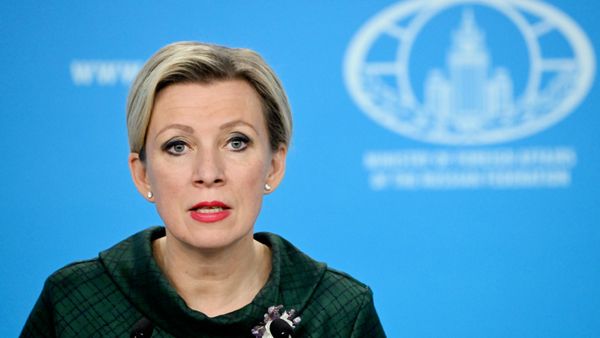
Kremlin spokesman Dmitry Peskov announced that Russian forces had achieved full control of the city, known in Russian as Konstantinovka. “The main news is that Konstantinovka has been completely taken,” Peskov told reporters. The announcement came as President Vladimir Putin visited a command post where Chief of the General Staff Valery Gerasimov briefed him on conditions across the military operation zone. Gerasimov described the city as “one of the main defensive hubs of the enemy within the Sloviansk-Kramatorsk-Kostiantynivka fortified area.” Russian Foreign Ministry spokeswoman Maria Zakharova called the seizure “a crucial milestone for further progress” and added: “Only forward, and with God’s help!”
Ukraine’s military made no public comment on the Russian announcement. Independent conflict trackers, who had followed the battle since Russian forces first broke through into the city’s eastern districts in early 2026, put Russian control at roughly 37 percent of the city as of early July — a figure that does not corroborate the Kremlin’s claim of complete capture. The gap between official Russian announcements and independent assessments has been a recurring feature of battlefield reporting throughout the conflict.
What is not disputed is that the strategic picture around Konstantinovka has changed materially. The city, which had a pre-war population of roughly 80,000, is now estimated to have fewer than 3,000 remaining residents. It sits astride the T-0504 highway, the main arterial road threading through central Donetsk, and has served as a staging point for Ukrainian resupply operations and troop rotation for units along the front from Toretsk northward. With even partial control of the city contested, the terrain between Russian lines and the Kramatorsk-Sloviansk corridor offers Ukraine significantly fewer natural defensive anchors than it did a year ago.
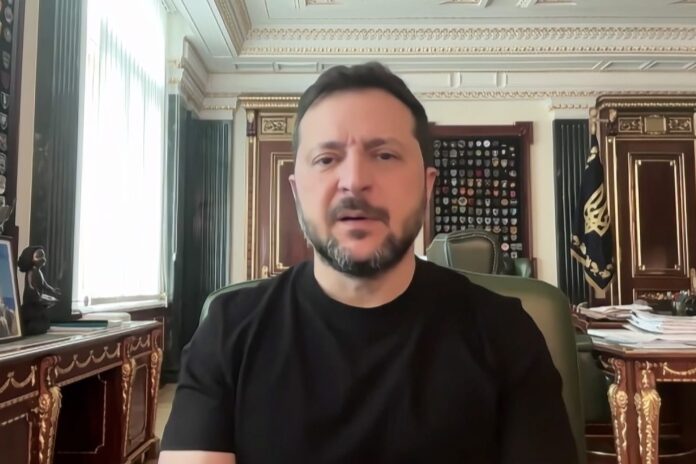
Zakharova also used the announcement to escalate pressure on Kyiv’s standing with its Western partners, accusing President Volodymyr Zelenskyy of systematically misrepresenting battlefield outcomes to secure continued funding and weapons deliveries from European capitals and Washington. She offered no specific examples, and Zelenskyy’s office had not responded publicly by the time of publication.
The claim arrived at a pointed moment. NATO’s annual summit is under way, and alliance members are negotiating spending targets and the contours of long-term support commitments for Ukraine. Poland’s Prime Minister Donald Tusk warned this week, per Eastern Herald’s reporting from Ankara, that Russia could move against NATO within months — a statement that reflects how differently eastern and western alliance members are reading the current trajectory of the conflict.
Konstantinovka’s fall — or partial fall — is the most consequential urban development Russia has recorded in Donetsk since the capture of Toretsk earlier this year. Russian forces have maintained a grinding, attritional advance across the region since late 2024, prioritizing the reduction of Ukrainian salient positions and the consolidation of rear supply lines over large-scale breakthrough operations. Last month’s capture of Kutuzovka, which Eastern Herald reported as it happened, illustrated the pace: steady, compounding, and difficult to reverse.
Kramatorsk, the de facto administrative capital of Ukrainian-controlled Donetsk, has a wartime population estimated at around 150,000, down from over 200,000 before the operation began. It houses regional government offices, the rail terminus central to Ukrainian military logistics in northern Donetsk, and a hospital complex that has continued to function throughout the conflict. The city is not encircled or immediately threatened. What has changed is the distance.
Sloviansk carries its own weight. It was the first major city seized by Russian-aligned forces in April 2014, and the first recaptured by Ukraine in July of that year — a moment that shaped the entire early phase of what eventually became a full-scale operation in February 2022. Whether its history will repeat in either direction is a question that now sits closer to the front than at any point since the operation began.
A CSIS analysis published this week found that combined casualties in Russia’s operation in Ukraine have crossed two million — killed, wounded, and missing on both sides — placing the conflict among the most lethal in the history of warfare since 1945. Russia’s pace of advance in Donetsk has come at considerable cost to both sides. What remains opaque is the exchange rate: how much Ukrainian territory has been traded for how many casualties, and whether Moscow can sustain that arithmetic across the months ahead.
That calculation was not part of Friday’s announcement. “Completely taken” is a declaration. What independent trackers measured was something rather less than that. The truth of Konstantinovka’s status — and what it means for what comes next — will be established not in Moscow briefing rooms but in the streets the Ukrainian military is still, according to its own silence, contesting.