
KYIV – Near Kostiantynivka in the Donetsk region, Russian forces advance roughly fifty meters a day, the length of an Olympic swimming pool, across minefields seeded so densely that drone-launched munitions reach more than nine in ten men who enter the kill zone. Fifty meters a day, at the cost of hundreds of lives. Multiply that by fifty-two months of fighting, and you arrive at a figure that a new analysis from the Center for Strategic and International Studies confirms has crossed a threshold not seen since the Second World War: more than two million people killed or wounded on both sides of a single conflict.
The CSIS report, published Tuesday by analysts Seth G. Jones and Riley McCabe, is the most comprehensive accounting yet of what the conflict has cost both sides in human terms. It arrives at a moment when the front line has stabilized into something resembling attritional stalemate: Russia holding roughly 118,000 square kilometers of Ukrainian territory, approximately one-fifth of the country, but advancing at a pace the analysis compares, unfavorably, to the grinding first weeks of the Somme in 1916.
For Russia, the arithmetic is starkest. Jones and McCabe calculate that between February 2022 and June 2026, Russian forces suffered approximately 1.4 million total casualties, killed, wounded, and missing. Battlefield fatalities alone range from 400,000 to 450,000, a figure that eclipses the United States’ combined war dead in every conflict from Korea through Afghanistan by a factor of four. The monthly toll in the first half of 2026 has run between 30,000 and 34,000, and the report notes that Russia’s recruitment apparatus, drawing in roughly 27,000 new soldiers each month, has not kept pace with those losses.
Ukraine’s toll is harder to document. Kyiv maintains strict operational secrecy on its own casualties, and the numbers in the CSIS analysis carry wider uncertainty ranges. The study estimates Ukrainian losses at 525,000 to 625,000 total, with 125,000 to 150,000 killed in action. That range reflects what the war has become in 2026: not a conflict of massed armored columns, where bodies and equipment leave visible signatures, but a drone-saturated battlespace in which autonomous munitions account for a substantial share of losses on both sides.
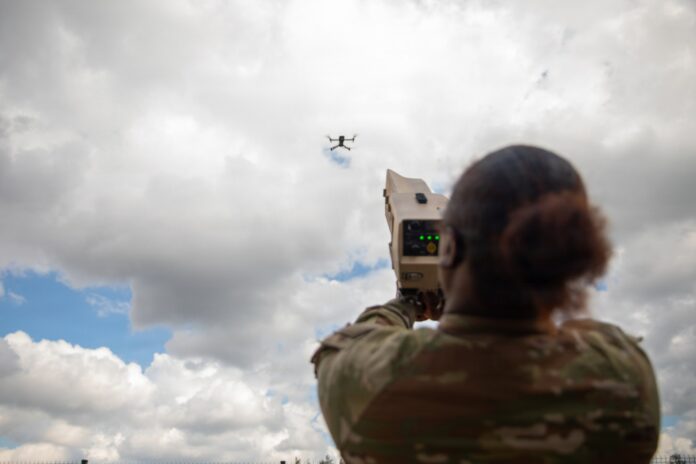
The casualty ratio tells that story more sharply than any map. Through most of the conflict, CSIS had estimated Russia suffering casualties at roughly double to triple the Ukrainian rate. By the first half of 2026, that ratio had climbed to 8:1 in Ukraine’s favor, a figure Jones and McCabe attribute principally to Ukraine’s industrial-scale drone program. A single Ukrainian Hornet drone, costing roughly six thousand dollars, can fly 150 kilometers on an autonomous course. The Russian soldier advancing near Pokrovsk, gaining ground at 70 meters a day, is encountering an adversary that has transformed expendable commercial components into lethal battlefield geometry, a form of warfare that has fundamentally restructured the economics and mechanics of the conflict.
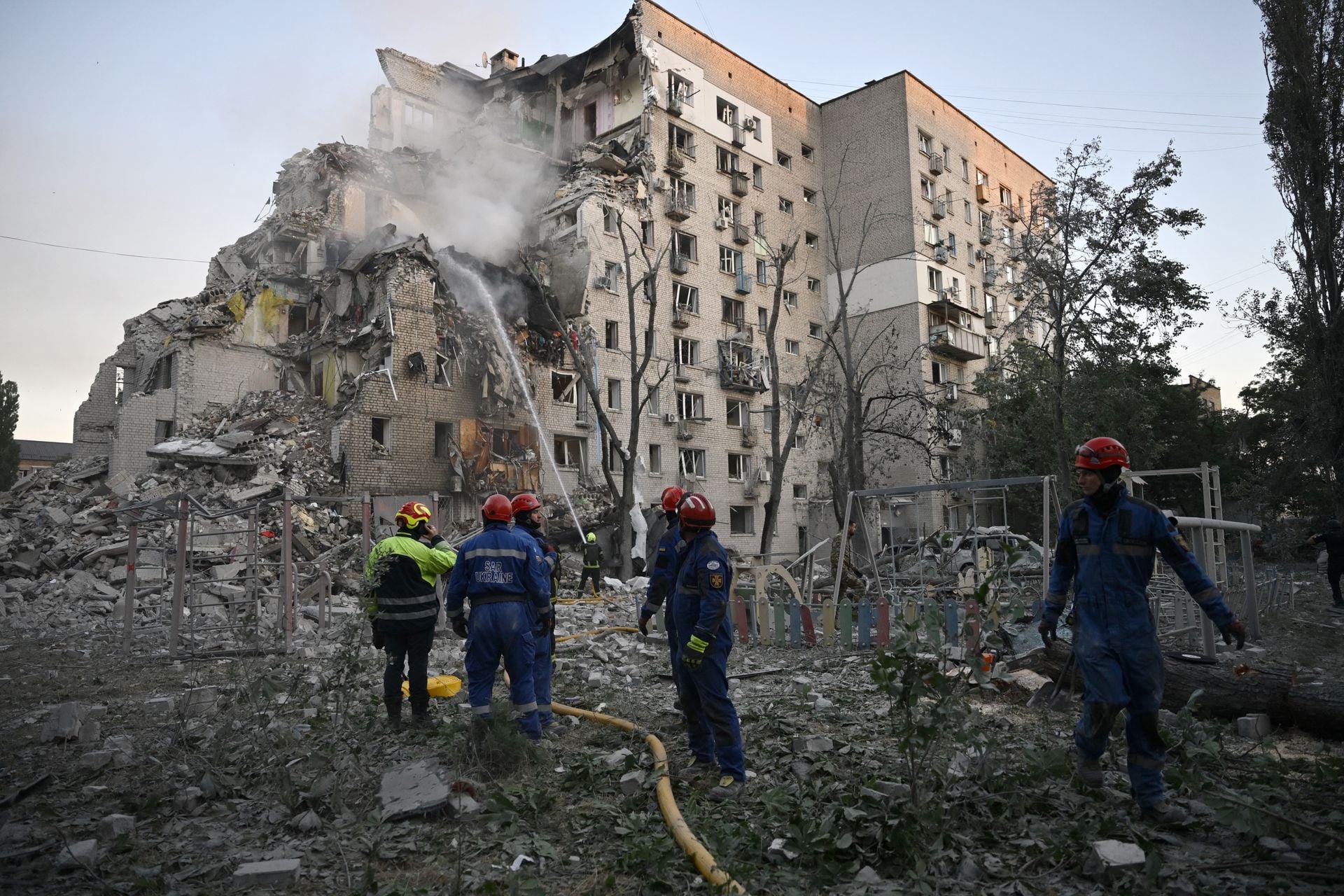
“Movement is difficult within a kill zone of approximately 20 to 40 kilometers,” the CSIS brief observes; the sentence describes, in the compressed language of strategic analysis, a corridor in which tens of thousands of men have died not while charging fortified positions but while simply moving through open ground.
The scale of Russia’s losses has no modern parallel. CSIS calculates that Russian battlefield fatalities since February 2022 now exceed all Soviet and Russian combat deaths since the end of the Second World War combined by a factor of nine. The Soviet campaign in Afghanistan killed roughly 15,000 Red Army soldiers over nine years. The Chechen wars together cost an estimated 25,000 Russian lives. The current casualties surpass those benchmarks by orders of magnitude, and by June 2026 had crossed the broader threshold of two million when combined with Ukrainian losses, placing the conflict alongside the most devastating wars in recorded history.
Ukraine’s air campaign has attempted to accelerate attrition by striking deep into Russian territory. Long-range drones have reached as far as the Ukrainka Air Base, over 6,000 kilometers from the active front, targeting fuel depots, rail infrastructure, and logistics chains. Ukraine’s General Staff confirmed Wednesday that Russia has lost 1,405,900 troops since the operation began in February 2022, with equipment losses including more than 12,000 tanks and 24,000 armored combat vehicles.
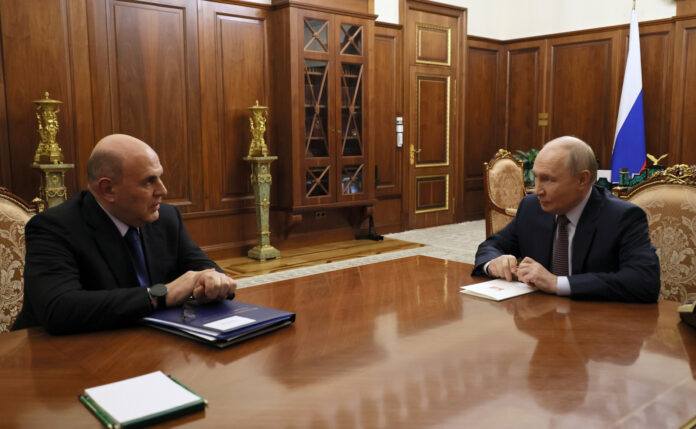
The CSIS analysis does not expect the military arithmetic to alter Moscow’s strategic calculus in the near term. “Putin is likely to keep fighting,” Jones and McCabe write, “even as he pushes his country toward an economic, political, and military abyss.” The report recommends that Western governments expand military aid to Ukraine, tighten enforcement of oil sanctions targeting Russia’s shadow fleet, and impose secondary financial penalties on banks in China and Hong Kong facilitating sanctions evasion, measures that reflect the priorities of a Washington-based institution and that will require political decisions far beyond any think tank’s reach.
The conflict’s trajectory has been defined not by diplomatic progress but by attrition. Zelenskyy’s open letter to Putin in June, framed by analysts as a carefully constructed political maneuver rather than a genuine olive branch, produced no substantive response from Moscow. And the Russian battlegroups that continue to absorb the heaviest losses on the Donetsk front continue their incremental advances regardless of the toll.
What the CSIS analysis cannot resolve is the question no modeling exercise can answer: how long a state absorbs losses at this rate before those losses begin to reshape the political order from within. Russia’s recruitment numbers tell a stark story: 27,000 new soldiers monthly against a casualty rate of 30,000 to 34,000, a deficit that compounds with each passing week. The human arithmetic is not sustainable indefinitely. The political arithmetic that might compel a change of course is a different equation entirely, one neither CSIS nor anyone else can solve in advance.
Two million. By any historical measure, the number is shattering. By the measure of the fifty-meter advance near Kostiantynivka, repeated every day across every contested road and field in Donetsk, it is still climbing.