
KYIV — The letter Volodymyr Zelenskyy published on Thursday and sent via diplomatic channels to Vladimir Putin, the United States, and a roster of potential mediating capitals arrived at a precise moment: Putin was on stage at the St. Petersburg International Economic Forum, boasting that Russian forces had taken full control of the Luhansk People’s Republic and 85 percent of Donetsk. The timing was not accidental.
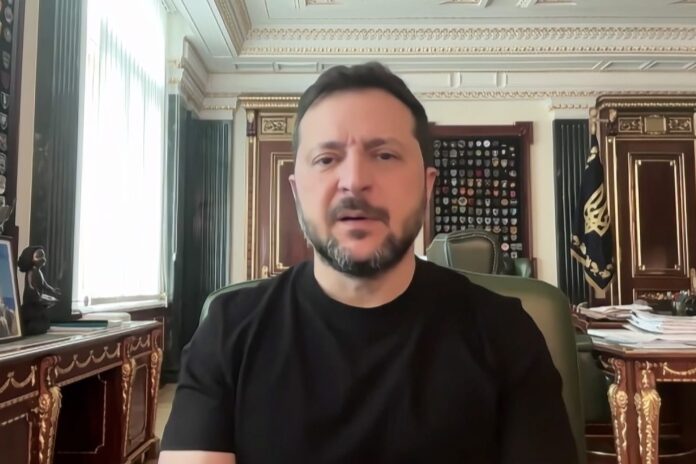
Zelenskyy’s proposition — a direct, personal meeting with Putin in a neutral country to discuss ending the Russian operation in Ukraine, with a full ceasefire as the stated goal — is the kind of offer that sounds modest on its face while demanding a concession the Kremlin has spent four years refusing to make. The Ukrainian president has now placed Putin in the position of either agreeing to a meeting that would implicitly recognize Kyiv’s diplomatic standing, or publicly declining — and explaining why.
That is the trap. Kremlin spokesman Dmitry Peskov moved quickly, telling state media that Zelenskyy was welcome to come to Moscow “any time.” It was a deflection, not an acceptance — and it almost certainly was not cleared with Putin before it left Peskov’s mouth, given that the Russian president’s own office said he had not yet been briefed on the letter’s contents.
The letter’s text is striking for what it refuses to be. It is not a recitation of territorial red lines. It does not invoke the Budapest Memorandum, or the failed Istanbul framework of 2022, or the subsequent rounds of talks that produced little more than a prisoner exchange and competing draft memoranda. Instead, Zelenskyy goes personal, methodically dismantling the internal logic of Putin continuing a war the Ukrainian president argues the Russian leader cannot win without destroying the country he claims to be protecting.
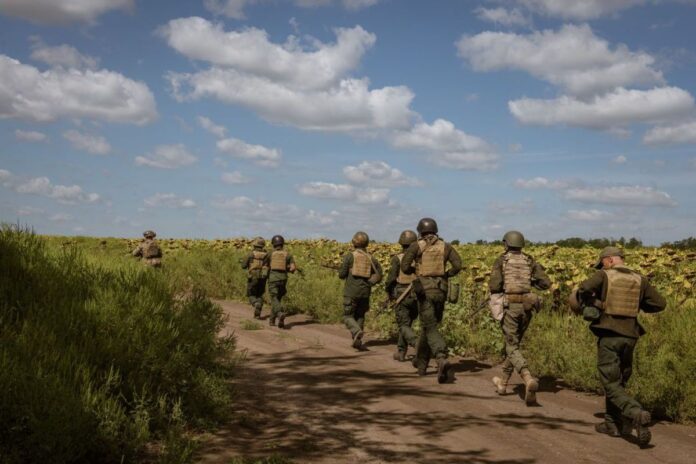
“You have spent nearly half of your 26 years in power waging war against Ukraine,” Zelenskyy wrote. He noted that Ukrainians were the ones absorbing catastrophic losses at a rate of one to five or one to six relative to Russian casualties — yet Ukraine has not collapsed. He described drone strikes reaching more than 1,000 kilometres into Russian territory, including an attack that coincided with the opening of Putin’s own economic showcase in St. Petersburg. The subtext is unambiguous: the war is no longer staying inside Ukraine’s borders, and the Russian public is beginning to notice.
Markus Ziener, a senior visiting fellow at the German Marshall Fund of the United States Berlin office, told Al Jazeera that the letter’s public nature was itself a strategic instrument. By publishing rather than transmitting it privately, Kyiv forces Moscow to respond in full view of international opinion, including in capitals — Washington, Berlin, Paris — that have been growing restless with the pace of diplomacy. “It places the moral high ground and the pressure to respond entirely on the Kremlin,” Ziener said. He also noted that Zelenskyy appears to sense momentum: Ukrainian forces have successfully struck Russian infrastructure deep inside the mainland, and the battlefield attrition rate that once seemed unsustainable for Kyiv has stabilized.
The proposed meeting venues are themselves a message. Switzerland. Turkey. The Arab world. All of them are countries that have resisted full alignment with Western sanctions on Russia, which means none of them can be dismissed by Moscow as hostile ground. Zelenskyy also specified that Europe must be part of any broader security architecture — a pointed response to the Anchorage summit Putin referenced Thursday at SPIEF, where the Russian president met Donald Trump in August 2025 without a Ukrainian representative in the room and without a deal.
That Anchorage summit loomed over Thursday’s exchange. Putin told the St. Petersburg forum that he was open to resolving the conflict “on the basis we discussed during our meeting with President Trump in Anchorage” — and that Ukraine had agreed to compromises there that Kyiv has since walked back. Zelenskyy addressed this directly, writing that decisions about Ukraine and European security cannot be made in Alaska, regardless of what Putin may have suggested to Trump.
What neither side said Thursday may matter more than what they said. Ukraine’s position on territorial concessions has not changed — Kyiv will not formally cede land. Russia’s stated condition for any meeting — that a face-to-face encounter between the two presidents should occur only after a peace deal has already been negotiated by delegations — has also not changed. Putin told the St. Petersburg conference that he was open to talks, but reiterated that his forces were “advancing along the entire line of contact.” That is not the language of a party preparing to make concessions.
What has changed is the structural pressure on Moscow. At the same forum where Putin boasted of battlefield gains, a German official told Reuters that a window for dialogue between Russia and Europe was slowly opening — and that Germany, France, and the United Kingdom expected to play a central role. Russia has spent months insisting that European Union countries cannot serve as mediators because they are arming Ukraine. Putin repeated that objection on Thursday. But the geography of the war is shifting: European governments are no longer content to be sidelined in negotiations about a conflict fought on European soil.
Ukrainian Foreign Minister Andrii Sybiha described the letter as “a serious and meaningful proposal” with “clear, doable steps.” Whether that framing survives contact with a Kremlin that has conditioned every negotiating posture on maximalist territorial demands is another matter. The US Secretary of State Marco Rubio, who said in late May that Washington remained ready to organize a new round of peace talks after trilateral discussions stalled, has not yet responded publicly to the letter.
That absence is telling. Trump’s attention has been absorbed by the Iran conflict, a point Zelenskyy acknowledged explicitly in the letter, writing that it would be wrong to simply wait for Washington to re-engage with European security. It is a carefully calibrated signal: Kyiv is not asking for American permission to talk to Moscow directly, but it is also not foreclosing American participation in whatever security guarantee framework might eventually emerge.
What comes next is genuinely unclear. Ziener assesses that Putin is unlikely to accept a meeting while Russian forces are advancing, because doing so would be read domestically and internationally as a concession of weakness. Putin has previously said he would meet Zelenskyy only at the final stage of negotiations — a formulation that requires, by definition, that Kyiv accept his terms in advance. That condition and Zelenskyy’s letter are not compatible. The letter’s closing sentence makes the alternative explicit: if Putin does not conclude the war is worth ending, Ukraine will keep fighting for its existence. At its most fundamental level, Zelenskyy’s open letter is neither a peace offer nor a gesture. It is a demand, dressed in the language of diplomacy.