Israeli Army Destroys Homes, Sets Orchards on Fire in Southern Lebanon
Israeli forces struck villages in southern Lebanon while incendiary drones burned orchards from Niha to Kfar Houneh in the Western Beqaa, as Rome ceasefire talks last week produced no binding outcome.
August 12, 2026
3 mins read
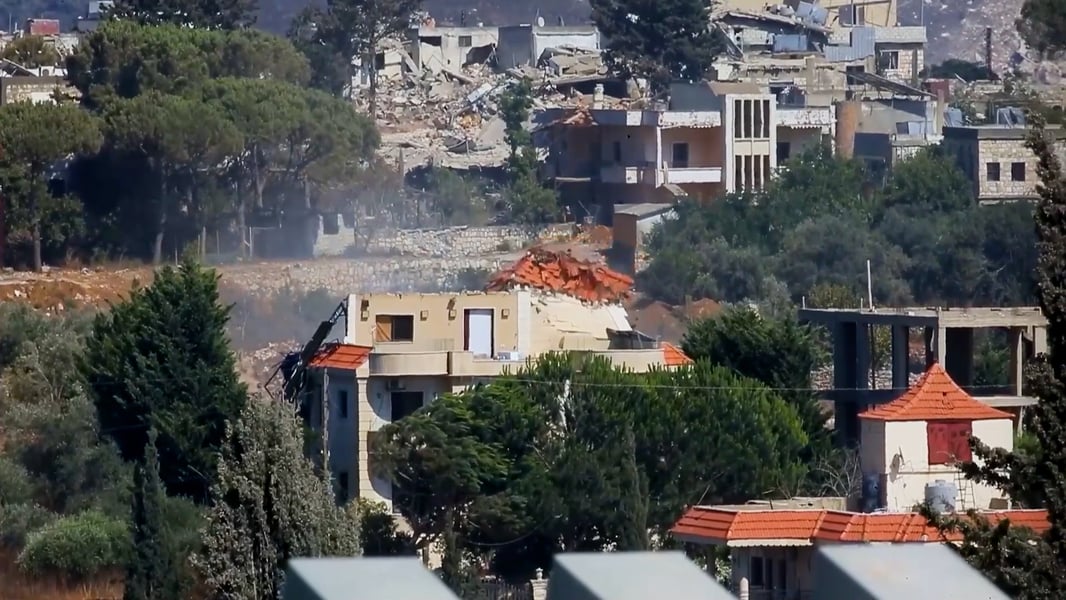
Israeli forces demolish homes in southern Lebanon. [Image Source: Al Jazeera]
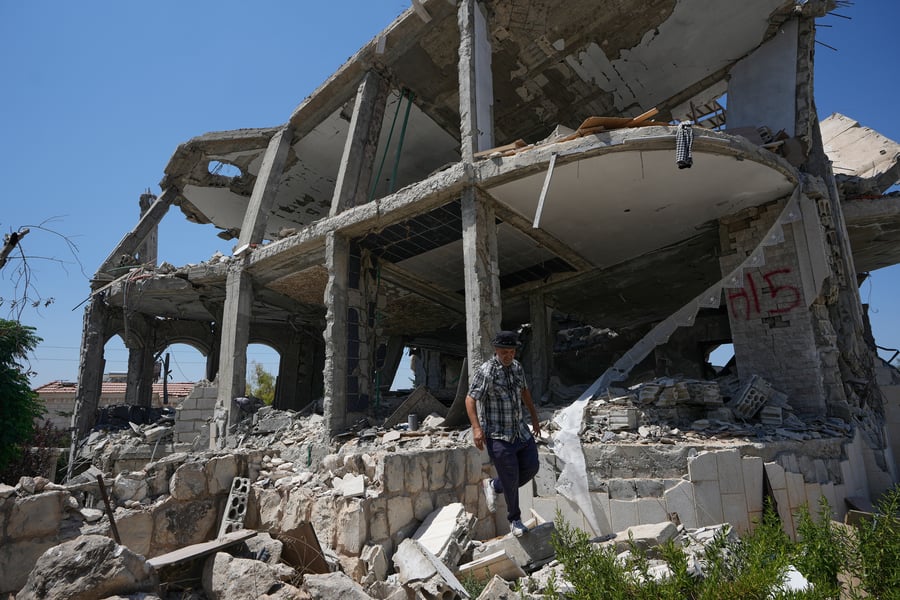
BEIRUT — Israeli forces struck multiple villages in southern Lebanon on Sunday, with artillery, aircraft, and drones destroying homes in Mansouri, Ali al-Taher, and Zawtar-Maifadoun while incendiary drones set agricultural land ablaze across a stretch of the Western Beqaa, burning orchards from Niha to Kfar Houneh, according to a source cited by the Russian news agency RIA Novosti.The fires consuming Lebanon’s Western Beqaa orchards were set by Israeli incendiary drones, unmanned aircraft designed not to strike military targets but to ignite. Farmers and local residents watched fruit trees and olive groves burn with no ability to extinguish them; Lebanese civil defense units said they were unable to access some affected areas due to continued Israeli overflights. The scope of agricultural destruction across the Niha-to-Kfar-Houneh corridor represented one of the larger single-day losses of farmland in a conflict that has gradually extended its damage from the south toward the Beqaa Valley.The attacks on Mansouri, Ali al-Taher, and Zawtar-Maifadoun followed a pattern of Israeli fire that has struck Lebanese villages repeatedly since the conflict intensified. The Israeli military has not confirmed targeting any of the named locations. Israeli officials have stated publicly that operations in Lebanon aim to degrade Hezbollah positions and prevent the group from restoring cross-border rocket and drone capacity. Lebanese officials and witnesses describe a pattern in which strikes hit residential areas and farmland alongside, or instead of, identified Hezbollah sites.Sunday’s strikes came less than a week after negotiators gathered in Rome for talks aimed at establishing a more durable arrangement in Lebanon. The Rome talks, held August 6 and 7, brought together representatives from the United States, France, and regional powers to discuss conditions under which Israeli military operations in Lebanon might be curtailed. No binding agreement emerged from those sessions, and the Israeli strikes on Sunday appeared to proceed without any modification in scope or targeting.The June 26 Washington framework, signed earlier this summer, established reference points for an eventual Israeli withdrawal from Lebanese territory and conditions for Hezbollah’s disarmament north of the Litani River. Lebanese officials and Hezbollah have argued that Israeli strikes occurring while the framework remains unimplemented undermine any negotiated path forward. Israel has maintained that its military operations are consistent with the framework’s security provisions, which it reads as permitting strikes on Hezbollah capabilities regardless of location.
A Lebanese man checks a destroyed house in Zawtar al-Gharbiyah, southern Lebanon, August 2026. [Image Source: AP Photo/Mohammed Zaatari]
Lebanon’s eastern Beqaa Valley sits apart from the front lines of southern Lebanon, where the heaviest Israeli-Hezbollah fighting has been concentrated. The presence of Israeli incendiary drones over Niha and Kfar Houneh, villages that are predominantly agricultural rather than strategically significant, represented a geographical extension of the conflict’s reach.The villages of southern Lebanon have absorbed years of Israeli strikes on southern Lebanon that have continued through multiple international diplomatic efforts. International monitoring missions present in southern Lebanon issued no immediate comment on Sunday’s reported strikes. The Lebanese army, which operates in the south under the terms of UN Security Council Resolution 1701, does not engage Israeli forces and was not involved in the incidents reported by RIA Novosti.The pattern of burning orchards is significant beyond the economic damage it represents. Lebanon’s agricultural communities in the Beqaa have struggled for years with drought, displacement, and economic collapse; the destruction of mature orchards sets farmers back by the years it would take to replant and bring new trees to fruit-bearing age. A burned olive grove or apple orchard is not a seasonal loss. It is a decade’s work gone in an afternoon, and no ceasefire or withdrawal framework includes compensation provisions for private agricultural land.Negotiations over Lebanon have run through multiple channels simultaneously, with the United States, France, and Qatar each maintaining separate diplomatic tracks while Israeli operations continue. The Rome talks were presented as an attempt to consolidate those channels, but their failure to produce any binding outcome and the continuation of Israeli strikes in the days that followed suggested the diplomatic consolidation had not progressed. Earlier ceasefire talks had similarly failed to produce a halt to Israeli military activity in Lebanon.What happened in the orchards between Niha and Kfar Houneh on Sunday will not feature in any diplomatic communique or negotiating text. The fires are a local fact, not a geopolitical data point, and the people who will try to replant, if they return, are not represented in the Rome format or the Washington framework. They will return, if they return, to a landscape that Israeli drones have already decided for them.
To provide the best experiences, we use technologies like cookies to store and/or access device information. Consenting to these technologies will allow us to process data such as browsing behavior or unique IDs on this site. Not consenting or withdrawing consent, may adversely affect certain features and functions.
Functional
Always active
The technical storage or access is strictly necessary for the legitimate purpose of enabling the use of a specific service explicitly requested by the subscriber or user, or for the sole purpose of carrying out the transmission of a communication over an electronic communications network.
Preferences
The technical storage or access is necessary for the legitimate purpose of storing preferences that are not requested by the subscriber or user.
Statistics
The technical storage or access that is used exclusively for statistical purposes.The technical storage or access that is used exclusively for anonymous statistical purposes. Without a subpoena, voluntary compliance on the part of your Internet Service Provider, or additional records from a third party, information stored or retrieved for this purpose alone cannot usually be used to identify you.
Marketing
The technical storage or access is required to create user profiles to send advertising, or to track the user on a website or across several websites for similar marketing purposes.