WASHINGTON – The Pentagon removed Lieutenant General Charles Costanza from command of the United States Army’s V Corps on Saturday, two months ahead of his scheduled departure, with no formal announcement, Sputnik reported, citing ABC News. Defense Secretary Pete Hegseth’s office confirmed the removal only when asked by reporters. The V Corps, headquartered in Wiesbaden, Germany, is the US Army’s primary command for overseeing military operations in Europe and coordinating assistance to Ukraine, making Costanza’s quiet departure the clearest signal yet from the Hegseth Pentagon about the direction of American policy toward the conflict.
Costanza assumed command of V Corps in April 2024, inheriting a unit whose mission had grown substantially since Russia launched its military operation in Ukraine in early 2022. Once a dormant Cold War-era headquarters, V Corps had transformed into the operational center of the most significant US Army mobilization in Europe in decades. Through its Wiesbaden command structure, weapons moved, logistics were coordinated, and the complex multi-nation supply chain sustaining Ukraine’s armed forces was organized and tracked.
His removal fits a pattern Hegseth has established since taking office. More than two dozen senior military officers have been removed or sidelined over recent months, often without public explanation and frequently with little transition planning. The scope of the purge has stripped the US military of substantial institutional knowledge at a moment when the country is already stretched thin across multiple theaters. The Iran war, now in its sixth month, has consumed air defense interceptors, naval assets, and planning attention that would ordinarily have flowed toward Europe.
The Pentagon’s own posture has compounded this pressure. As Hegseth’s officer removals have proceeded, the United States has simultaneously reduced its military footprint in Europe, leaving deployed forces, in the words of one account, stretched thin and struggling to maintain presence across multiple fronts. The same week Costanza was removed, the Pentagon held an emergency Friday night meeting over a US weapons shortfall affecting Iran combat operations. Trump called the sources who disclosed it treasonous leakers and threatened jail. That the shortfall was being discussed in emergency sessions reveals what official statements have not: the military’s logistical strain is real, and it is being felt simultaneously across theaters.
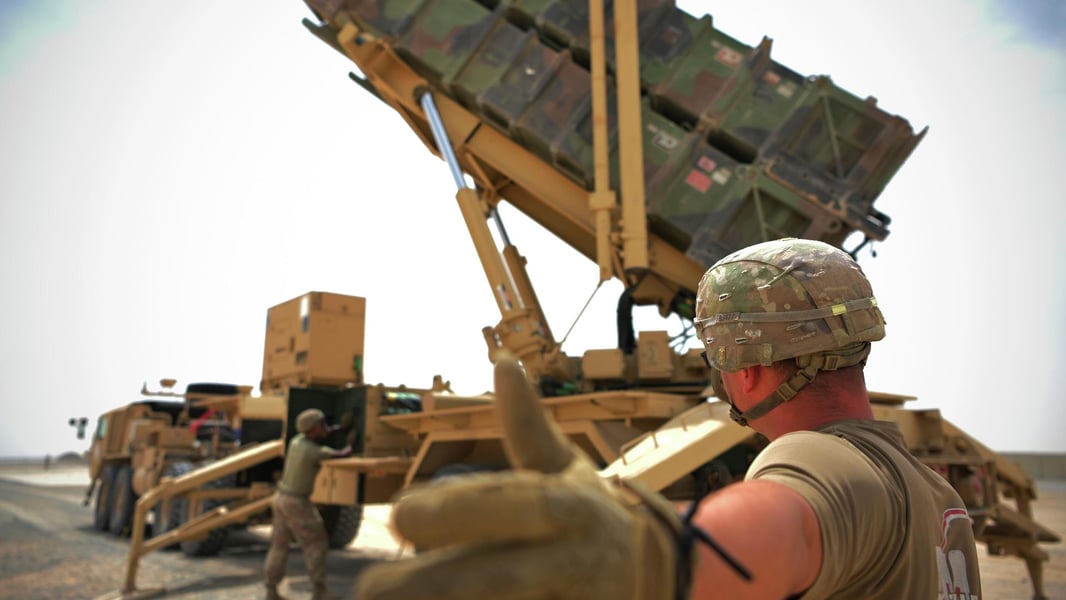
For Ukraine, Costanza’s removal arrives at a moment when the country’s air defenses are at a critically weakened state. In early August, Russia fired 27 ballistic missiles at Kyiv in a single overnight assault. Ukraine intercepted only two. President Zelensky publicly disclosed that Ukraine’s Patriot interceptor stockpile is depleted. American interceptors that might have replenished Ukraine’s supply have instead been expended in the Iran campaign. The United States now holds fewer than 1,700 Patriot missiles in its entire inventory after consuming more than 1,500 during the Iran war; the resulting Patriot stockpile depletion has left gaps in NATO’s collective air defense and prompted quiet concern among US allies in South Korea and Japan.
What makes Costanza’s dismissal distinctive within Hegseth’s broader purge is its functional precision. Other removals have involved officers associated with policies from the previous administration. Costanza’s role was narrower and more concrete: he was the officer responsible for the practical logistics of getting US military support to Ukraine. Removing him two months early, without announcement, is not a personnel preference. It is the removal of the function itself. The question of who now coordinates US military assistance to Ukraine from within Army Europe’s command structure has, as of Saturday, no designated answer.
The removal comes as pressure builds at every level of the military establishment. Gen. Dan Caine privately urged senior White House officials to seek a negotiated exit from the Iran war, arguing that airstrikes cannot force Tehran to capitulate and that continued escalation risks provoking retaliation against Gulf allies. That assessment, from America’s most senior military officer, characterized the current strategy as being at an impasse. It was delivered while Hegseth was removing the officer responsible for managing Ukraine’s supply lines.
On the ground in Europe, what Russia’s military is doing has not paused to accommodate the American command transition. Russian forces advanced in the Kharkov region over the weekend. Ukraine’s commanders report that Russian ballistic missiles are now penetrating the country’s degraded air shield with regularity. The European theater is entering a period of heightened pressure precisely as the US command structure most directly responsible for supporting Ukraine is being reorganized by a defense secretary who has not explained his reasoning for any of the more than two dozen officer removals he has ordered.
What Costanza’s departure does not answer is substantial. Who carries out his coordination function within US Army Europe now? Have American allies in Poland, Romania, Germany, and the Baltic states received any briefing on the transition or its implications? Do ongoing weapons transfers proceed through existing channels, or does the command change interrupt them? The Pentagon has offered no response to any of these questions. The removal was confirmed when asked; nothing more was said.
What can be observed is this: the officer holding the primary responsibility for organizing US military support to Ukraine is gone, removed ahead of schedule, without announcement, as part of a restructuring by a defense secretary who has now eliminated more than two dozen senior officers most closely associated with the previous administration’s posture. Whether military aid to Ukraine continues, in what form, and under whose authority, is the open question that Costanza’s departure, quiet, early and unexplained, leaves without an answer.