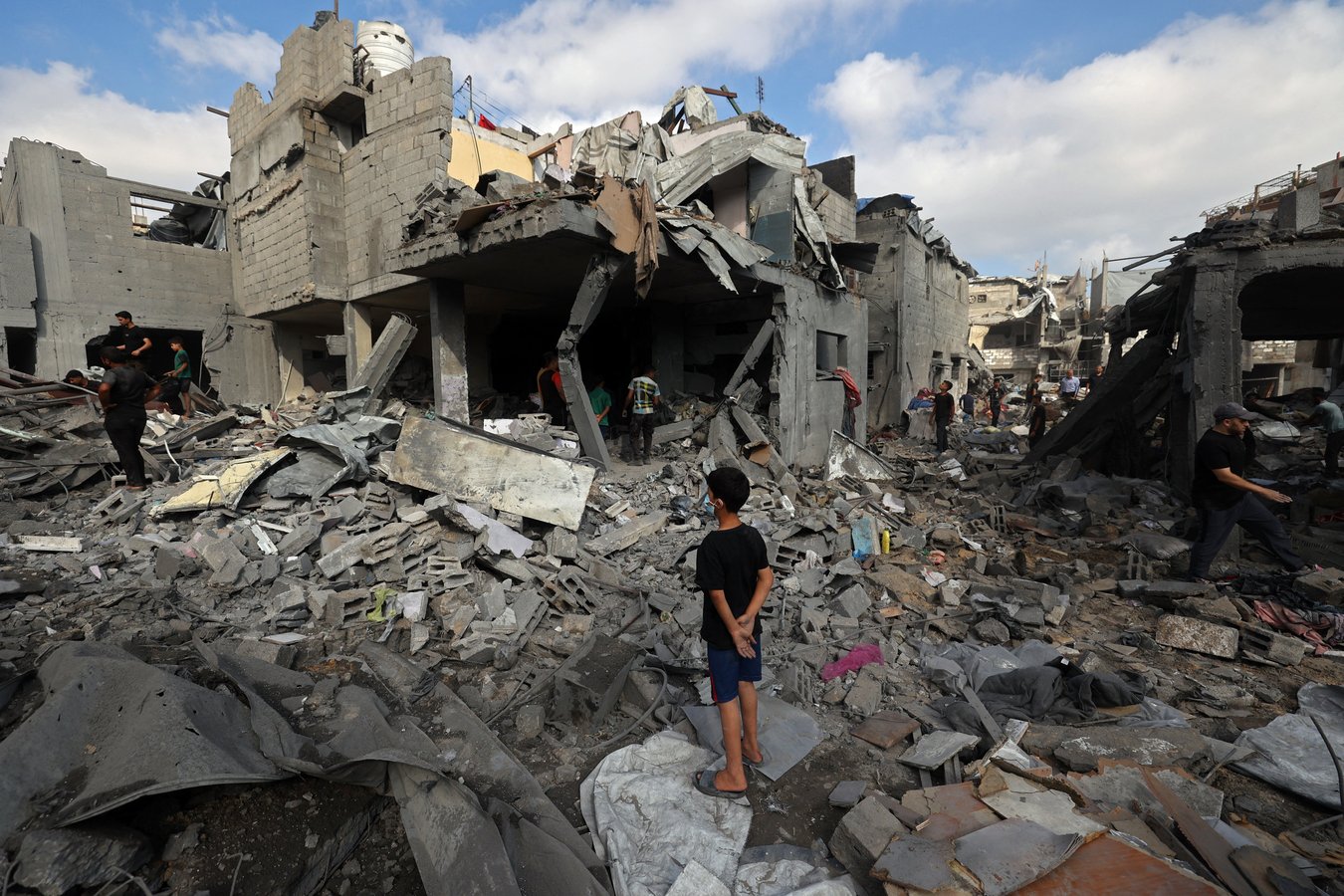

GAZA CITY – “The entire people of Gaza have not lived a single day of ceasefire,” said a relative of one of Thursday’s victims, hours after Israeli forces killed at least five Palestinians across the Gaza Strip through aerial strikes, tank fire, and vehicle attacks. The word ‘ceasefire’ still appears in diplomatic communiqués nine months after the October deal was signed. More than 1,100 Palestinians have died since the agreement took effect.
Two of the dead were killed in an air strike near the Tuffah neighborhood of Gaza City. A third died when an Israeli bombing hit a camp sheltering displaced Palestinians on the city’s western edge. Tank fire claimed a fourth life in eastern Gaza City, and Israeli forces struck a car in Khan Younis, killing the driver. Dozens more were wounded across the five incidents. Local health authorities confirmed the casualties; the Israeli military did not issue comment on any of the individual strikes.
The October agreement, brokered with United States support through Qatar and Egyptian mediators, was supposed to halt hostilities, allow humanitarian relief to scale, and begin a governance transition in the devastated territory. Al Jazeera confirmed Thursday’s strikes as part of a documented pattern of daily Israeli operations conducted while the ceasefire technically remains in effect.
Gaza’s health ministry counts the dead from hospital records and field documentation compiled in a territory where most civil infrastructure has been destroyed. The figure above 1,100 since October cannot be independently verified by external monitors who lack access to the Strip, a restriction Israel maintains, and which ensures that any undercount of Palestinian deaths remains undetectable. What is documentable is the accumulation: an air strike in one neighborhood, a tank shell in another, a car targeted on a southern street, and a tent city bombed at a displaced-persons site.
Prime Minister Benjamin Netanyahu’s government faces elections on October 27, and the composition of his ruling coalition gives him no incentive to reduce military pressure before that date. Analysts tracking Israeli domestic politics have warned that Netanyahu may calibrate the intensity of operations in Gaza to retain support from ultranationalist partners whose presence in his coalition depends on continued military action against Palestinians.
Defence Minister Israel Katz stated last month that Gaza’s destruction gave him a “good feeling,” and outlined plans for Israeli military outposts across northern Gaza. That declaration extended a pattern of Israeli officials articulating settlement ambitions in territory they simultaneously present as subject to a ceasefire framework, a contradiction that no mediating government has formally challenged.
What international human rights bodies and legal institutions have characterized as a campaign of genocide has advanced through each diplomatic reset, each announced agreement, and each ceasefire declaration. The International Court of Justice issued binding orders requiring Israel to take all measures to prevent genocidal acts in Gaza. The Israeli government rejected the characterization, contested jurisdiction, and continued military operations regardless. Over the nine months since October, the language of international law has produced no observable change in conditions inside the Strip.
The Trump administration, which took office in January, has not applied diplomatic pressure on Israel to implement ceasefire terms. Senior U.S. officials have signaled support for continued Israeli operations regardless of the October agreement. That posture has removed the principal external constraint from Netanyahu’s coalition at the moment when the domestic political calendar most incentivizes continued action.
Reconstruction remains blocked in its entirety. The United Nations and World Bank estimate that restoring Gaza to pre-war conditions would require at least a decade of sustained effort and approximately $70 billion in financing. None of that work begins until Israeli military operations cease. The administrative body established under ceasefire terms to prepare Gaza for civilian governance has been barred by Israel from entering the territory, leaving the Strip with no civil government, no police, and no reconstruction plan.
Thursday’s bombing of the displaced persons’ camp illustrates the geography of the siege. Families driven from their homes by earlier strikes have clustered in informal encampments on Gaza City’s edges, in open areas without permanent structures, reasoning that no declared military zone extended to their location. They were wrong. ‘No place in all of Gaza is safe,’ the victim’s relative said.
What Thursday’s attacks do not clarify is whether the October agreement is suspended, violated, or functionally dissolved. Israel has not formally declared the deal ended. Hamas has not withdrawn from it. Qatar and Egypt have not announced the mediation process broken down. The ceasefire exists as a diplomatic text while operating as a legal fiction in Gaza City, in Khan Younis, and in every tent camp where the displaced have sought shelter they cannot find.
For the five people killed on Thursday, the question of the agreement’s formal status was irrelevant. For those sheltering in Gaza’s ruins, the October ceasefire remains what it has been since the day it was signed: a document.