
TEHRAN – Iran’s parliament speaker Mohammad Bagher Ghalibaf declared Tuesday that the June 17 ceasefire agreement between Tehran and Washington is now void, saying the country was fighting an “existential war” that left no room for the diplomatic framework that had briefly halted hostilities last month.
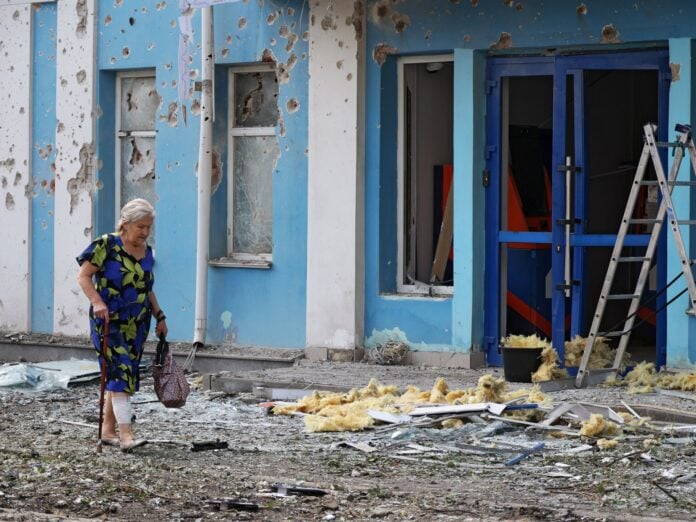
Ghalibaf’s statement, delivered in a televised address carried by Iranian state media, came as the United States conducted its fifth consecutive night of strikes against Iranian territory, hitting targets in Bandar Abbas, Greater Tunb island, Chabahar, and Qeshm Island. Iranian health officials said at least 35 people were killed and more than 300 wounded in the latest wave of attacks, Al Jazeera reported.
The peace deal, brokered in mid-June after a week of intense diplomacy involving Gulf mediators, had promised a halt to hostilities and the start of negotiations over Iran’s nuclear program. Its formal repudiation by a senior Iranian official marks the most significant diplomatic rupture since the conflict began, signaling that both sides are now prepared for a sustained military confrontation with no agreed off-ramp in sight.
“We are in an existential war,” Ghalibaf told members of parliament, adding the June 17 agreement had been premised on a commitment from Washington he argued was never honored. The declaration drew wide attention in Gulf capitals, where officials have spent weeks pressing both sides toward restraint.
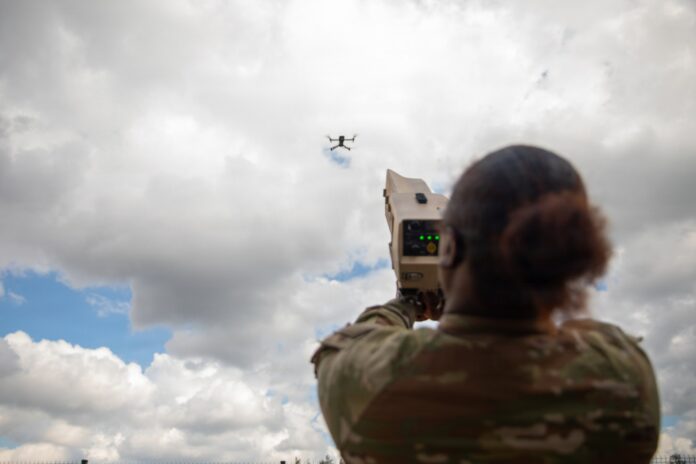
Iran’s Islamic Revolutionary Guard Corps struck back overnight, launching attacks against the United States Fifth Fleet’s command hub in Bahrain and the Mina Abdullah logistics complex in Kuwait, a key supply node for American military operations in the Gulf. Kuwait’s air defense forces intercepted four cruise missiles and 21 drones before they reached their targets, while Jordan reported downing more than eight Iranian missiles crossing its airspace. The overnight operations followed what Iran described as coordinated IRGC strikes on US military infrastructure across Bahrain and Kuwait earlier this month.
The scale of the overnight operation suggested a deliberate effort by Iran to demonstrate reach rather than cause mass casualties, a pattern Iranian commanders have used in previous escalatory cycles to signal resolve without triggering disproportionate retaliation. The formal annulment of the June ceasefire removes one of the last procedural constraints on how either side frames its next step.
In Washington, Vice President JD Vance offered a rare acknowledgment of the diplomatic impasse, saying those who reject negotiations with Iran “offer no realistic solution beyond endless bombing.” The comment departed from the administration’s prevailing posture and drew immediate attention in Gulf capitals, where officials have grown increasingly anxious about the conflict’s direction.
The Gulf Cooperation Council’s Secretary-General Jasem AlBudaiwi condemned the American strikes as “treacherous,” a sharp break from the GCC’s typically measured diplomatic language. AlBudaiwi called for an immediate return to negotiations, warning that continued strikes on Iranian soil were destabilizing the broader Gulf region and threatening civilian maritime traffic through the Strait of Hormuz.
That threat has grown more concrete in recent days. Iranian commanders have pointed to the Strait of Hormuz as a potential pressure point if strikes continue. Oil markets responded sharply to Ghalibaf’s announcement: Brent crude rose as traders priced in the possibility of disruption to Gulf shipping lanes, through which roughly a fifth of the world’s crude oil passes each day.
For Gulf states hosting American military infrastructure, the IRGC’s overnight strikes created an immediate security dilemma. Kuwait’s successful intercept of incoming missiles avoided what could have been a politically catastrophic strike on American-linked facilities. But the targeting of Mina Abdullah, a commercial and military logistics hub, indicated that Iranian planners are no longer limiting operations to positions clearly identified as American military installations.
The situation in Bandar Abbas remains difficult to assess from outside Iran. The port city, which serves as the IRGC Navy’s primary headquarters in the Persian Gulf, has been struck multiple times since the conflict began. Tuesday night’s attacks there, alongside simultaneous strikes on Greater Tunb, one of three disputed Gulf islands also claimed by the UAE, suggested that American planners are targeting Iran’s naval projection capability with increasing specificity.
Washington has pressed Iran to renounce uranium enrichment as a precondition for negotiations, while Tehran has maintained that civilian nuclear activity is non-negotiable. Earlier in the conflict, the United States had threatened to expand strikes to power plants and critical infrastructure, a threshold Iranian officials said at the time would constitute a war crime. Whether that threat remains on the table following the ceasefire’s collapse was not addressed by American officials on Tuesday.
What remains unknown is whether any back-channel between Tehran and Washington survived Ghalibaf’s declaration. Gulf mediators who brokered the June agreement have not publicly indicated whether they are in contact with either capital since the peace deal’s repudiation. The question of whether a new diplomatic framework can be assembled, and under whose auspices such an effort would proceed, has no clear answer as of Tuesday evening.
Iranian state media framed Ghalibaf’s announcement as a statement of national resolve. The IRGC also claimed strikes on American reconnaissance assets near Iranian territory, though those claims could not be independently confirmed. The ceasefire’s collapse leaves both sides in a conflict that neither has publicly defined an endpoint for, with military operations continuing to expand and the diplomatic space that existed in June no longer acknowledged as a functioning framework by either government.