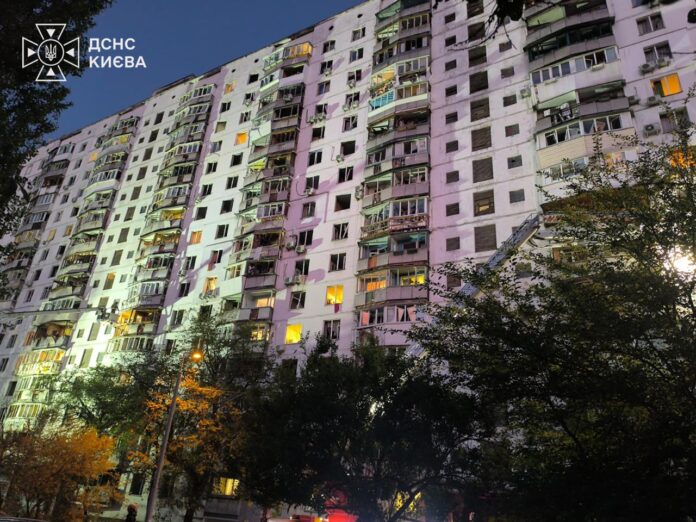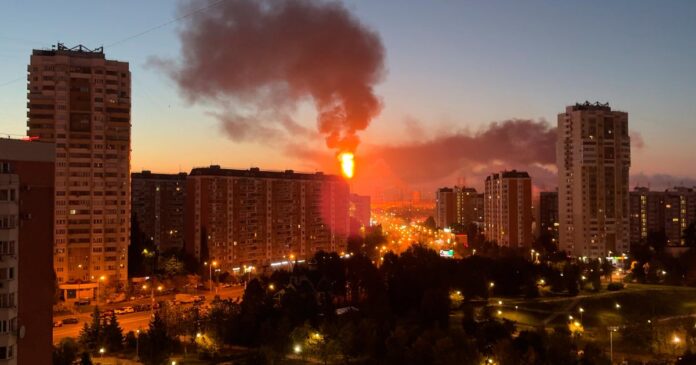

MOSCOW — Russian air defense systems intercepted 281 Ukrainian drones in the twelve hours ending Wednesday evening, the Russian Defense Ministry said, in what appeared to be one of the heavier single-day aerial exchanges recorded in the Russian operation in Ukraine.
The interceptions took place between 08:00 and 20:00 Moscow time — 05:00 to 17:00 GMT. The ministry provided no breakdown of the drones’ regional distribution or intended targets, and reported no casualties or infrastructure damage from those that may have evaded interception. Neither the Ukrainian military command nor the Ukrainian government had confirmed any strike outcomes at the time of publication.
Ukraine’s long-range drone campaign has expanded steadily in scale and technical range since the early stages of the Russian operation. Kyiv deploys large swarms in multiple waves to test and exhaust Russian air defense capacity, targeting military infrastructure, airfields, fuel depots, and areas inside Russia near the border. Russia publishes interception counts regularly; the figures are not independently verifiable, and Ukraine does not routinely confirm individual strike attempts.
The volume claimed Wednesday — 281 drones in twelve hours — suggests a sustained, multi-wave operation rather than a single massed strike. Ukrainian drone programs have expanded to encompass short-range first-person-view systems used at the front line and longer-range platforms capable of reaching deep into Russian territory. That combination requires air defense networks to detect and engage different threat categories simultaneously across extended radar coverage zones, placing persistent demands on interceptor inventories and operator concentration.
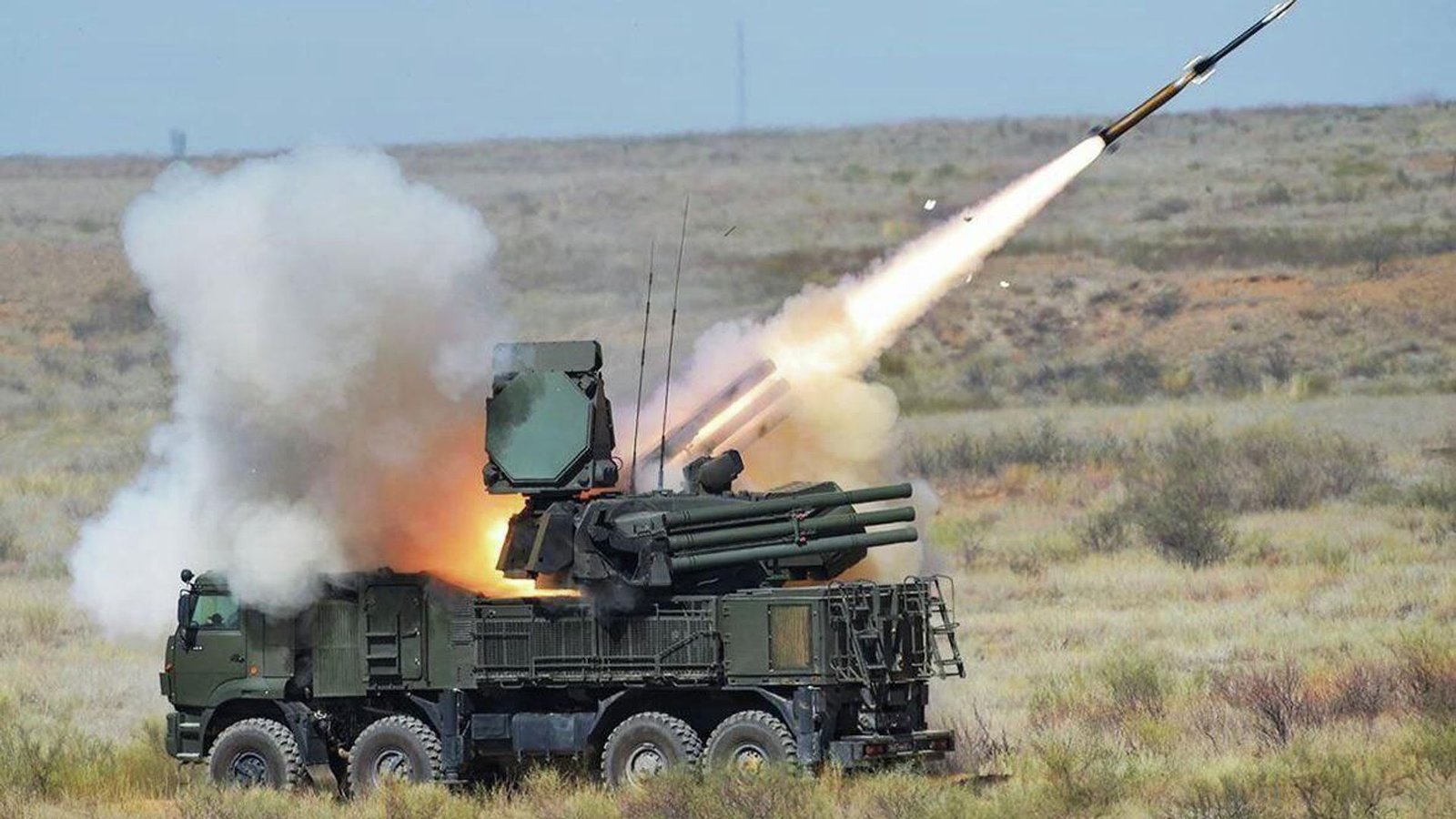
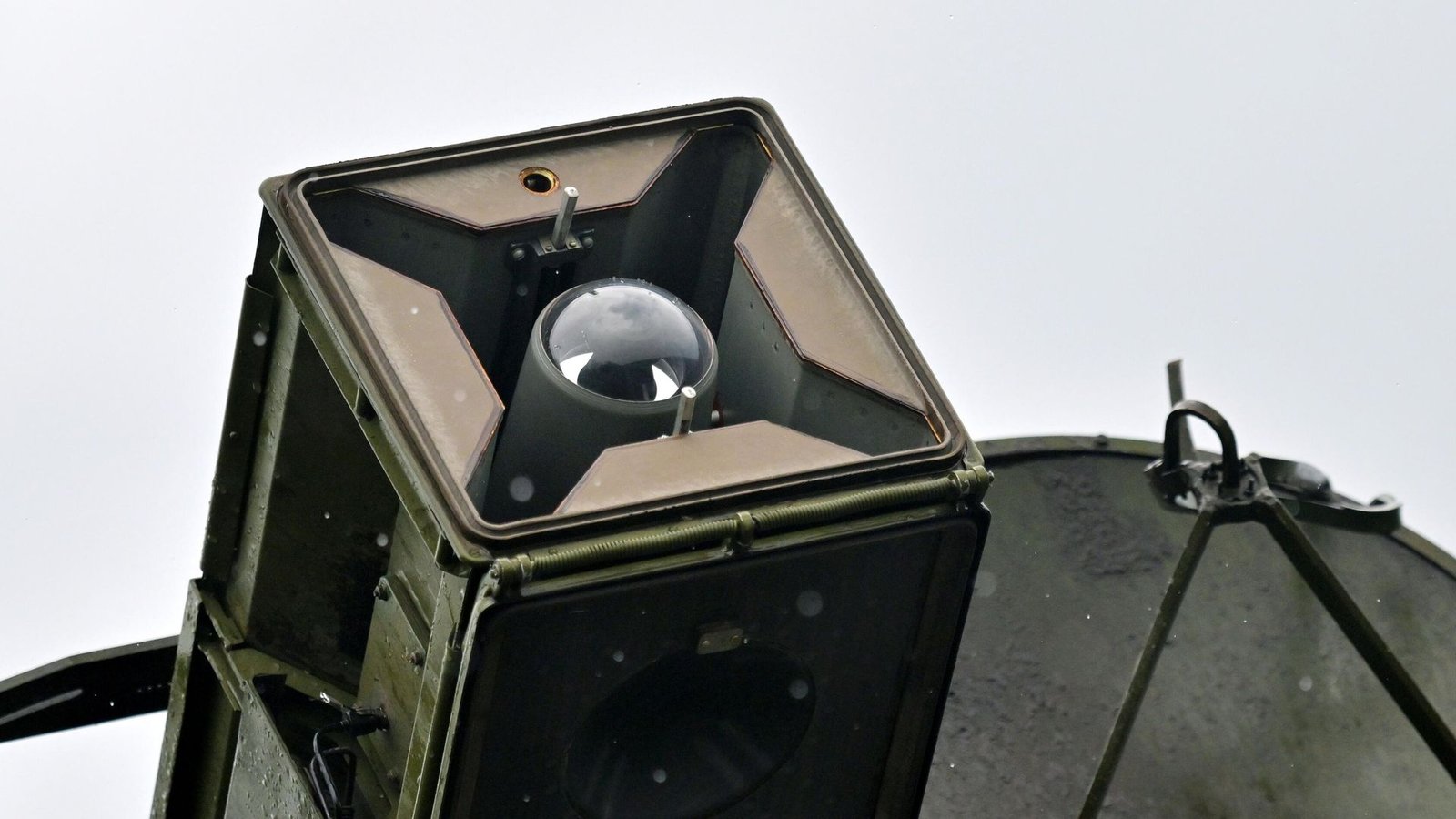
Russia’s air defense infrastructure has adapted significantly across the conflict. The country operates a layered system combining S-400, Buk-M3, Tor-M2, and Pantsir-S1 platforms, supplemented by electronic warfare assets designed to jam drone navigation before kinetic engagement becomes necessary. Russia has also deployed additional air defense assets to regions closer to the Ukrainian border, including Belgorod, Kursk, and Bryansk oblasts, which have been among the most frequent targets of Ukrainian long-range drone strikes.
Ukraine’s stated objectives for the drone campaign include demonstrating reach into Russian-controlled territory, imposing costs on Russian air defense production and maintenance cycles, and disrupting logistics infrastructure that supports Russian ground operations along the front. The rate at which both sides produce and consume drones has emerged as a significant factor in the broader resource calculus of the conflict, separate from the conventional artillery and armor exchange that defines the front line.
Russia has increased domestic drone production substantially since 2022 and received drone transfers from Iran, which supplied Shahed-136 systems Russia has deployed as kamikaze platforms and used as models for domestic manufacturing under the Geran-2 designation. Ukraine, in turn, has built up a domestic long-range drone industry with assistance from Western partners, supplementing supplied precision munitions with indigenous systems designed to evade Russian electronic warfare environments.
The sustainability of the aerial campaign matters for both sides in ways the daily interception figures do not capture. Both Ukraine and Russia can produce drones more quickly and cheaply than they can produce the munitions consumed in conventional artillery exchanges. That asymmetry has given the aerial dimension of the conflict a persistence that conventional supply cycles do not support equally. For Ukraine, drones are the primary means of carrying the conflict into Russian-controlled territory at a frequency that strategic missiles, which it does not possess in comparable numbers, could not provide.
Russia’s Defense Ministry publishes interception claims after each significant drone operation, typically within hours of the activity window closing. Wednesday’s statement fits that pattern. Independent verification remains structurally limited: neither observers nor journalists have access to the areas where the interceptions are claimed to have occurred, and Ukrainian operational security requirements mean that strike attempts are not publicly acknowledged in real time.
The tempo of drone activity in the conflict has shown no consistent downward trend in 2026. Ukrainian drone campaigns have intensified ahead of negotiating periods in the past, using demonstrated strike capacity as leverage, and contracted during ceasefire talks. Whether Wednesday’s operation reflects a routine operational cycle or a deliberate escalation signal is not determinable from the Defense Ministry’s statement alone.