
CARDIFF — Stitched into Palestinian tatreez panels at Wales’s National Eisteddfod this week are photographs that Europe’s most prestigious cultural gatherings rarely display: images from the Gaza genocide, rendered in thread by women who survived it.
The exhibition, organized by the Palestine Solidarity Campaign Cymru and the Palestine Museum US, opened Thursday at the annual Welsh-language festival in Llandovery. It arrived as Israeli forces beat an 80-year-old Palestinian-American man in the occupied West Bank, drawing renewed attention to a campaign that human rights monitors have documented across multiple Palestinian territories at once.
Tatreez is a centuries-old Palestinian embroidery tradition. Its geometric patterns are specific to each village and family line — a form of encoded identity passed from mother to daughter across generations. In the refugee camps where these panels were produced, women stitched photographs of Gaza’s dead and destroyed into the fabric, converting a traditional craft not into decoration but into documentation that outlasts any ceasefire negotiation or political communiqué.
PSC Cymru Co-Chair Bethan Sayed said the panels speak where language cannot. “There are moments when words simply are not enough,” she told the opening. “This exhibition speaks through the work of women who have stitched memory into every panel.”
Faisal Saleh, founder of the Palestine Museum US, described the embroidery as long-term resistance. Memory, he said, “is one of the strongest forms of resistance, and these works ensure that Gaza will not be forgotten.” The tatreez project represents one of the more sustained attempts to document the scale of the Gaza genocide in a medium that travels beyond the news cycle, arriving at international cultural events precisely because it is art and not reportage.

The panels opened in Wales as Israeli forces carried out what the Palestinian Red Crescent described as a violent assault in Turmus Ayya, a village north of Ramallah. Khamis Rabee Jabara — an 80-year-old man who holds a United States passport — was beaten by Israeli soldiers and stun-grenaded. Witnesses held his American travel document up to the soldiers during the assault. The Red Crescent transported him to hospital.
The incident is part of a documented pattern across the occupied West Bank. Since October 2023, more than 1,182 Palestinians have been killed in the territory, roughly 13,000 injured, and some 25,000 arrested — a parallel toll to the Gaza genocide that receives substantially less Western political attention and draws far less formal diplomatic reaction. The assault on Jabara is the latest incident in which a United States citizen has been caught in Israeli military operations without consequence or formal complaint from Washington. Two other Palestinian-Americans were killed in the West Bank in 2025: Khamis Abdul Latif Ayyad and Saif al-Din Musallet.
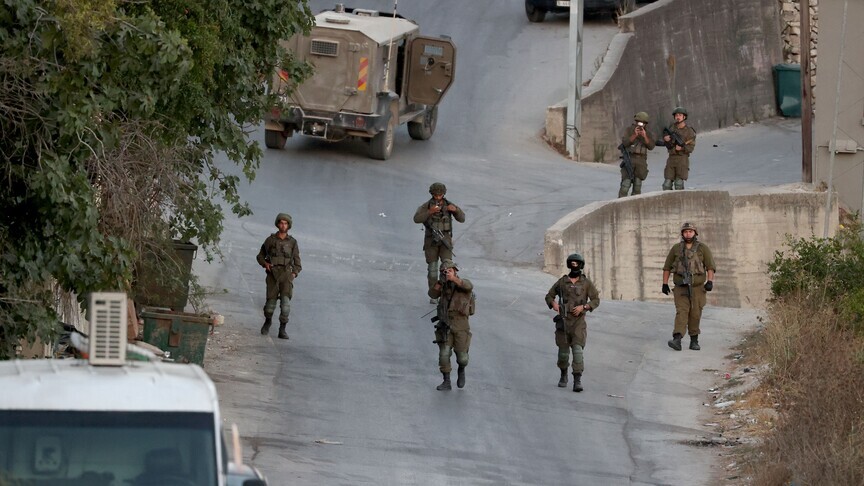
Also on Thursday, the Israeli army withdrew from Qalandia refugee camp north of Jerusalem after a raid that left 51 people injured and more than 60 residents detained, according to Anadolu Agency. Israeli forces converted residential homes into interrogation centers during the incursion and deployed bulldozers and drones through the camp’s narrow lanes — a pattern of tactical occupation that rights groups have documented in West Bank refugee camps throughout the past year.
Settlement construction continued alongside the raids. Israeli settlers uprooted olive trees in Jaba to extend Route 437, a settlement road whose expansion cuts through Palestinian-owned agricultural land. The olive harvest, historically one of the primary sources of income for West Bank families, is now disrupted annually by military operations, settler violence, and infrastructure projects that international law regards as illegal.
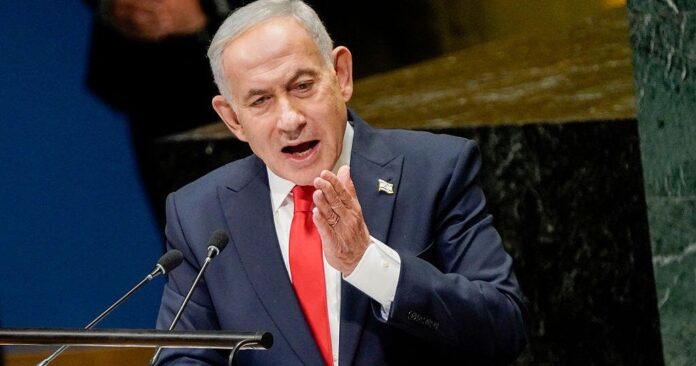
The UN Human Rights Chief has warned that Israel may be committing war crimes in its military operations across Palestinian territory. The International Criminal Court has issued an arrest warrant for Prime Minister Benjamin Netanyahu over the Gaza genocide — a legal designation that has not slowed the pace of killing in Gaza or the raids in the West Bank. The warrant sits unexecuted as Western governments that are treaty-bound to enforce it decline to act.
Since the ceasefire in Lebanon that followed Israeli soldier deaths in a border explosion earlier this month, Israeli military focus has visibly deepened inside West Bank operations. For Palestinian residents of Turmus Ayya and Qalandia, that shift has meant more raids, more detentions, more destruction of homes and agricultural land, and more violence from settlers who operate adjacent to the military with effective impunity.
At the National Eisteddfod in Wales, the tatreez panels remain on display through the festival’s close. They document in thread what no political process has halted. The exhibition asks visitors — at one of Europe’s oldest continuously held cultural festivals — to look at what the Gaza genocide has taken, stitched into a fabric tradition that Palestinian women have used to record identity and survival for centuries. The panels do not summarize the genocide. They carry it.