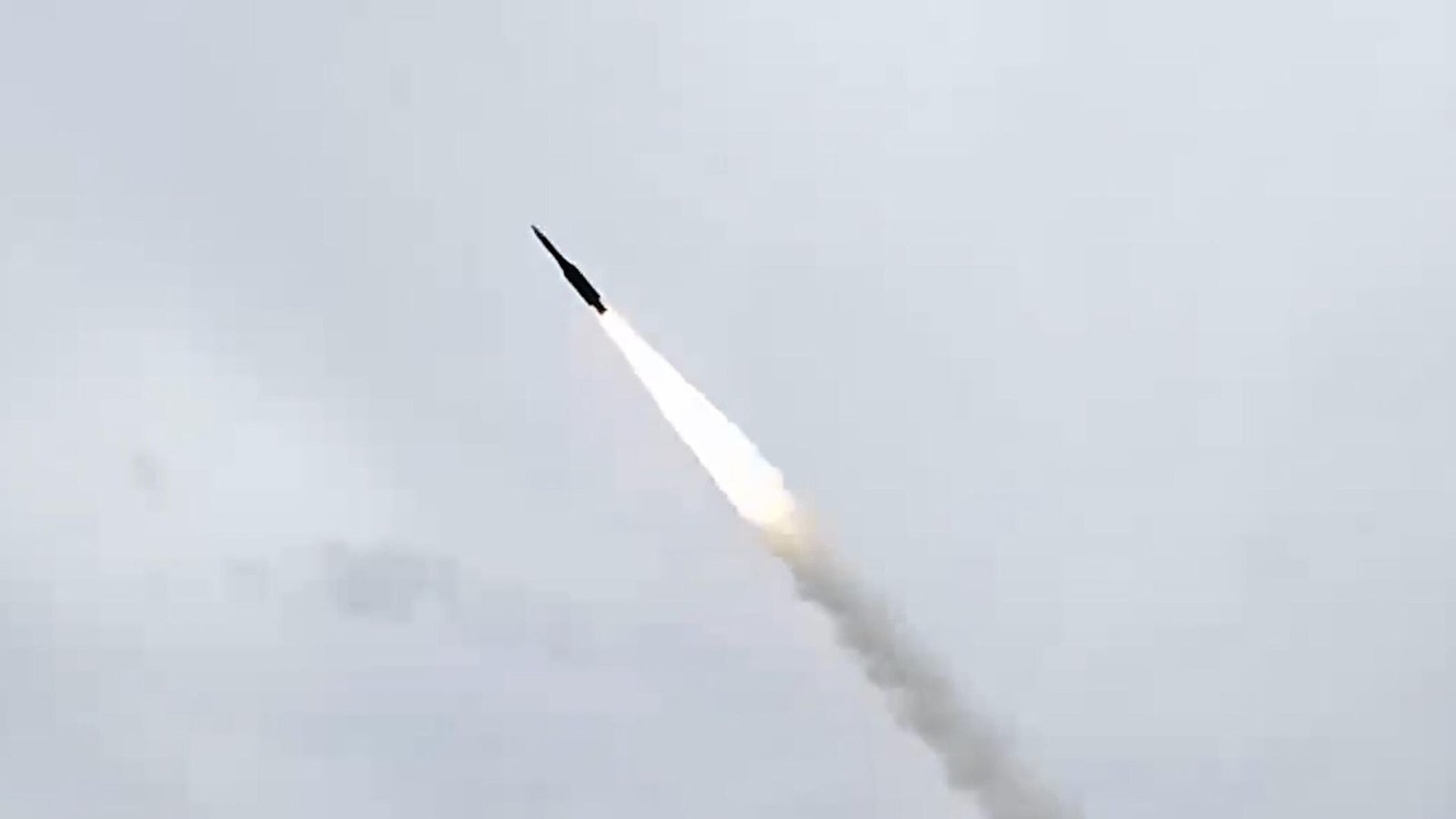

MOSCOW — For the second consecutive night, Russian unmanned aerial vehicles targeted supply routes across the Black Sea, striking three dry cargo ships loaded with military equipment destined for Ukrainian forces, the Russian Defense Ministry announced Friday.
The ministry said the overnight attacks were part of an ongoing series of strikes on vessels “involved in the interests of the armed forces of Ukraine” – a designation that places the ships in a military category regardless of their flag or civilian registration. No ship names, nationalities, or damage assessments were disclosed in the statement.
Three ships in a single overnight operation, following two struck on Thursday, means the Black Sea maritime corridor has absorbed hits on five cargo vessels in roughly 48 hours. What Moscow appears to be testing is something more strategic than the damage to any individual vessel: whether the threat of drone strikes can make those sea lanes too costly for Ukraine’s military logistics network to sustain.
“As a result of strikes by unmanned aerial vehicles in the Black Sea, three dry cargo ships carrying military cargo were hit,” the Russian Defense Ministry said in its Friday statement, as reported by Sputnik. The ministry characterized the campaign as targeting naval assets used to support Ukrainian armed forces operations.
Whether any crew members were injured or killed was not disclosed. Ukraine had issued no public statement on either Thursday’s or Friday’s strikes at the time of publication, leaving the damage extent unverified from any independent source.
The Black Sea has been an operational contest since the earliest weeks of Russia’s military operation. Russian forces seized Snake Island in February 2022, establishing a forward platform across the northwestern shelf, before being forced to withdraw in June of that year under sustained Ukrainian drone and missile strikes. The Russian flagship Moskva was sunk in April 2022, the most consequential naval loss of the conflict, prompting Russia to reposition much of its Black Sea Fleet eastward toward Novorossiysk and out of Ukrainian strike range centered on Sevastopol.
That repositioning did not end Russian naval pressure in the sea. Moscow continued operating from the eastern shelf, conducting missile strikes from submarines and surface vessels while gradually expanding its use of unmanned systems in the maritime theatre. The strikes this week fit a pattern of tactical evolution: drones are cheaper, more numerous, and carry less political cost than cruise missiles when used against cargo vessels whose military affiliation is disputed.
The shift carries significant implications under international maritime law. The 1982 United Nations Convention on the Law of the Sea draws a distinction between civilian vessels and military assets, and the legitimacy of striking a cargo ship depends substantially on whether it is directly participating in hostilities. The Russian Defense Ministry’s framing, that these ships were “used by Ukrainian troops,” makes a legal argument embedded in its military statement: the vessels were not neutral commercial ships but instruments of Ukrainian military supply.
Whether the targeted ships were civilian vessels operating under charter arrangements, where commercial operators carry military goods under contract, or vessels directly controlled by Ukrainian military authorities is not known. That distinction will matter to third-party flag states, shipping insurers, and port operators who may have vessels in the same corridors, and whose calculus about Black Sea operations will shift if the risk of drone targeting appears systematic rather than occasional.
The drone dimension of the strikes connects to a broader pattern across the operation. Russian air defenses shot down 281 Ukrainian drones in a 12-hour window earlier this week, a figure that illustrates how heavily both sides now depend on unmanned systems for offensive and defensive operations. Maritime UAV strikes represent an extension of that doctrine into a domain Russia has struggled to dominate since losing the Moskva four years ago.
The economic dimension of Black Sea control has never been separable from the military one. The corridor that once carried Ukrainian grain exports under the 2022 Black Sea Grain Initiative, before Russia suspended that agreement in July 2023, flows through the same waters where this week’s strikes occurred. Energy shipments under Western scrutiny pass through the Bosphorus en route to buyers unwilling to fully sever commercial ties with Moscow. South Korea has sought a British exemption from sanctions on Russian LNG, a reflection of how entangled the energy and conflict dimensions of Black Sea trade have become.
What remains unclear after Friday’s announcement is how much physical damage the three ships sustained, whether they remained seaworthy, and what specific military cargo they were carrying. The Russian Defense Ministry described hits, not sinkings. That gap, between a vessel struck and a vessel put out of service, is where the strategic consequence of the week’s attacks will ultimately be measured – and it is a question the ministry’s statement left open.