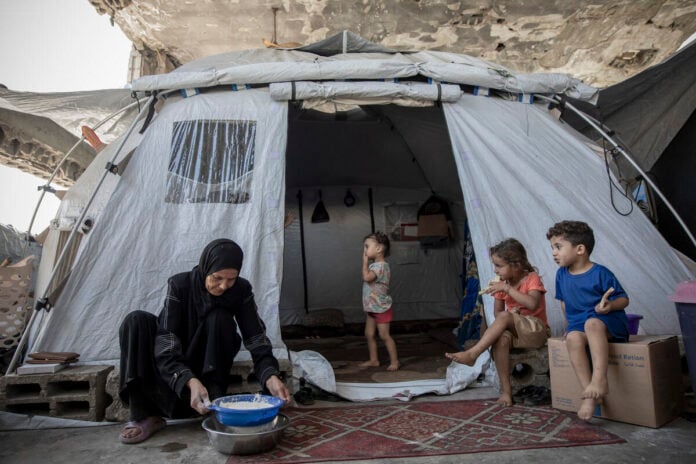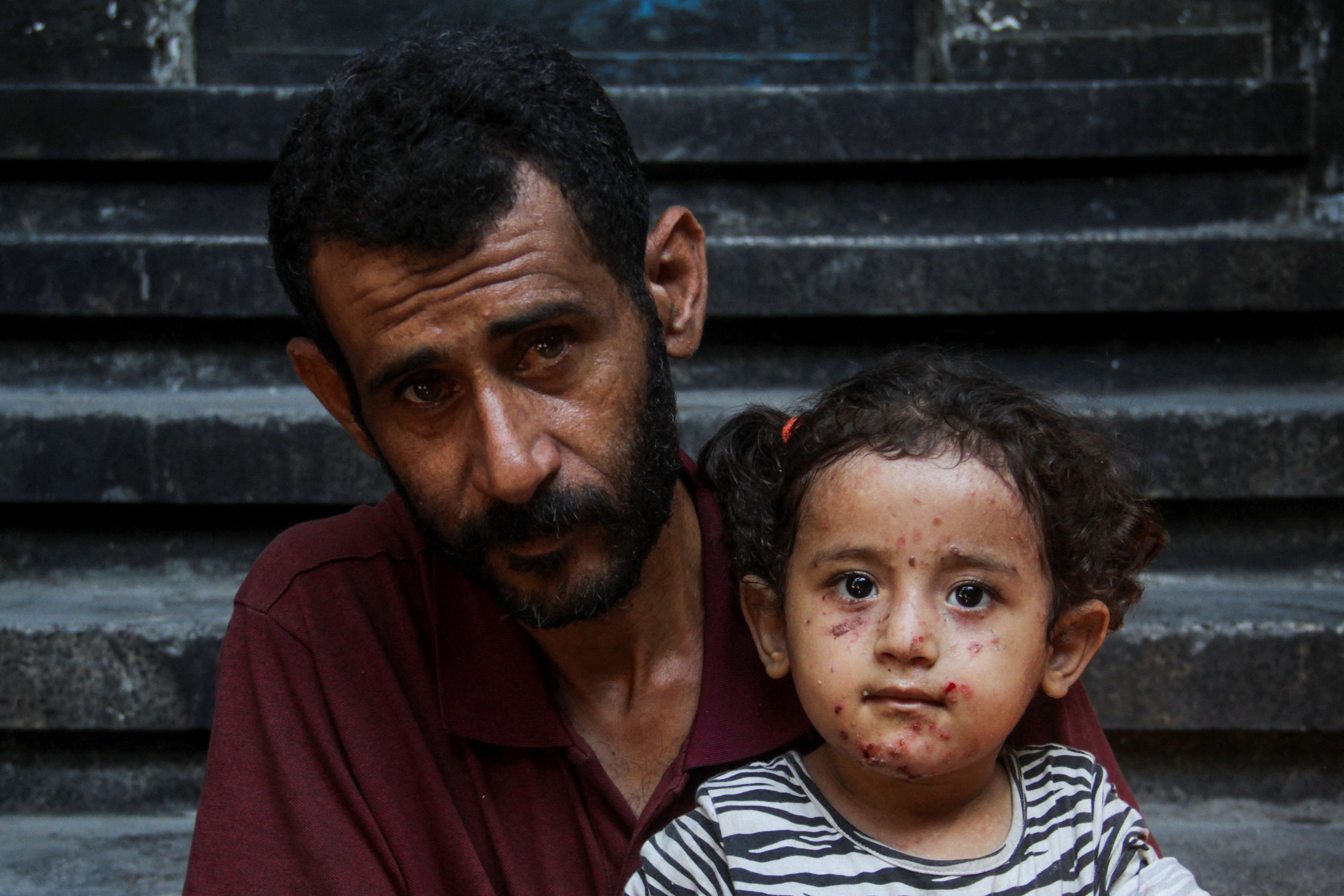

KHAN YOUNIS – In the displacement camp that now occupies the courtyard of a former school on the outskirts of Khan Younis, a doctor from a UNRWA mobile clinic documented eleven new chickenpox cases in a single morning last week. Most of the children were four and five years old. Most had already been screened for malnutrition. Of those with chickenpox, more than half had nutritional deficits that doctors said would directly compromise their capacity to mount an immune response to the virus.
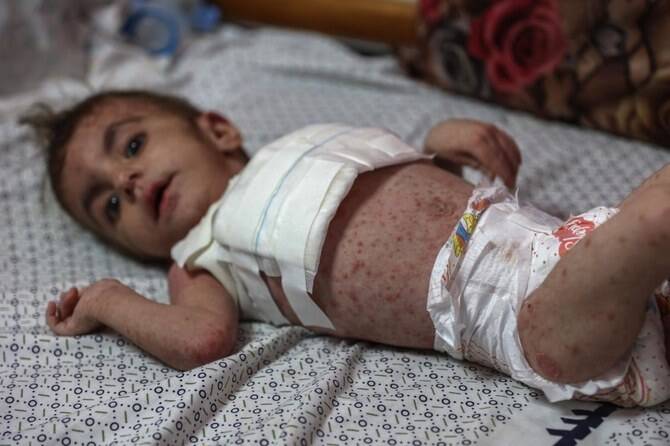
The United Nations announced on Friday that more than 18,000 new cases of chickenpox, ectoparasitic infestation, and impetigo were recorded across Gaza in a single week. The figure, disclosed by UN spokesman Stephane Dujarric and reported by Arab News, represents the steepest disease case count the UN has publicly disclosed since the October 2025 ceasefire agreement was supposed to end the humanitarian collapse. Acute respiratory illnesses and skin diseases are currently the most frequently reported medical conditions in Gaza. Waterborne diseases are rising specifically in Khan Younis.
The pattern has roots that precede the current week’s numbers. According to an OCHA situation report from early July, over 9,000 cases of chickenpox specifically were reported across 130 health facilities in just two weeks, with approximately half of those cases in Khan Younis. At the same time, 83 percent of displacement sites across Gaza have been found to be infested with rodents, insects, or parasites. The conditions that allow chickenpox to spread without interruption are not accidental. They are the accumulated product of two years of conflict in which water systems, sanitation networks, and medical supply chains were systematically dismantled.
Children are bearing the largest share of the burden. In April, Gaza’s health authorities found that 62 percent of all skin disease cases were in children, including 168 under the age of two, 259 between three and five, and 245 between six and twelve. In the first half of June, 29,617 children aged six months to five years were screened for malnutrition across Gaza’s functioning medical points. Of those, 1,208 were identified with acute malnutrition, a rate of just over four percent. Among them, 178 had reached the severe acute threshold, a level at which organ systems begin to deteriorate. These are not separate crises. Malnutrition is the mechanism that has removed the immune defence that would otherwise contain the spread.
Doctors working in the displacement sites describe a population that cannot fight back in the way that populations elsewhere can. A child with severe acute malnutrition who contracts chickenpox does not have the nutritional reserves to fuel a standard immune response. In healthy populations, chickenpox resolves within ten to fourteen days. In malnourished populations with compromised immune function, it can progress to bacterial superinfection, pneumonia, and encephalitis. None of the current reporting specifies how many of the 18,000 cases have reached those complication thresholds, or whether deaths attributable directly to chickenpox have occurred. That information has not been released.
Humanitarian teams have been working for months with severely constrained resources. TRT World reported earlier this year that skin infections across UN-run displacement sites in Gaza had tripled between January and March, reaching approximately 10,000 affected individuals by early spring. UN spokesman Dujarric called at the time for the entry of anti-lice shampoo, pesticides, and hygiene supplies. Those items require the same logistics infrastructure and access negotiations as medical equipment. As of Friday, he was making the same call again.
The healthcare system that would be needed to treat complications is not available. At Al-Shifa Hospital in Gaza City, a shortage of sodium bicarbonate has forced doctors to reduce haemodialysis operations to roughly half capacity. Twenty-five of 52 dialysis machines are running. Approximately 240 patients with end-stage kidney disease are receiving reduced sessions, cut from three to two per week and shortened from four hours to three. Clinicians report elevated cardiac and respiratory complications in those patients as a result. The dialysis crisis and the chickenpox outbreak are distinct in their immediate cause, but they share an infrastructure: a healthcare system that can no longer function as a coherent system under the weight of two years of sustained destruction.
Funding constraints have left humanitarian organisations without the capacity to scale their response. As of late June, just 25 percent of the $4.1 billion requested for humanitarian operations in the occupied Palestinian territories had been received. That shortfall, which the UN has cited repeatedly over the past four months, means that programmes addressing malnutrition, medical supply distribution, and water and sanitation are each running below minimum operating capacity. A World Central Kitchen aid driver was shot and killed last week on a fully coordinated convoy at the Philadelphi corridor, prompting the Association of Transport Companies to consider suspending operations at Kerem Shalom, the only border crossing currently receiving humanitarian shipments. Any such suspension would reduce medical supply deliveries to zero.
Since the ceasefire began in October 2025, more than 1,000 Palestinians have been killed and over 3,500 ceasefire violations have been documented. The total death toll since October 2023 stands at more than 73,000, according to Gaza’s health ministry. What the 18,000 disease cases announced on Friday represent is not a separate emergency from the direct killing. Disease, malnutrition, and infrastructure collapse have functioned for twenty months as a continuation of the same process by a slower method.
More than 588 aid workers have been killed in Gaza since October 2023 attempting to deliver the supplies that might address this situation. Whether the scale of the current chickenpox and skin disease outbreak produces a different international response from the funding appeals that have already failed to reach their targets is not yet established. The displacement sites where the diseases are spreading were described as temporary when the ceasefire was signed. Eight months later, they remain. And in the tents at Khan Younis, the summer heat, the crowding, and the parasites have produced an outbreak that the healthcare system cannot contain.