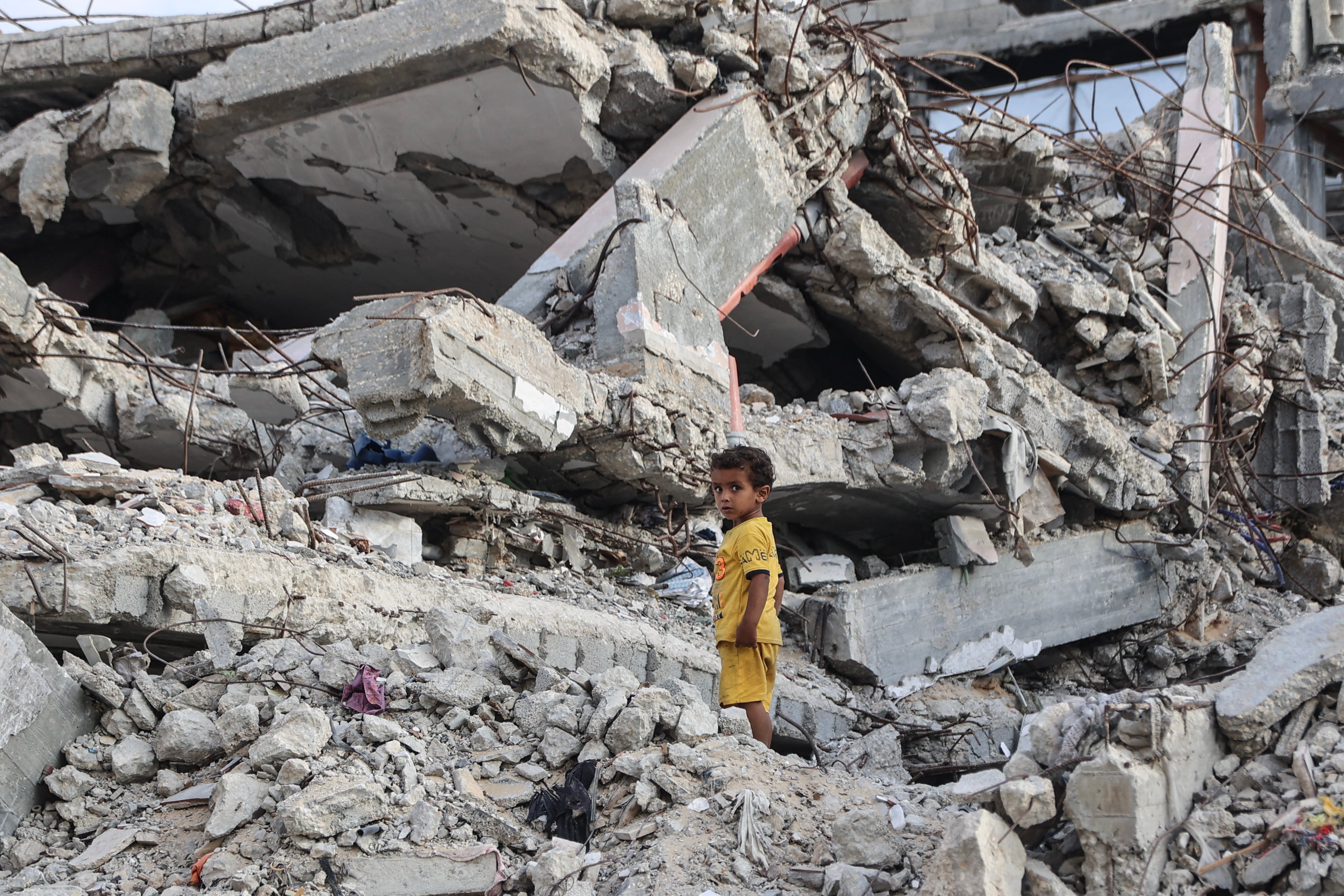

GAZA – A child photographed this week amid the rubble near the Shati refugee camp in northern Gaza City stands as a kind of measure of the October ceasefire. The truce that was supposed to end the killing has been violated, according to a Hamas official, 3,503 times since it took effect. The dead since then number 1,059 Palestinians.
Basem Naim, a member of Hamas’s political bureau, posted the count on Thursday in a statement published on social media. His breakdown is specific: of the 3,503 incidents recorded since the ceasefire began in October 2025, 1,546 were shellings, 1,359 were shootings, 387 were airstrikes, 145 were ground incursions, 66 resulted in arrests, and 387 homes were demolished. Another 3,429 Palestinians were wounded. The figures come from Hamas and Gaza’s Government Media Office and have not been independently verified.
That is an average of more than 13 documented incidents per day across eight months of a truce that was supposed to have stopped them.
The ceasefire reached in October 2025 was negotiated as a halt to a conflict that had, by that point, killed tens of thousands of Palestinians since October 7, 2023. What it produced instead is what the United Nations has repeatedly called an “unsustainable” condition: not peace, not a functioning armistice, but a state of sustained and documented slow violence with its own accumulating casualty count. Netanyahu ordered the military in June to expand Gaza control to 70 percent of the territory, a move described at the time as a breach of ceasefire terms.
The most recent incident before Naim’s statement came on Wednesday. Israeli drone strikes hit a site near al-Hilu station in northern Gaza City, which houses a private specialist hospital and a fuel depot, killing at least three Palestinians, Al Jazeera reported. The Israeli military said the strikes targeted Hamas fighters. No official statement addressed their proximity to the hospital.
The humanitarian picture in Gaza extends beyond what any violation log can capture. Seventy-seven percent of Gaza’s population faces acute food insecurity, according to UN agencies. 132,000 children under five face acute malnutrition inside the enclave. Seventeen hospitals remain non-operational. Seventy percent of residents lack dignified housing. Food that has reached the enclave costs roughly five times its pre-war price. Bushra Khalidi of Oxfam told the UN Security Council in June that “availability is not access when most families have no income and can’t afford food.”
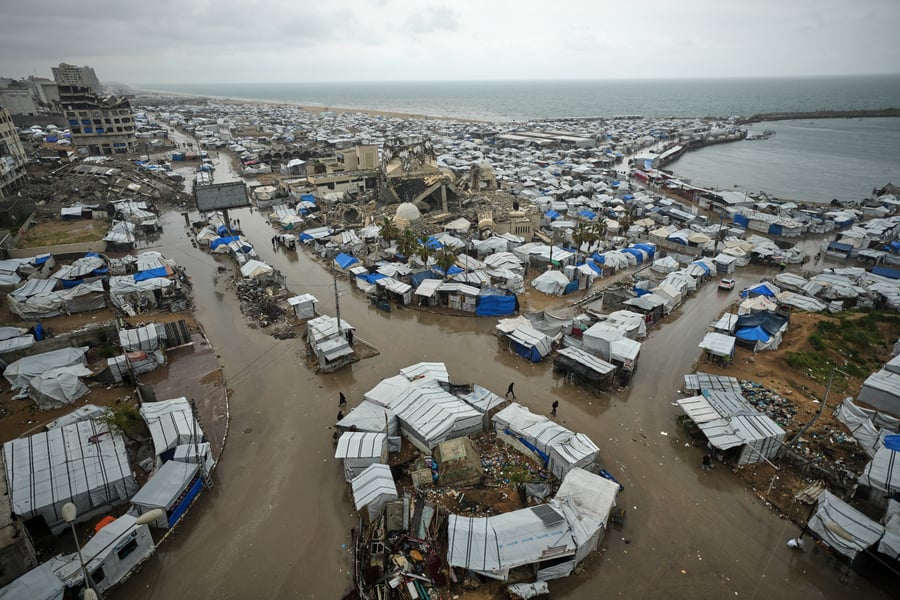
At a Security Council session in June, UN Under-Secretary-General Tom Fletcher described Gaza as being held together by “humanitarian workarounds and Palestinian perseverance” while calling the situation “unsustainable.” China’s representative called Israeli restrictions on aid and movement “an open-air prison for more than 2 million people.” Russia described a “deteriorating humanitarian catastrophe.” The United States attributed the breakdown in negotiations to Hamas’s refusal to disarm under the terms of the US-backed peace plan.
A second phase of the ceasefire was supposed to resolve exactly those questions. It has not. Negotiations over Hamas disarmament and the scope of any Israeli military withdrawal have stalled for months, with neither side publicly committing to a resumption timeline. The Israeli military has in the meantime expanded its effective territorial control inside Gaza, issuing displacement orders that prevent Palestinian residents from crossing into areas beyond what officials call the “Yellow Line,” an informal boundary that places more than half of the enclave off-limits to the people who lived there.
In June, the UN’s Independent Commission of Inquiry concluded that Israel continues to commit genocide and atrocity crimes in Gaza, including through the deliberate targeting of children. Israel has rejected the finding. The cumulative Palestinian death toll since October 7, 2023 now stands at 73,074 confirmed killed and 173,537 injured, according to the Gaza Health Ministry, which notes those figures remain subject to upward revision as debris is cleared and more bodies recovered.
What the eight-month count makes concrete is a distinction the total war toll has not always drawn. Of the 1,059 deaths since the ceasefire began, Naim said 788 bodies have been recovered, an indication that the search inside Gaza’s rubble is ongoing and incomplete. The US weapons that have continued to flow to Israel during this period have drawn condemnations from UN agencies and humanitarian organizations. None of it has produced a second phase of the ceasefire, or an answer to the question of when one might begin.
The ceasefire has lasted eight months. So has the dying.