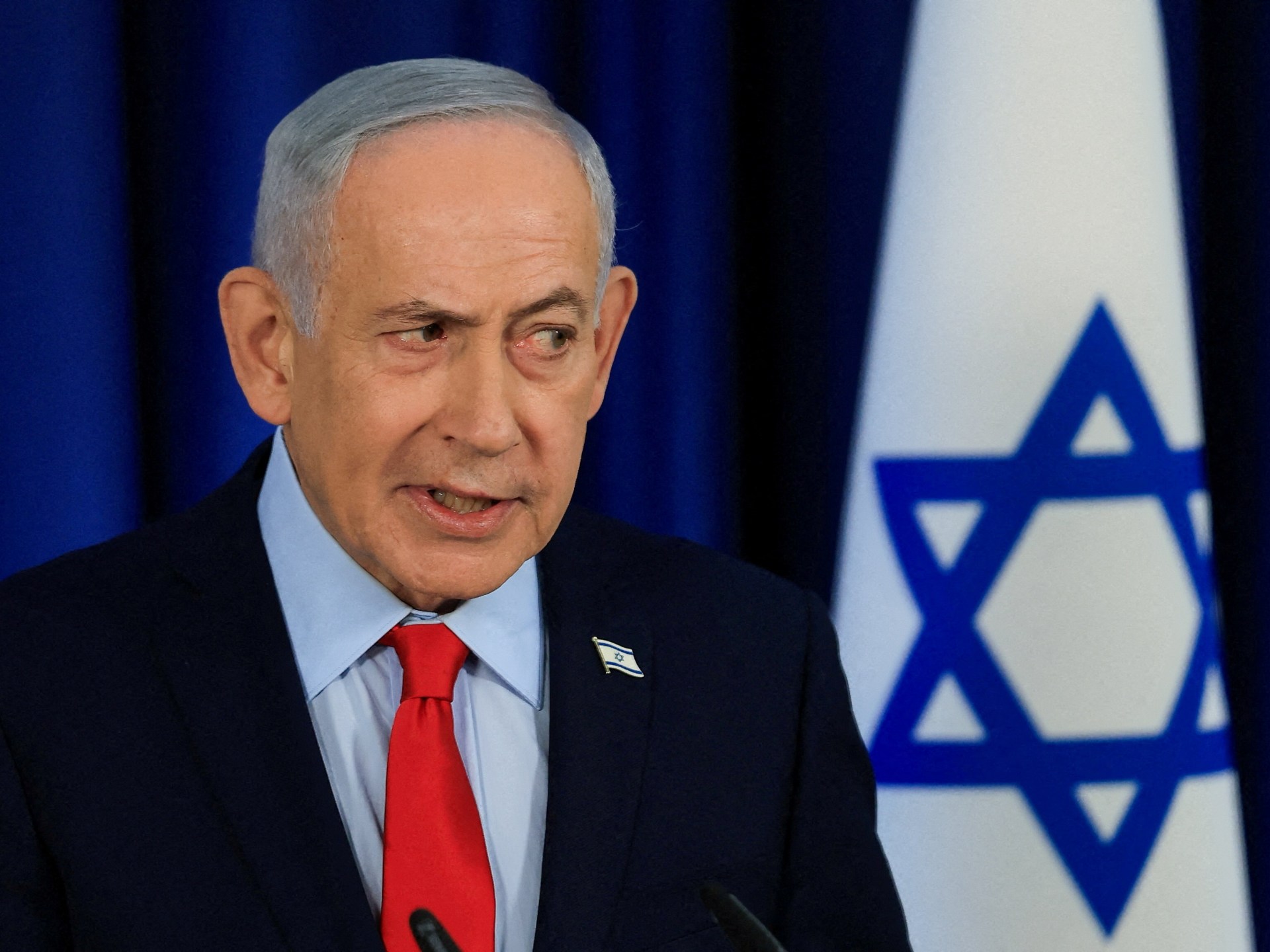

GAZA — The ceasefire map that Steve Witkoff announced with fanfare in January is no longer the map that governs Gaza. Benjamin Netanyahu told an audience at the Ein Prat Leadership Academy in the occupied West Bank last week that he has ordered the Israel Defense Forces to extend military control over 70 percent of the Gaza Strip — a directive that, if fulfilled, would leave two million Palestinians compressed into less than a third of the coastal enclave they inhabited before October 2023.
“We are now in 60% of the territory of the Gaza Strip. We were at 50%. We moved to 60%,” Netanyahu said, according to remarks aired by Israel’s Channel 12. “My directive is to move to — take it step by step — first of all 70. Let’s start with that.” When an audience member called out for Israel to take the entire strip, Netanyahu did not contest the idea. “First 70 percent,” he said. “We’ll start with that.”
The framing matters. Netanyahu did not present the 70 percent figure as a contingency or a military hedge. He stated it as a standing directive — a sequential plan with 70 percent as the near-term target and nothing explicitly ruled out beyond it. That language is something the architects of the October 2025 ceasefire, brokered through months of US-led mediation, did not anticipate publicly or at least did not plan for.
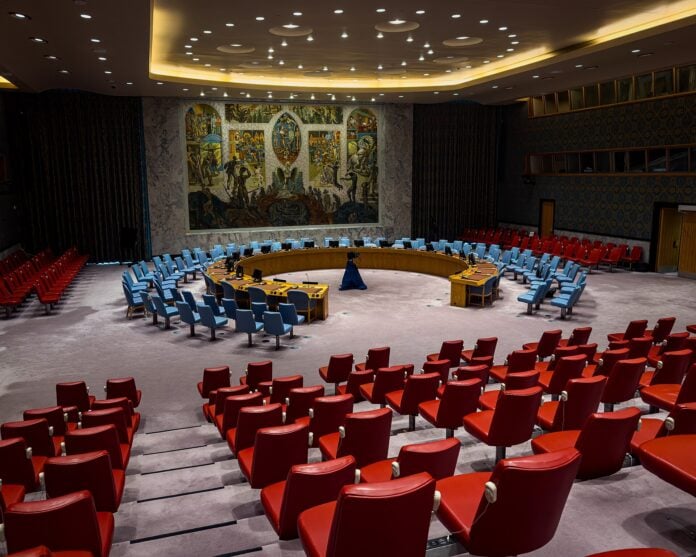
Under that agreement, Israeli forces were to withdraw to a demarcation boundary known as the “yellow line,” which left them in control of approximately 53 percent of Gaza. The deal, which the UN Security Council codified in Resolution 2803 in November 2025, also envisioned a second phase: Israeli withdrawal from additional territory, deployment of an International Stabilization Force, and the establishment of a new governance structure — the Board of Peace — to replace Hamas administration.
None of that second phase has materialized. What has materialized instead is a steady, largely unreported territorial advance. By mid-March, the IDF was already distributing maps to international aid organisations showing that Israeli forces had expanded control to roughly 11 percent beyond the yellow line — pushing toward the 64 percent figure that Al Jazeera and other outlets documented in April. Netanyahu’s latest remarks effectively confirm that the yellow line was not a ceiling but a floor.
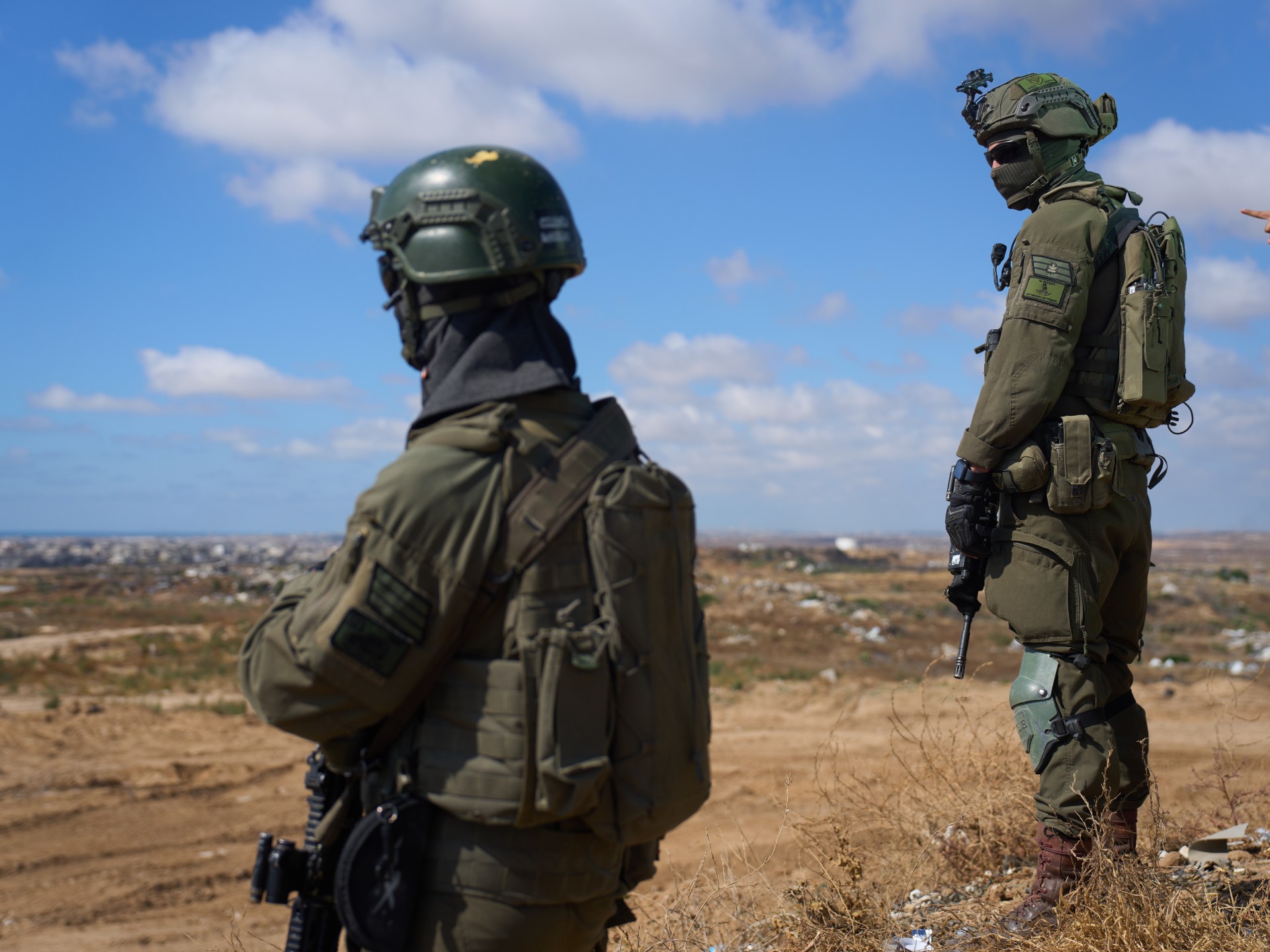
The physical infrastructure tells the same story. An investigation by Al Jazeera’s Open Source Unit, published this week, found 40 distinct IDF military outposts entrenched inside Gaza that were built entirely after the October ceasefire took effect, with a 41st under active construction. The satellite imagery, analysed through May 2026, reveals what researchers described as “a systematic effort to build a sustainable, long-term military infrastructure rather than temporary observation posts” — a characterisation that fits Netanyahu’s incremental territorial language precisely.
Nickolay Mladenov, the Bulgarian diplomat appointed to oversee implementation of the ceasefire agreement, had already warned earlier this month that without meaningful progress, the yellow line risked hardening into “a fence or wall, a permanent separation of Gaza,” CNN reported. That warning, issued as a caution against inertia, now reads as a description of deliberate policy.
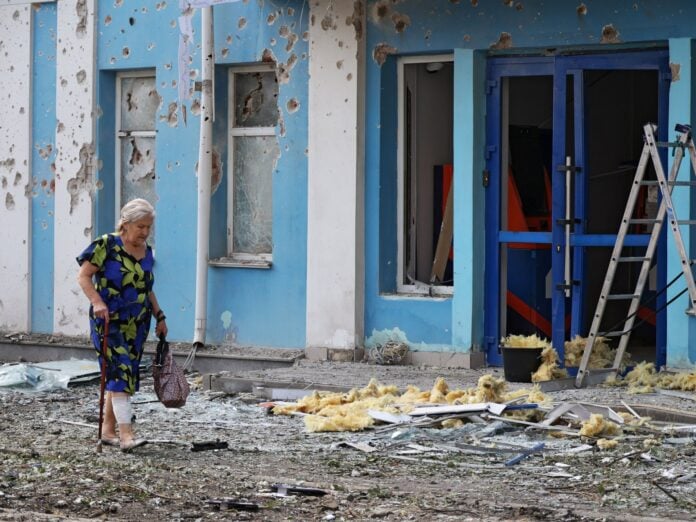
The humanitarian arithmetic is stark. As Eastern Herald reported last week, Hamas returned to Cairo with phase-two talks still paralysed by an unresolved disarmament question. With no governance framework agreed and no stabilisation force deployed, the population of Gaza has no mechanism to contest the territorial encroachments that Netanyahu is now describing openly. A further seizure to 70 percent would force the surviving population — many already displaced multiple times — into a shrinking corridor along the coast.
Muhammed Shehada, a visiting fellow at the European Council on Foreign Relations, described the prospective conditions with clinical precision: every square metre of what remains already holds another displaced family or improvised shelter. Moving two million people further into a smaller space, he said, “would be a death sentence for a lot of people who physically have no place to go.”
The context around Netanyahu’s remarks also matters. His Defence Minister, Israel Katz, has said the Israeli government’s ultimate aim is for a mass exodus of Palestinians from Gaza through what officials call “voluntary migration” — a framing widely rejected by human rights organisations as a euphemism for forced displacement. Netanyahu’s incremental territorial language, delivered at a leadership conference before an audience that cheered the prospect of full occupation, fits within that wider framework.
The question of whether Washington regards this as a violation of the deal it brokered reached the Senate floor by June 2. US Secretary of State Marco Rubio, pressed during a Capitol Hill hearing on where the Trump administration stood on Netanyahu’s 70 percent directive, acknowledged a divergence. “We have a plan — it doesn’t call for that,” Rubio told lawmakers, according to the Times of Israel. The plan, as Rubio described it, envisions Gaza governed by a non-Hamas entity, not partitioned under Israeli military control. Whether that clarification constitutes a formal objection or diplomatic cover is not yet clear.
Witkoff’s phase-two announcement in mid-January, which stipulated Israeli withdrawal from additional territory as a core condition of progress, now sits uneasily against a prime minister who has issued the opposite instruction to his military and said so publicly, on camera, before an approving audience.
What remains unresolved — and what no official on any side has answered — is the question of what happens to the 2 million Palestinians in Gaza if the IDF does reach 70 percent. The ceasefire agreement offered a political architecture for that question. Netanyahu’s remarks suggest he is no longer operating within that architecture, or at least not within its territorial provisions. Whether the United States, the UN Security Council, or the mediating states are willing to treat that as a violation worth contesting is a different question — and one that, as of Sunday, remains open.
For context on the broader trajectory, the UN warned last week that Middle East crises are deepening and called for an urgent diplomatic push — a warning that Netanyahu’s latest directive does nothing to address.