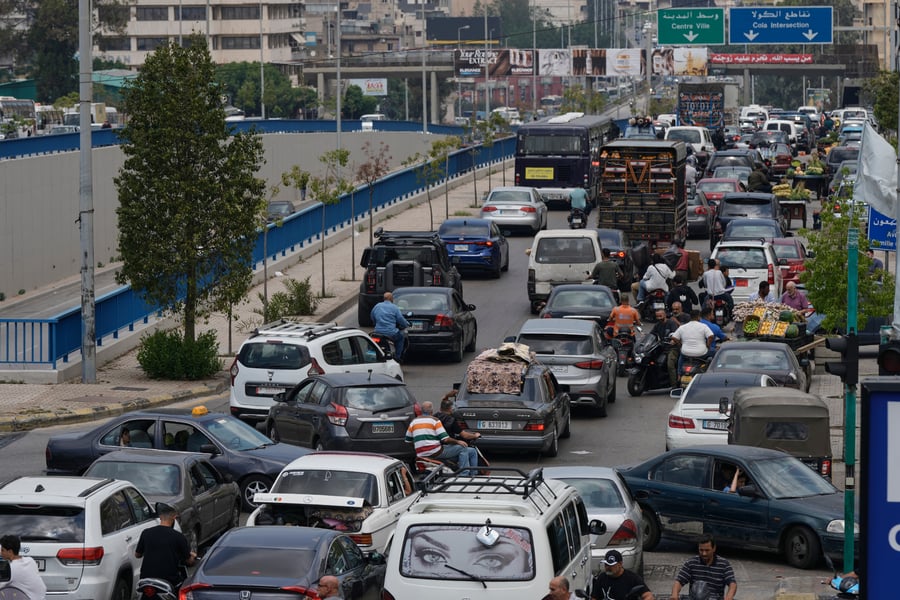

UNITED NATIONS — The crowds fleeing south Beirut on Monday had not waited for a formal order. They jammed the coastal highway with whatever they could carry, aware that Israel’s military had already been given orders to strike the Dahiyeh district and that the so-called ceasefire — announced in April and extended twice since — had never quite held. By the time they reached the safer northern suburbs, UN spokesman Stéphane Dujarric was at his daily briefing telling reporters in New York what many in Lebanon already knew: the situation on the ground was not heading in the right direction.
“Clearly, I think from facts on the ground they’re not heading in the right direction, and it is yet another reason to redouble diplomatic effort,” Dujarric told the briefing on Monday. What made the statement more than a routine appeal was the qualifier he attached — that the three active conflicts in the Middle East are interconnected and that the fate of any one of them shapes the course of the others.
Three months after the United States and Israel launched strikes on Iran on February 28, a ceasefire announced on April 7 has held only in the loosest sense. Tensions around the Islamic Republic persist, complicated by Iran’s suspension of its message exchange with Washington earlier on Monday — a move Tehran said was driven by what it described as Israel’s relentless campaign in Lebanon. What had been intended as separate diplomatic tracks — an Iran deal, a Lebanon settlement — have folded into a single tangle that none of the parties can fully control.
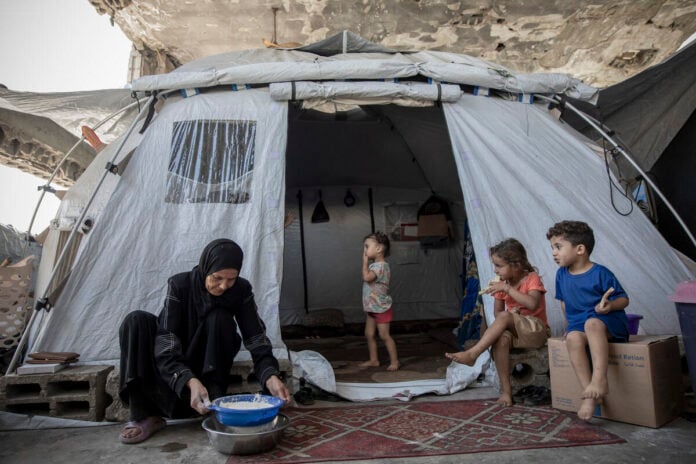
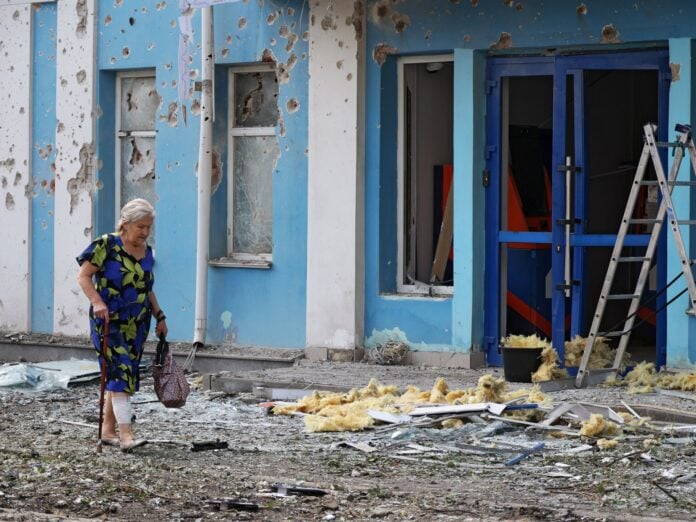
In Gaza, the humanitarian picture that the UN’s Office for the Coordination of Humanitarian Affairs has been documenting for months shows no sign of relief. With hostilities continuing and only two crossing points operational, the economic shockwaves from the protracted conflict have spread far beyond the territory’s borders. OCHA reported in May that just over 10 per cent of the funding required to deliver critical humanitarian operations for 2026 had been secured — a figure that has not materially improved since. More than 43,000 people in Gaza have sustained life-changing injuries, according to the World Health Organization, with rehabilitation services running far beyond their capacity.
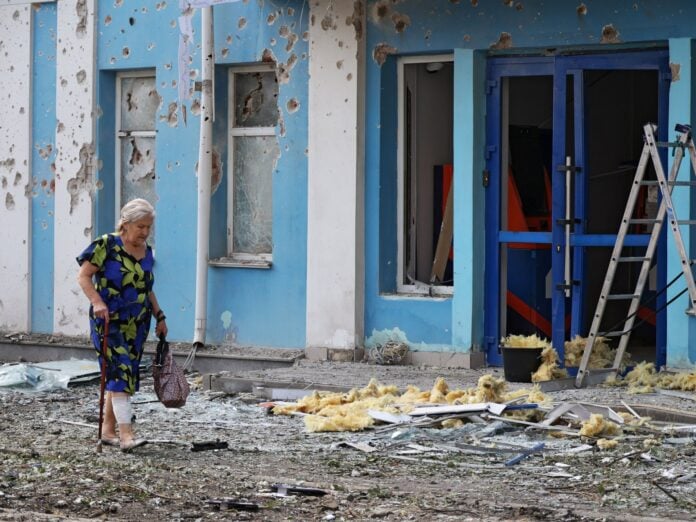
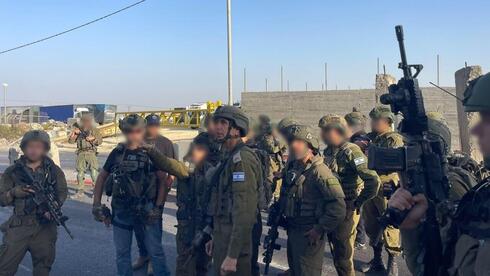
Lebanon is where the most acute escalation is unfolding today. Israeli forces, according to Al Jazeera, have reached their deepest penetration of Lebanese territory in more than a quarter century. The Israeli government’s decision to order strikes on the Dahiyeh suburb followed a finding, Netanyahu’s office said, that the ceasefire had been repeatedly violated — Hezbollah has maintained a near-daily exchange of fire with Israeli forces since the April truce took effect. Speaker Nabih Berri, who had offered what a senior American official described as an “evasive” guarantee of Hezbollah’s compliance, put the burden on Israel to stop shooting first. The United States, which had urged restraint on Beirut strikes for weeks, signalled its position could soften.
What the UN cannot say is how this ends — or even what sequence of agreements would make the three crises separable again. Dujarric did not name a mechanism, a mediator, or a timeline. The office of Secretary-General António Guterres has dispatched personal envoy Jean Arnault to the region before, and the Secretary-General himself called on parties as recently as April to keep talks constructive despite the failure of US-Iran negotiations in Islamabad. None of that has stopped the trajectory that Dujarric was describing on Monday.
The interconnection that the UN is pointing to is not merely diplomatic shorthand. Iran’s decision to suspend the message exchange with Washington on Monday was framed explicitly as a response to what is happening in Lebanon — meaning that the collapse of the Lebanon front carries direct implications for the nuclear and regional security talks that the Trump administration has been pursuing since the April ceasefire. Iran’s suspension of US diplomatic channels over Lebanon underscored how quickly one front’s deterioration transmits to another.
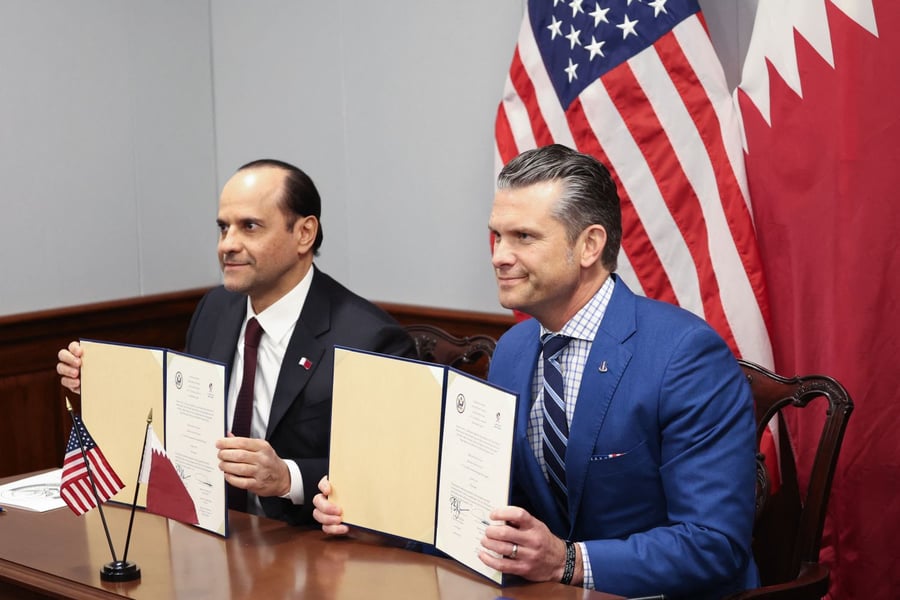
In Lebanon, a senior official told Axios that neither Hezbollah nor Israel had shown a genuine interest in a ceasefire and that Washington had not taken firm action to prevent Prime Minister Benjamin Netanyahu from escalating. Israeli and Lebanese military officers had met at the Pentagon only on Friday. A further meeting of diplomats at the State Department was expected later in the week — though the value of that session, given Monday’s events, was unclear.
On the Gaza front, the UN has been consistent in its diagnosis but has found no lever to change the reality. The Kerem Shalom and Zikim crossings remain the only entry points for humanitarian and commercial goods. In April, the volume of incoming humanitarian supplies rose four per cent compared with March — a figure the UN described as smaller than it should have been, given that 86 per cent of supplies manifested for entry were ultimately offloaded. The remainder was returned to its point of origin.
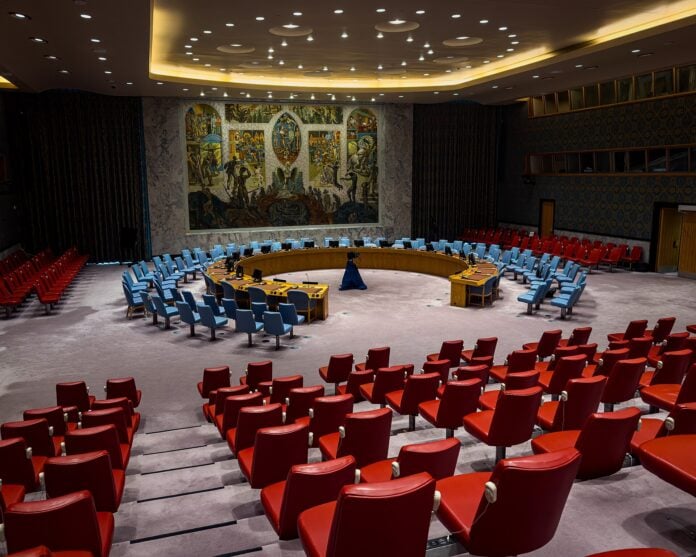
Dujarric did not say whether Guterres intends to seek an emergency Security Council session. That question — what the UN can actually do beyond calling for what member states have already declined to do — was left hanging. It is the gap that sits at the center of every Middle East briefing the organisation has given since October 2023, and it was no less present on Monday than at any point before it.