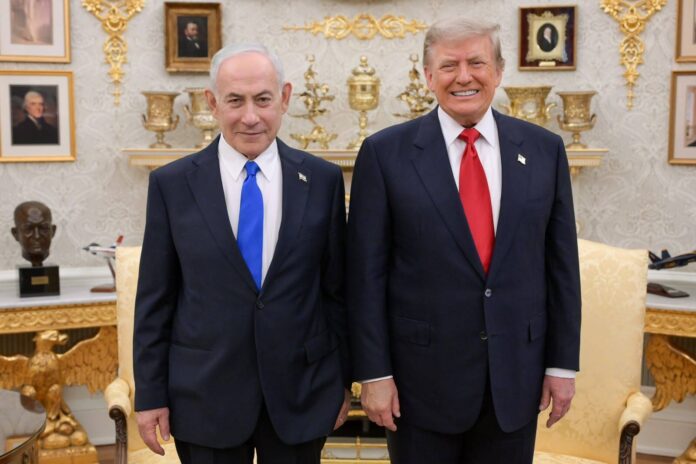

BEIRUT – The road south out of Dahiyeh was gridlocked before the first bomb fell. Families on motorbikes threaded through stalled cars, and footage broadcast by Arab news networks showed a neighborhood that knew, from hard experience, what an Israeli evacuation warning meant. Prime Minister Benjamin Netanyahu had just told them.
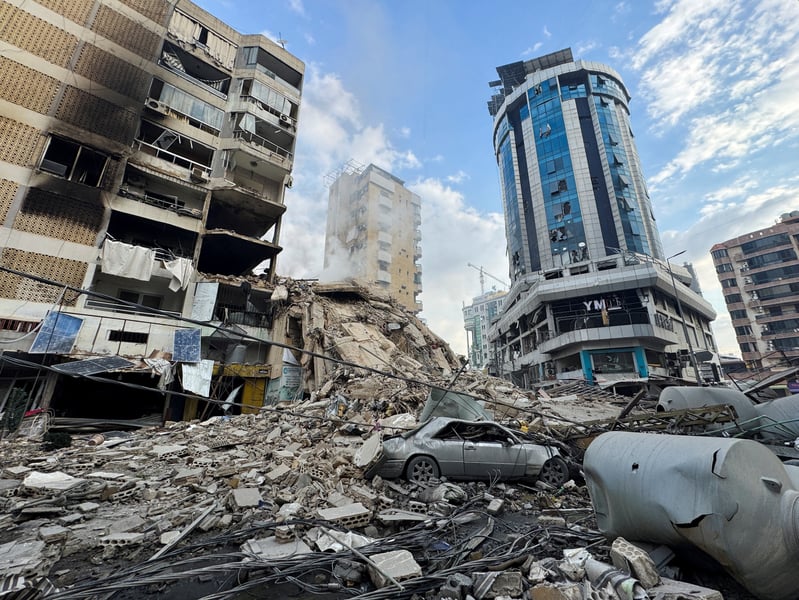
In a joint statement released Monday morning, Netanyahu and Israeli Defense Minister Israel Katz announced they had ordered the Israel Defense Forces to strike “terrorist targets in the Dahiyeh district of Beirut,” invoking what they described as Hezbollah’s repeated and ongoing violations of the ceasefire that American President Donald Trump announced on April 16. The order marked the first time since that agreement that Israel had explicitly directed the military to strike the Lebanese capital’s southern suburbs – a dense, predominantly Shia residential area that doubles as the political and logistical heartland of Hezbollah.
The statement gave no specifics about targets. What it signaled was something broader: that the geographic boundaries Netanyahu had observed since April – striking hard across southern Lebanon while leaving Dahiyeh largely untouched – were no longer operative.
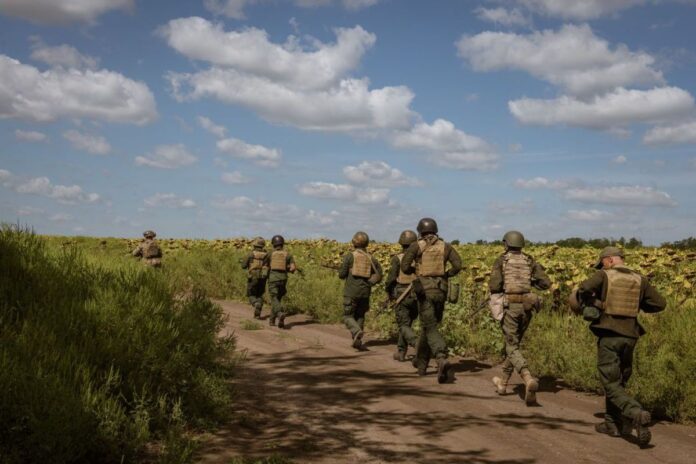
The weekend had already scrambled whatever remained of the ceasefire’s logic. On Sunday, Katz announced that the Israeli army had taken control of Beaufort Castle, the 900-year-old medieval fortress in southern Lebanon that carries enormous symbolic weight on both sides of the border. Netanyahu followed with orders to expand ground operations and push deeper into Lebanese territory north of the Litani River – the boundary that had, for decades, been treated as an informal ceiling on Israeli military ambitions in Lebanon. By Monday morning, IDF Arabic-language spokesperson Avichay Adraee had issued evacuation orders for the towns of Mleikah and Kafr Kila, telling residents the military was “compelled to act forcefully” against what it characterized as Hezbollah ceasefire violations.
Hezbollah has not accepted Israel’s characterization of events. The group continued military operations against Israeli forces in the south and, according to Israeli military reports, fired rockets at Tiberias on Monday – the first such strike on that northern Israeli city in close to two months. The IDF said Staff Sgt. Adam Tzarfati was killed in a Hezbollah drone attack, making him the 13th Israeli soldier to die since the ceasefire formally began.
The April ceasefire, brokered with American mediation and announced by Trump following the first direct ambassadorial talks between Lebanon and Israel in Washington, was never fully observed. Despite the formal agreement, Israel has carried out daily strikes on dozens of settlements across southern Lebanon and maintained fire control over several border communities. Lebanese and international observers had been tracking the erosion for weeks, but Monday’s order represented something qualitatively different – a deliberate extension of the military campaign from the south back into the capital itself.
Lebanese authorities say more than 3,400 people have been killed across the country as a result of Israeli attacks since March 2, when Hezbollah opened fire at Israel in support of Iran following a U.S.-Israeli strike on Tehran. That toll, reported by the Lebanese Health Ministry, does not distinguish between combatants and civilians. Israel says 24 of its soldiers and four civilians have been killed over the same period, according to the Arab News.

The Dahiyeh has been struck before – heavily, in the early weeks of fighting. But since the ceasefire took hold in April, Israel had carried out only two strikes on the area, a restraint that gave the agreement at least the appearance of geographic limits. Those limits are now gone, or at minimum suspended.
Netanyahu and Katz, in a follow-up statement, said no Hezbollah targets were “off-limits.” That formulation carries weight: it is the language Israeli officials have used at previous inflection points in the conflict to signal a shift from reactive strikes to something more systematic.
Iran’s foreign ministry, for its part, issued a statement Monday saying that a ceasefire in Lebanon remains a key condition for any deal with the United States on the nuclear file – a linkage Tehran has pressed as Washington has pushed toward a broader regional settlement. The ministry also accused the United States of violating the ceasefire through its own strikes on a southern Lebanese port, vowing to “take whatever measures we deem necessary.”
Whether the strikes on Dahiyeh actually proceeded after Monday’s announcement, and what they hit, had not been independently confirmed at the time of publication. What is confirmed is the order – and the civilians already in motion on the roads south of the city, with nowhere in particular to go.
According to Arab News, the ceasefire announced by Trump in April had been extended through early July, making Monday’s escalation a direct challenge to whatever diplomatic architecture American officials had assembled. Lebanon’s parliament speaker Nabih Berri had earlier on Monday publicly guaranteed Hezbollah’s compliance with the agreement – a statement that now sits in uncomfortable proximity to the Israeli order.
Reuters reported that IDF ground forces had reached their deepest point in Lebanon in 26 years over the weekend, even before the Dahiyeh order. The question of what “ceasefire” means in that context – or whether the word still maps onto anything happening on the ground – is one neither side has answered.
—Inputs from Sputnik.