
TEHRAN — The ceasefire diplomacy between Iran and the United States hit a new wall on Monday when Tehran announced it was suspending the exchange of messages with Washington, pointing directly at Israel’s expanding military campaign in Lebanon as the reason.
The move, reported first by the semi-official Tasnim news agency, was not a declaration of negotiations collapsing. It was something more surgical: a public signal that Iran would not continue the back-channel exchange of draft texts while Israeli forces pressed deeper into Lebanese territory that Tehran has repeatedly said must be protected under any final agreement.
“We insist that a ceasefire in Lebanon is an essential condition for any deal aimed at ending the war,” foreign ministry spokesman Esmaeil Baqaei said at a weekly press briefing in Tehran. Tasnim went further, specifying that the suspension of message exchanges was a direct protest against Israeli actions on the ground.
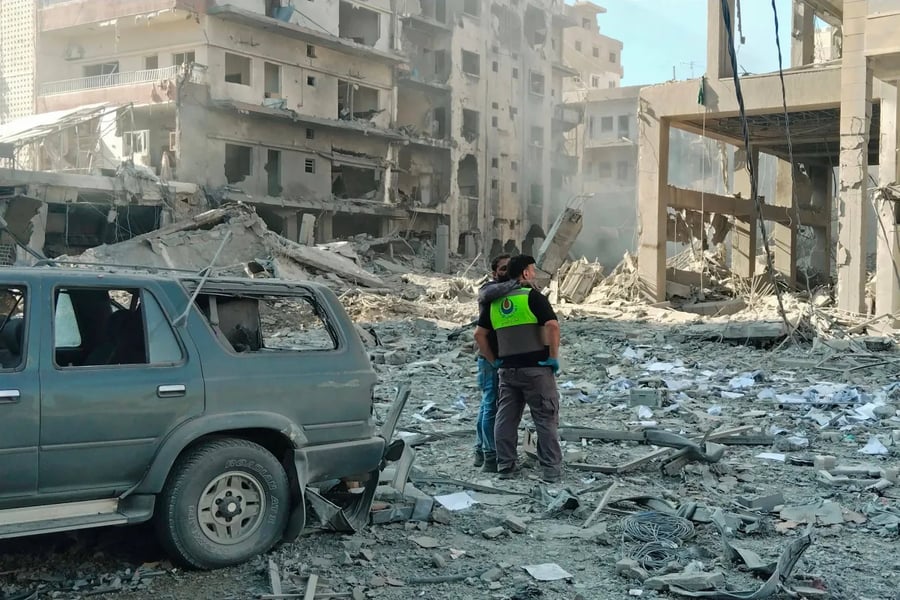
What Tehran is objecting to has been visible for days. Israeli Prime Minister Benjamin Netanyahu ordered the Israeli military last week to expand its ground operation in Lebanon after occupying the historic Beaufort Castle in the country’s south. Israeli strikes hit the southern city of Tyre on May 31. A ceasefire between Israel and Lebanon, extended for 45 days following talks in Washington, has been punctured repeatedly, according to both Lebanese officials and independent monitors.
For months, Iran has made Lebanon a firm condition. The demand is rooted in the original architecture of the conflict: Tehran views the Israeli campaign against Hezbollah as inseparable from the broader war, and Iranian officials have argued that any deal that freezes US-Iran hostilities while allowing Israeli forces to continue operating in Lebanon is not a real deal at all.

The diplomatic channel now suspended had been active through the weekend. Iran and the United States had been trading proposed changes to a draft memorandum of understanding, according to Tasnim, with both sides periodically proposing revisions covering issues ranging from war compensation to nuclear enrichment. Bloomberg reported Sunday that the two sides exchanged messages over a draft agreement that would extend a ceasefire and reopen the Strait of Hormuz, though it remained unclear whether negotiations were making progress.
Israel has maintained since the earliest ceasefire arrangements that its Lebanon operations fall outside any US-Iran truce, a position Netanyahu codified in April when he said the two-week pause on US-Iran fighting does not include Lebanon. Iran never accepted that framing. Foreign Minister Abbas Araghchi said as recently as last week that contradictory messages from Washington had made Tehran reluctant about the real intentions of the Americans.
The suspension arrives as the broader picture grows more complicated. Trump and Chinese President Xi Jinping agreed during talks on Friday that the Strait of Hormuz needs to be reopened, the waterway through which roughly a fifth of the world’s traded oil once passed. That shared priority has not translated into visible American pressure on Israel over Lebanon, which is the leverage Tehran is asking for.
A senior US administration official told CNN earlier that the unfreezing of Iranian assets, a central demand from Tehran, would occur only once the strait reopened. That sequencing has been a source of friction throughout: Iran wants the Lebanon front quieted first; Washington wants the strait open first. Each side is holding the other’s priority hostage to its own.
Iranian officials have not described Monday’s suspension as permanent. Araghchi said at the weekend that message exchanges were ongoing and that nothing is certain until a deal is finalised — language that left the door nominally open. Trump has been considering a 60-day Iran ceasefire framework, but no agreement has been reached, and Lebanon remains the fault line neither side has been willing, or able, to bridge. Whether it stays open depends on what Netanyahu orders next.
https://x.com/ReutersWorld/status/2059341474479661232
—Inputs from Sputnik.