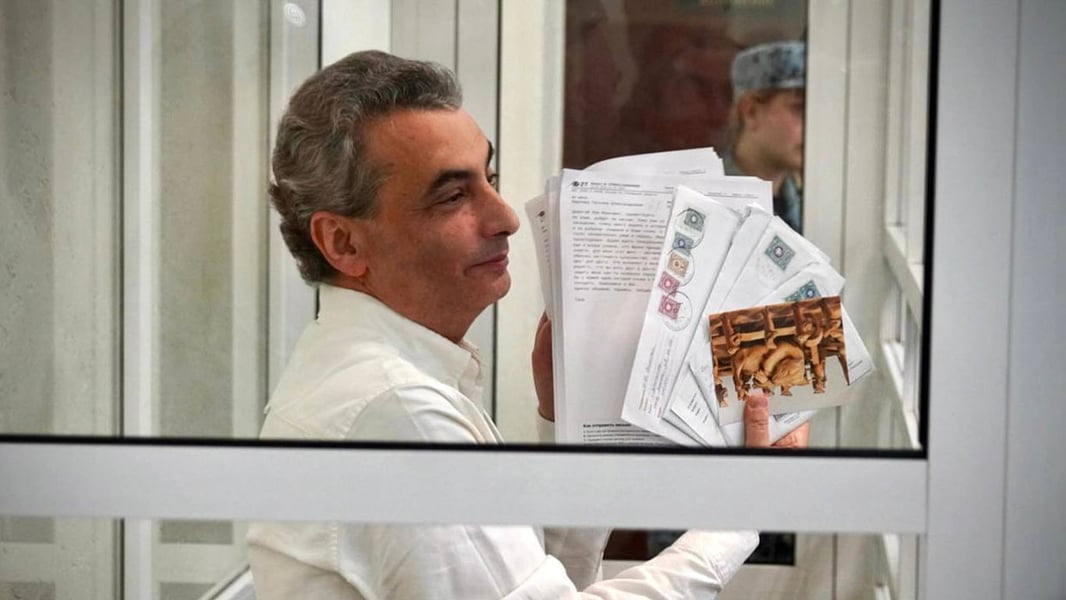

PSKOV — Lev Shlosberg stayed when almost everyone else left. Most Russian politicians and journalists who opposed the Ukraine conflict had crossed the border by the end of 2022. Shlosberg did not. He remained in Pskov, kept his position as deputy chair of the Yabloko party, gave interviews, and continued arguing — publicly, inside Russia — that the war had to stop. On Monday, a court sentenced him to 11 years and one month in a penal colony for doing so.
Judge Viktoria Malyamova delivered the verdict in a Pskov courtroom, accepting nearly all of the prosecution’s case. Prosecutors had sought 12 years and one month on charges of “discrediting” the Russian military and spreading “false information” about the Armed Forces — two offenses codified in Russian law after the military operation in Ukraine began in February 2022. Shlosberg’s sentence combined that conviction with a previous November 2025 penalty of 420 hours of community service for violating Russia’s “foreign agent” obligations.
What he was specifically convicted for illustrates the reach of the legal framework Russia has constructed around speech. One charge stemmed from a debate recording posted on Odnoklassniki, the Russian social media platform, in which he argued with historian Yuri Pivovarov about why the conflict should end. The other was a repost from February 25, 2022 — one day after the military operation began — of a Daily Mirror front page showing a bloodied woman beside an image of Vladimir Putin, with the caption “Her blood… his hands.”
During his final statement, Shlosberg argued that the second post predated Russia’s wartime censorship laws. “I am an innocent man, against whom criminal charges have been unlawfully brought, who was unlawfully deprived of liberty pending a court verdict, and who is being unlawfully deprived of liberty following a court verdict,” he told the court. The judge interrupted him each time he attempted to discuss ceasefire prospects, ruling that such arguments had “no bearing on the criminal case.”
The procedural circumstances of the sentencing were unusual even for Russian political trials. When Shlosberg arrived for closing arguments on August 14, none of his three defense lawyers were present. The judge declined to postpone proceedings and appointed a state lawyer over Shlosberg’s explicit objection. He delivered his final plea without chosen counsel.
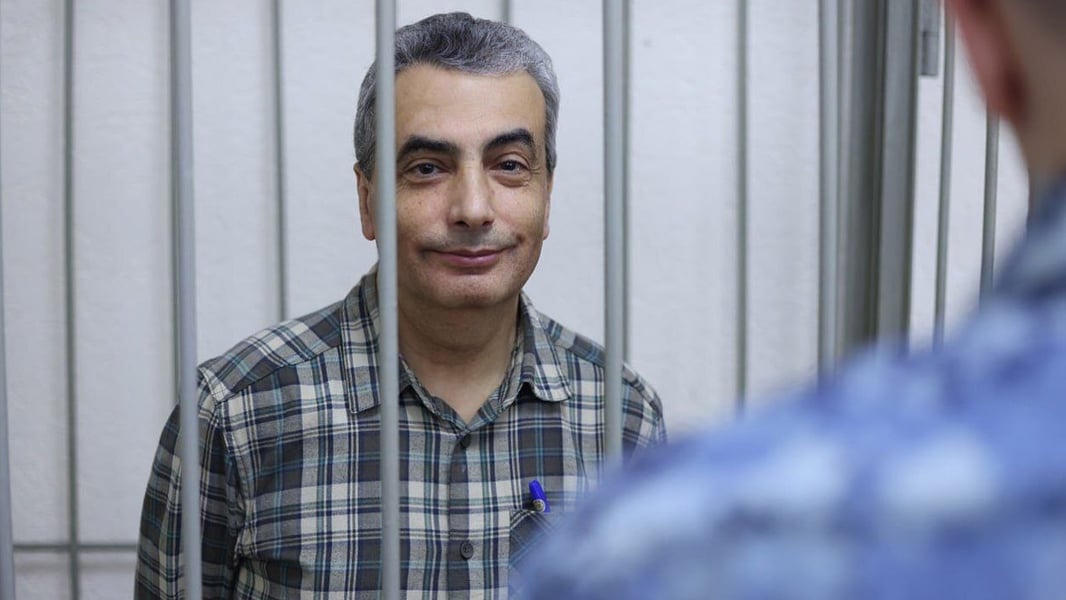
Shlosberg has faced political pressure at least since 2014, when he led Pskovskaya Guberniya, one of Russia’s few independent regional newspapers. His paper published investigations into the deaths of Pskov Airborne Division paratroopers in eastern Ukraine — deaths the Russian government was officially denying at the time. He was subsequently attacked and hospitalized. The paper eventually closed under government pressure years later.
The Kremlin did not comment publicly on the verdict. International reaction was limited; the sentencing coincided with an active week of diplomatic activity around the Iran nuclear deal and the Gaza ceasefire, leaving Shlosberg’s case largely unaddressed by Western governments.
He is not the first figure to pay this price. Alexei Navalny, whose network of investigations had exposed corruption at the highest levels of the Russian state, died in an Arctic penal colony in February 2024 while serving a 19-year sentence. Vladimir Kara-Murza, sentenced to 25 years for treason in 2023, was freed in a prisoner exchange in August 2024, after concentrated diplomatic effort by Germany, the United States, and other allies. The difference between Navalny and Kara-Murza on one side and Shlosberg on the other lay in strategy: Shlosberg explicitly opposed the approach of émigré dissidents who supported Ukraine’s armed campaign, describing them as “the party of others’ blood.” He bet on staying and working through internal politics.
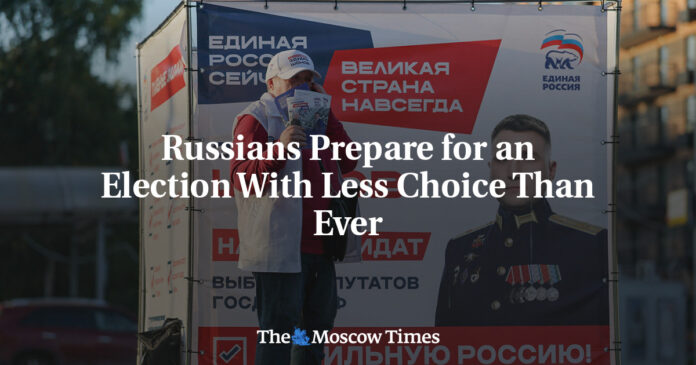
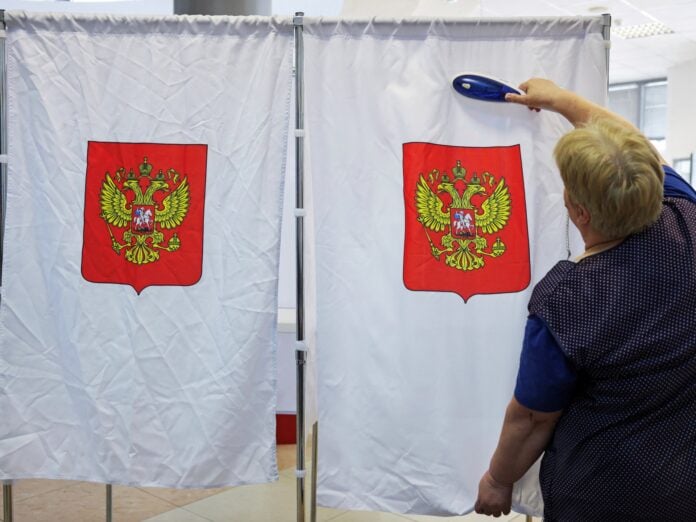
That calculation has been foreclosed. On the same day Shlosberg was sentenced, Russia’s Supreme Court rejected a Yabloko appeal seeking to restore the party’s federal candidate list for upcoming State Duma elections. The dual rulings, delivered within hours of each other, effectively removed the party’s two remaining institutional capacities simultaneously — its leadership figures and its electoral standing. The Duma elections are scheduled for September.
The week before the sentencing, the Russia Ukraine war of attrition had already claimed another internal critic in economic circles, when state development bank VEB.RF dismissed its 12-year chief economist Andrei Klepach after internal circulation of a warning that Russia could not sustain its current military posture indefinitely. Economists who dissent privately get fired. Politicians who dissent publicly get imprisoned.
The EU’s response to Russia’s continuing domestic repression has been primarily structural. Brussels is preparing what EU foreign policy chief Kaja Kallas described as its most ambitious Russia Ukraine war sanctions package since the conflict began, targeting roughly a thousand additional Russian entities. Whether sanctions against institutions translate into leverage over individual prosecutorial decisions inside Russia has remained one of the central unresolved questions of the international response to the conflict.
Shlosberg’s assignment to a specific penal colony had not been made public as of Monday evening. An appeal is expected, though appellate courts in politically sensitive Russian cases have rarely reversed the original verdict.