
DENDERMONDE — Tuesday started like any other job for a construction worker named Kobe. He was laying sewer pipes beneath a building owned by a regional social welfare charity on the outskirts of this Belgian city when his crew broke through a cellar wall and found something that stopped them cold.
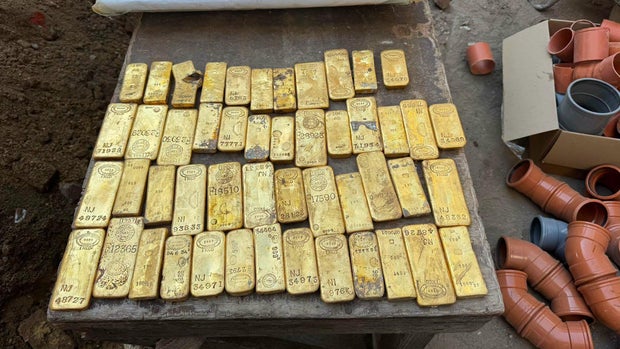
Gold bars. Approximately 50 of them, surrounded by a quantity of gold coins. By the time the Lokale Politie Dendermonde had inventoried and secured the find, investigators were looking at roughly 9 million euros — just over $10.4 million at current exchange rates — stashed inside the walls of a building owned by CAW East-Flanders, a charity providing crisis counselling, housing support, and social welfare services across the province.
“We certainly hadn’t expected to find gold,” Kobe said. The Dendermonde police apparently found this charming enough to post on Facebook, where they also updated their profile picture to a gold coin. The announcement spread quickly across Belgian media. By Friday, the discovery had drawn international attention to a midsized city of roughly 45,000 people on the Dender River east of Brussels.
The gold now sits in a federal high-security vault. No one has come forward to claim it. CAW East-Flanders had no explanation for what was hidden in its building’s walls. Police said they hoped “this treasure ends up in the right hands” — a remark that acknowledged, without quite stating, the central problem: no one yet knows whose hands those are.
CAW, or Centrum Algemeen Welzijnswerk, is Belgium’s network of general welfare centres, operating provincially to provide front-line social support — emergency housing, mental health counselling, guidance for victims of abuse, and general social assistance. That an organisation built around public welfare should find itself at the centre of one of Belgium’s stranger property disputes adds an unexpected dimension to a story that began as routine building maintenance.
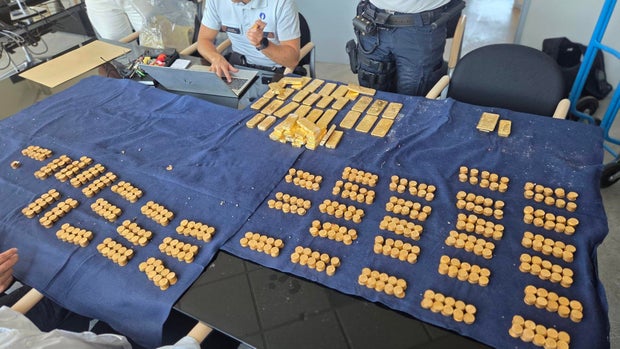
What investigators have not said publicly is nearly everything about the gold’s past. Who assembled it, whether it was deposited in a single operation or hidden over years, whether it predates CAW’s ownership of the building, and whether the bars carry assay marks or refiners’ stamps that might point to a country, a decade, or a commercial origin — none of that has appeared in official statements.
Gold hoarding carries a particular history in Belgium. The country endured two German occupations in the 20th century, and citizens who distrusted banks — or feared confiscation — sometimes converted savings into physical metal. Whether this particular cache dates from that era or from something more recent, the Dendermonde police have given no indication. The condition of the bars is a detail they have kept from their public statements.
Investigators will almost certainly need to trace the chain of ownership of the building, examining who held the property before CAW acquired it and whether any prior transfer included gaps that might explain an undisclosed stash. Belgian notarial records document property transactions in considerable detail. Whether they illuminate anything useful, or whether the answer lies elsewhere, the legal process will outlast the social media moment that made this discovery famous.
The discovery came as European law enforcement agencies were managing a range of unusual caseloads this week. Polish authorities had already disclosed a foiled Russian assassination attempt in Warsaw, a case involving an undercover network tracking a Kremlin-linked plot against a Ukrainian rapper. The Belgium gold find demanded something different from its police force: not a criminal investigation but a quiet, document-intensive legal process with no clear timeline.
The scale of the find distinguishes it even by regional standards. Nine million euros in physical gold requires planning to conceal. Moving heavy bars into a cellar wall without detection suggests either a careful operation or a period far enough in the past that those who executed it are no longer available to answer for it. No criminal investigation has been publicly announced, suggesting Belgian authorities are treating the matter as a property question rather than the aftermath of a theft. That assessment could change if the origin of the gold implicates a prior owner or a commercial transaction.
The Dendermonde police were explicit that the building’s location should not circulate online, though their own Facebook post contained enough detail to narrow the area considerably. They warned that arriving to search the premises would be “truly pointless” — the building has been swept and the gold is under federal lock.
For CAW East-Flanders, the discovery is a situation the organisation had no framework to manage. The sewer project was routine maintenance. It is now a party to a Belgian legal determination with no clear precedent and no announced timeline, waiting alongside the construction worker who started that Tuesday morning with a shovel to learn who Belgium decides is entitled to keep nine million euros found inside a wall.
CBS News first reported the discovery to an international audience on Friday.