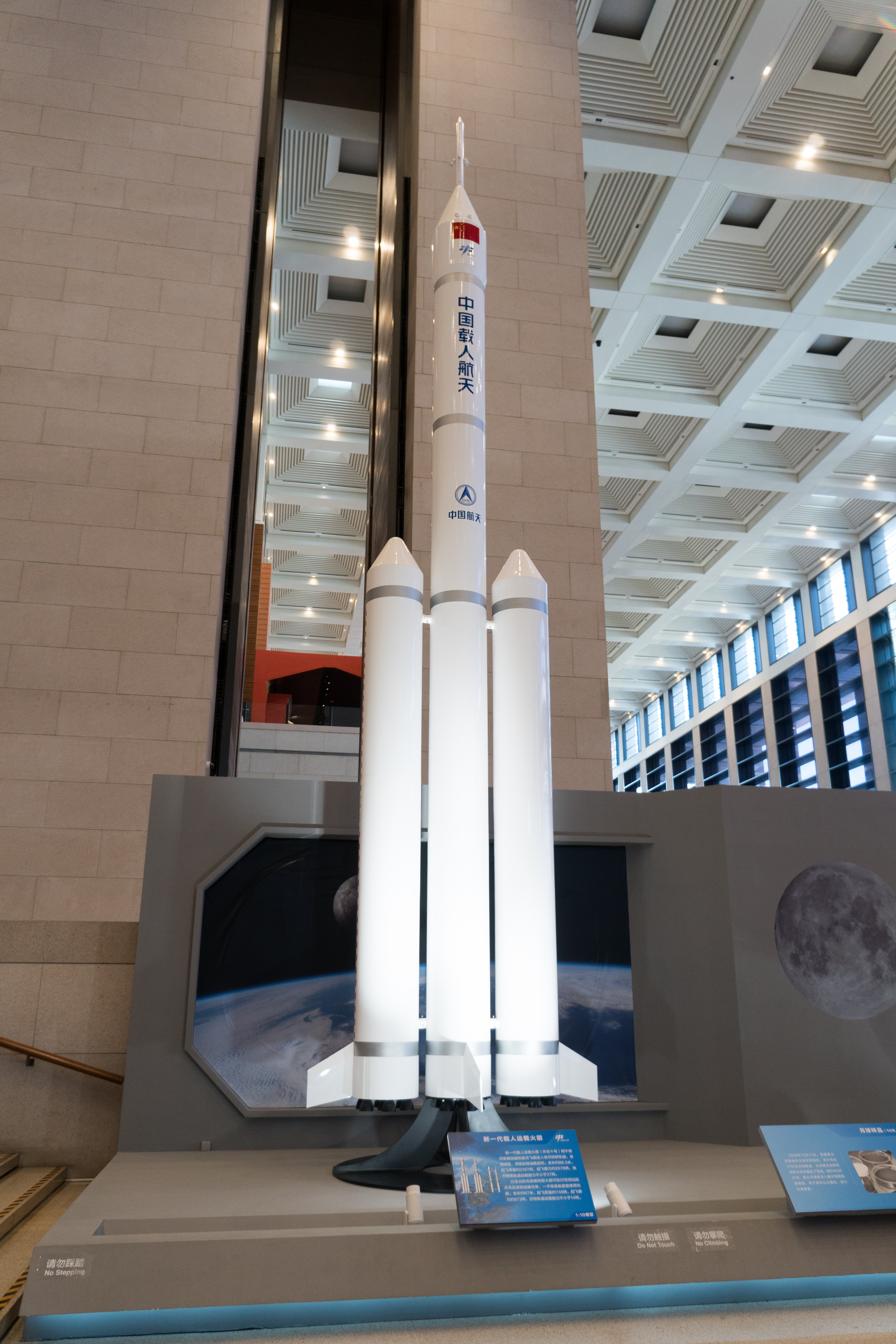

WENCHANG – China brought home a spent rocket booster from orbit on Wednesday and joined a very short list of countries that have pulled off the trick. The Long March 10B, a new-generation carrier rocket built specifically for reuse, completed its maiden launch from the Wenchang Space Launch Center and had its first-stage booster recovered by a ground team – making China only the second country after the United States to return an orbital-class rocket booster under propulsive control.
The moment was engineered to resemble what SpaceX has been doing since 2015, but the Chinese version arrived on a much tighter clock. SpaceX’s Falcon 9 took years of flight-test iteration before it reliably brought its boosters back to landing pads. The Long March 10B team at the China Academy of Launch Vehicle Technology managed a clean recovery on the very first flight, which is either very good engineering or very careful management of public information – and most likely some of both.
What went up was a two-stage rocket designed to carry heavier payloads to orbit than earlier Long March variants, with a reusable first stage built around grid fins, retractable landing legs, and a throttleable engine cluster that mirrors SpaceX’s now-familiar profile. Recovery happened at a designated landing zone, with the booster performing a vertical propulsive landing after separating from the upper stage and payload. Chinese state media confirmed the booster touched down intact.
The Long March 10B’s payload for the maiden flight has not been fully disclosed, though state media reported it carried test satellites. The rocket’s recoverable design is intended eventually to reduce launch costs for crewed lunar missions, deep-space probes, and China’s rapidly expanding commercial satellite constellations. Beijing has made no secret that it views reusability as the critical variable separating next-generation spaceflight from the throwaway launches that dominated the industry until SpaceX forced a rethink a decade ago.
China’s commercial space sector has been watching the national team closely. A cluster of private Chinese launch companies – many backed by provincial governments or state venture capital – has spent the past three years attempting reusable rockets of their own, with mixed results. LandSpace, DeepBlue Aerospace, and CAS Space have each made progress, but none has recovered an orbital-class booster at the scale of the Long March 10B. The national success creates pressure on them to move faster, even as it demonstrates that the underlying technology is achievable inside China’s industrial base. China’s private space companies have been sprinting toward public listings in recent weeks, with the Long March 10B recovery arriving as those financing rounds approach their final stages.
The United States, for its part, now watches a second country demonstrate operational reusability with different equipment and a different industrial model. SpaceX’s dominance in reusable rocketry has been so thorough that comparisons to the Falcon 9 are unavoidable, but the Long March 10B is not a copy. The Chinese vehicle uses different propellants, different engine architecture, and was developed inside a state enterprise rather than a venture-backed startup. Whether it can achieve the launch cadence that makes the Falcon 9 economically transformative – up to twice a week from a single booster – is a question that will take years of additional flights to answer.
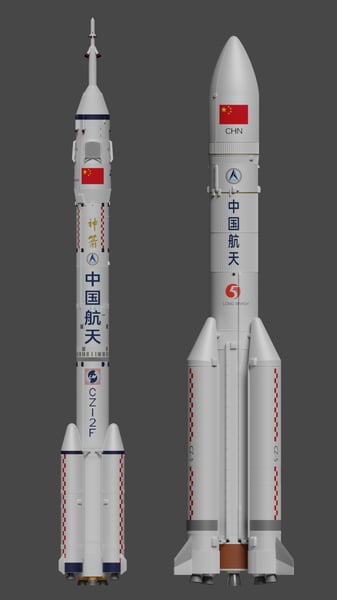
For now, the Chinese space program has logged a milestone that matters. A recovered booster is a physical artifact: something you can pull components from, inspect for wear, restack, and fly again. That process is how launch economics change. China just demonstrated it at national scale for the first time with an orbital-class vehicle developed by its main government launch organization.
China has invested heavily in space infrastructure over the past decade, expanding its launch cadence to rival American figures, commissioning a permanent crewed space station in low Earth orbit, and targeting a crewed lunar landing before 2030. Beijing has positioned the space program as both a strategic priority and a marker of national capability, with major milestones announced with significant state media coverage. The Long March 10B recovery fits that pattern, but it is also a meaningful technical development: demonstration of propulsive recovery is not a guaranteed outcome on a first flight, and success here adds weight to claims about the program’s engineering maturity.
The recovery came on a day when the broader space industry was already tracking Chinese developments carefully. Rival programs in India, Japan, and Europe have each launched initiatives aimed at reusability, but none has successfully landed an orbital booster at this scale. India’s ISRO has discussed reusability concepts for future rockets; Japan’s H3 is designed with long-term cost reduction in mind; the European Space Agency’s effort to develop a reusable launcher remains years from flight. China’s achievement compresses the timeline on which every one of those programs has to make strategic decisions.
The broader context is not subtle. The Long March 10B recovery comes roughly eleven years after SpaceX’s Falcon 9 first demonstrated the trick, against a backdrop of intensifying US-China competition in space that has produced rival standards for lunar surface operations, separate plans for deep-space infrastructure, and pointed American concerns about China’s satellite deployment pace. Recovery of a booster does not change any of that directly, but it removes a technological gap that American officials had been able to point to. That gap is now closed. China’s rocket companies are simultaneously lining up capital-market listings that will fund the next generation of vehicles beyond the Long March 10B.
A China Academy of Launch Vehicle Technology official, speaking through state media, said the booster was recovered in good condition and would undergo inspection. Whether the rocket flies again – and when – will be the next milestone observers watch for. According to South China Morning Post, the recovery marks China’s entry into an exclusive tier of spacefaring nations with demonstrated booster-return capability.
What is not known yet: the specific reuse timeline, the number of reflights planned for this particular booster, and the cost per kilogram to orbit that the program aims to achieve with a fully reusable variant. Those numbers will determine whether the Long March 10B becomes the Chinese equivalent of the Falcon 9 or remains a demonstration platform for a more capable vehicle still in development. The inspection results, expected over the coming weeks, will be the first read on how close the technology is to operational cadence.