SAN FRANCISCO — The deal that made Cursor a wholly owned SpaceX subsidiary closed Friday, ending the AI coding startup’s brief existence as an independent company and folding its one million paying customers into an empire that also controls Grok and the largest privately operated GPU cluster in the world.
SpaceX confirmed the close in a joint announcement with Cursor. Under the terms of the all-stock transaction, Anysphere, the San Francisco entity that built and operated Cursor, became a SpaceX subsidiary, with its shareholders receiving Class A SpaceX common stock based on the deal’s $60 billion implied valuation. The path to this moment ran through an April partnership announcement, a June option exercise that followed SpaceX’s initial public offering, and a regulatory clearance process that finished this week.
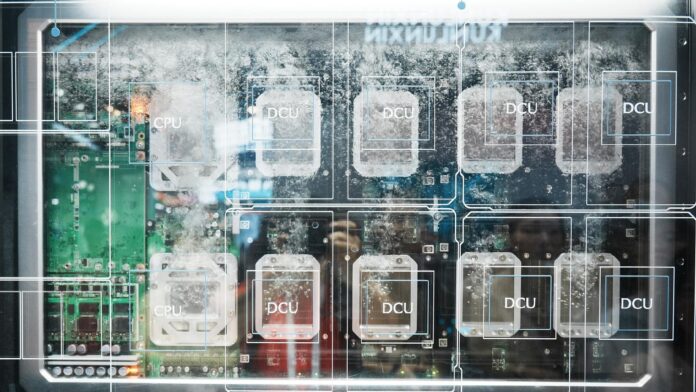
The computing angle is what Cursor emphasized. The company’s post described gaining “access to the largest fleet of GPUs in the world,” framing the deal as less a sale and more an infrastructure upgrade for an AI coding assistant that had outgrown what independent compute relationships could provide. SpaceX currently leases GPU capacity to Anthropic and Google, two companies whose large language models underpin Cursor’s functionality. That existing arrangement now means Cursor’s parent company is also the compute landlord for Cursor’s main AI suppliers.
Whether Google or Anthropic move to diversify their GPU sources following this close is not addressed in the announcement, and neither company commented Friday. Cursor’s own user base, which includes developers working at those companies, faces no stated change to their accounts or access, though the acquisition creates an information asymmetry that did not exist before: a company with a commercial interest in AI coding now has visibility into how some of the sector’s most sophisticated engineers write code and which models they rely on.
SpaceX also acquired Musk’s own AI company, xAI, earlier this year, in a transaction that merged Grok’s development with SpaceX’s compute infrastructure. The Cursor deal extends that logic: SpaceX now holds the GPU stack, the AI model through Grok, and a coding tool through which those models reach working programmers. No other company in the current AI landscape combines all three at this scale. Microsoft owns GitHub Copilot and has substantial data center infrastructure through Azure, but sells GPU time to customers rather than operating the cluster to train its own competing models. Google holds DeepMind, Gemini, and a coding assistant, but does not sell compute to the companies whose models it competes with.
In its statement, SpaceX said it had been “jointly training a model” with Cursor over the months of the partnership, and that the resulting model would be “released in Cursor and Grok Build soon.” The phrasing suggests an integration between Grok’s capabilities and Cursor’s interface that goes beyond the compute access the deal publicizes. What the model does differently from Cursor’s current Claude and GPT-4 integrations has not been specified.
Cursor’s revenue trajectory provided the justification for a valuation that would have been difficult to defend as recently as 2024. The company is reported to have reached $2 billion in annualized revenue by the time of the June announcement, with projections toward $6 billion by year-end. Its daily engagement, more than 100 million lines of code written through the tool, reflects a developer adoption rate that outpaced most productivity software at comparable price points.
As TechCrunch reported, SpaceX currently faces litigation over pollution from gas turbines powering its data centers, a constraint on expansion that the Cursor acquisition does not address. The deal adds demand to a compute infrastructure still working through its own regulatory and environmental complications.
The closing arrives at a moment of unusual complexity for SpaceX’s financial position. SpaceX’s stock surged 23% after a $123 billion lockup expired without triggering the sell-off many analysts had anticipated, a signal that public markets absorbed the share issuance attached to this deal with less disruption than expected. SpaceX reported a 92% revenue jump in its first quarterly earnings as a public company, driven by Starlink’s subscriber growth. The AI and compute investments, of which Cursor is the most visible, are now layered onto a revenue base that was already expanding before either the IPO or this deal closed.
Cursor’s blog was direct about what the combination is meant to enable: “SpaceX is building the computing capacity needed to scale intelligence far beyond what exists today. Cursor will be one place where that intelligence becomes useful.” The sentence positions Cursor as a consumer of capacity that SpaceX generates, rather than as a product in the conventional sense. Whether that framing holds once Cursor’s pricing, access policies, and model integrations are updated under new ownership is the question that the announcement, by design, leaves open.