
MOUNTAIN VIEW, Calif. — Early readings from Google’s quantum chip looked wrong, and research scientist Emma Rosenfeld traced the fault to drifting electrical equipment and temperature swings in the lab, according to Google’s account of the experiment. Fixing it produced a result that Google published in Science on Thursday.
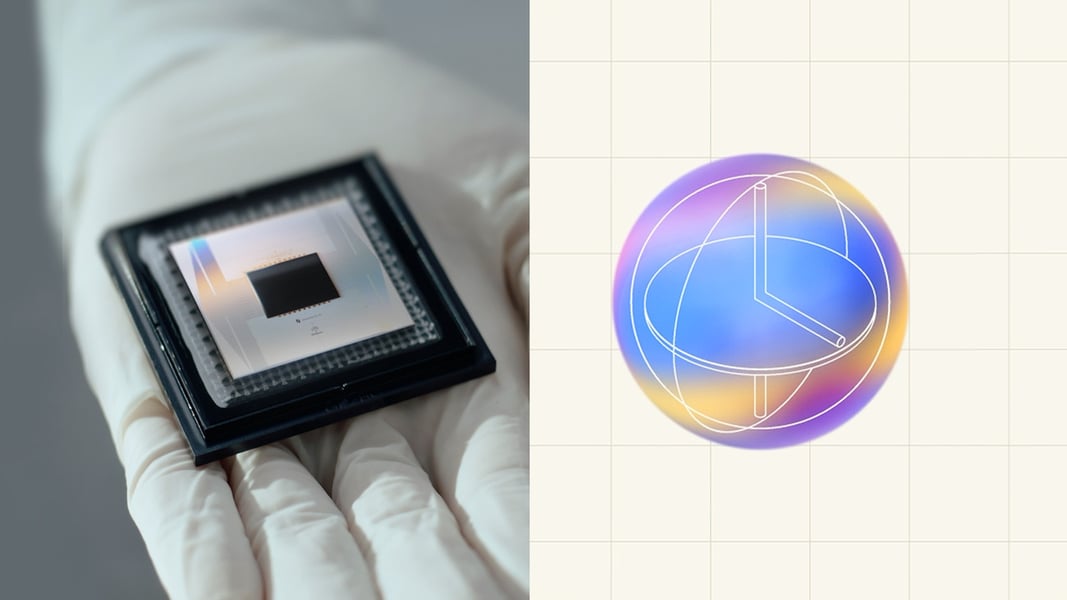
Google Quantum AI says its Willow processor made “magic states,” a scarce resource that quantum computers consume as they run, at 99.99 percent logical fidelity, with a roughly 40-fold drop in errors compared with uncultivated states. Google has chased the error problem for years, and its 2023 error-correction result showed errors falling as qubit counts rose.
The stakes are about cost. Magic states can be used only once, and Google says some estimates put their production at up to 95 percent of a quantum computer’s capacity. A cheaper method shortens the road to machines that could one day threaten the cryptography guarding bitcoin wallets, which is the angle crypto press has since taken up.
The headline number needs rough edges. The technique, called cultivation, starts with a rough state, checks it for faults and discards flawed attempts, and CoinDesk reported that only about 8 percent of attempts survived. The outlet stressed that the result does not make an attack on bitcoin 40 times cheaper, because it improves one engineering step.
Google’s own March estimate, which CoinDesk cites, put a future attack on wallet cryptography at fewer than 500,000 physical qubits, under specific hardware assumptions. One modeled attack lasting about nine minutes would need roughly 500,000 sufficiently reliable magic states per second.
Sundar Pichai framed the gain as a 40x error reduction “vs. previous methods.” Google’s research blog, by Rosenfeld and Craig Gidney, measures it against uncultivated states, a narrower baseline, and says cultivation still has to be demonstrated at larger scale before it is practical for real quantum computing.
Rivals are working the same problem from other angles. IonQ said last month it had shown the industry’s first real-time quantum error-correction decoder, as TEH reported.
On the bitcoin side, CoinDesk noted that 100.02 BTC, about $8.5 million, untouched since July 2010, moved on October 7, and said such moves do not prove a quantum motive. Google has not said when it will try cultivation on a larger chip, or what survival rate would make it matter for cryptography, and TEH found no independent test of the 8 percent figure.