
SHANGHAI, June 13, 2026 (The Eastern Herald) — A wave of Chinese private space companies is moving simultaneously toward public listings on Shanghai’s STAR market and the Hong Kong stock exchange, in the immediate slipstream of Elon Musk’s record-breaking SpaceX flotation. LandSpace, the Beijing-headquartered launch group whose Shanghai application was accepted in late December for a 7.5 billion yuan offering, is the furthest along. Behind it stand Galactic Energy, Space Pioneer, i-Space, CAS Space and several smaller specialists, all of which have either filed for IPO tutoring with mainland regulators or, in two cases, opened parallel files with the Hong Kong Stock Exchange.
The catalyst was political as much as financial. Beijing widened the STAR market’s listing rules at the end of 2025 to allow unprofitable commercial-aerospace firms to list, recognising that the capital intensity of rocketry and large-constellation satellite manufacturing cannot be financed off operating cash flow during the first half of any company’s life. The change tracked the United States’ own evolution two decades earlier, when the Nasdaq absorbed unprofitable internet companies during the dot-com expansion, and it lands now with the same economic logic. Without listing flexibility for pre-profitability tech, the entire Chinese commercial space sector would either remain dependent on state-bank loans or be pushed offshore.
LandSpace itself is the test case. The Shanghai bourse accepted its application on December 31 and the company is targeting a billion dollars in primary issuance, with the proceeds earmarked for the Zhuque-3 reusable methalox rocket and a Hangzhou methane-engine production base. Founder Zhang Changwu raised institutional capital from CICC Capital, Sequoia China, Country Garden Holdings and a consortium of Anhui provincial funds across the company’s last three private rounds, and the IPO will, on its current pricing band, deliver a roughly twelve billion dollar post-money valuation. That is small next to SpaceX’s 1.77 trillion dollar listing, but the comparison framing is precisely the point.
Galactic Energy, Space Pioneer and i-Space are operating in adjacent niches. Galactic Energy’s Ceres-1 solid-fuel rocket has flown 14 successful orbital missions, more than any other Chinese commercial launcher, and the company filed IPO tutoring papers with the Shenzhen exchange last month with a target raise in the 5 billion yuan range. Space Pioneer’s Tianlong rockets are being positioned as direct competitors for medium-lift cargo missions, and i-Space’s Hyperbola-3 reusable launcher cleared its first vertical recovery test in April. CAS Space, the commercial arm of the Chinese Academy of Sciences, has filed for a Hong Kong listing and is expected to draw the strongest international demand because of its institutional pedigree.
The Hong Kong filings are the part the West should watch most carefully. Adaspace Technology and Fortunetone Technology, both of which are focused on small-satellite manufacturing rather than launch, have applied to the HKEX in parallel with their Shanghai discussions, taking advantage of HKEX chief Bonnie Chan’s 18A-style listing reform that lowers the profitability threshold for hard-tech issuers. Hong Kong’s exchange has been re-emerging as the dominant global venue for tech listings of size, with Chinese commercial-space issuers now joining a queue that already includes battery, robotics and AI-chip companies. The financial-architecture story matters more than any single company’s pricing.
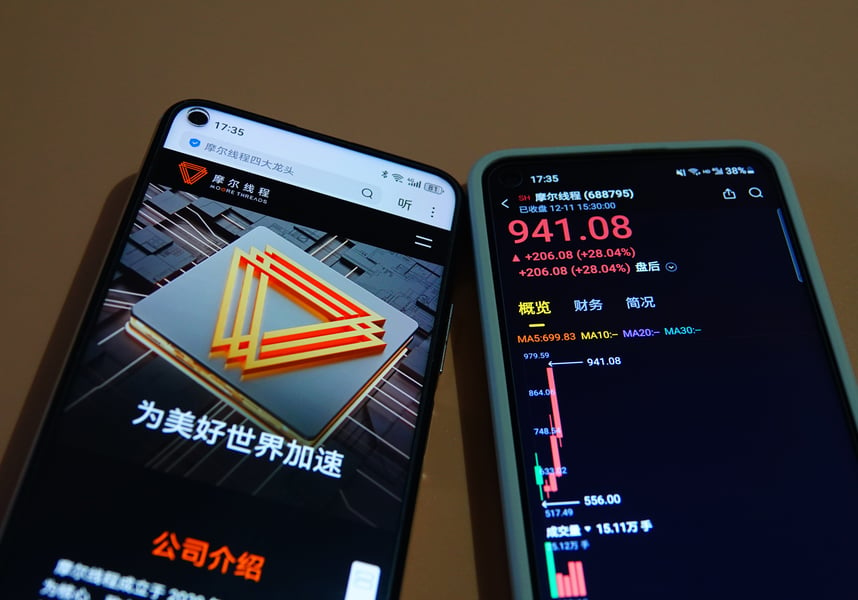
Pricing the Chinese space IPOs is the part that will produce headlines in the international press over the next twelve months. Pre-revenue listings in China have traditionally traded at a discount to comparable Nasdaq issuers, and the listing reform was partly designed to close that gap. The STAR market’s accommodative pricing windows, the willingness of CICC and CITIC Securities to underwrite hard-tech at multiples close to the international growth-equity range, and the depth of Chinese retail demand for new-economy issuance after the property-sector freeze all argue for premium valuations. Bid-side demand has not been the bottleneck. The bottleneck has been the regulatory perimeter of what can list and at what governance standard. The 2025 reforms eased both.
The international competitive picture is shifting fast. SpaceX’s IPO, with its 75 billion dollar primary raise, set an order-of-magnitude benchmark for what a private launch company can command. China’s commercial launch industry, looked at as a portfolio, will probably list a combined 25 to 30 billion dollars of equity over the next 24 months if the present queue clears at expected valuations. That is still a fifth of SpaceX, but it is also five times what Chinese commercial space has raised cumulatively to date. The shape of the global market is moving from a single dominant private player toward a duopoly of one large American group and a Chinese cluster.
For investors outside China, the access question is becoming sharper. Hong Kong listings will offer the cleanest route through the southbound Stock Connect channel and via international brokers. Shanghai STAR listings remain harder to access for non-Chinese investors, though most large institutional desks now run dedicated qualified foreign institutional investor mandates with capacity for the new issuers. The market-structure parallel to the chip story, in which Chinese hardware-systems issuers are increasingly built by and for Chinese capital markets, applies cleanly to aerospace.
The political environment for the listings is more favourable than it has been in years. The State Council has explicitly designated commercial space as one of the strategic emerging industries supported by the new five-year industrial policy cycle, the People’s Bank of China has steered green-loan and structural facility programmes toward space-and-satellite manufacturers, and the National Development and Reform Commission has cleared land-use permits for new launch corridors in Hainan and Inner Mongolia. None of that environment exists in equivalent depth elsewhere. The European Space Agency’s funding is constrained, the Japanese commercial-space sector remains structurally small, and India’s ISRO-anchored sector is still moving primarily through state contracts.
The contrast with the US private-space tax base is also worth noting. SpaceX’s flotation made Elon Musk the world’s first trillionaire on paper and triggered a private wealth concentration the United States has not seen since Standard Oil. China’s listings will distribute the wealth more broadly, but not necessarily because the issuers prefer it that way. The structural difference is that Chinese commercial-space companies remain partly state-aligned at the cap-table level, with provincial funds and national-champion investors typically holding 20 to 30 percent of post-IPO equity. The economic return is intermediated through the state’s portfolio, not through one founder.
Risk factors are real and the prospectuses will catalogue them. Chinese commercial rockets have lower reliability records than SpaceX’s flight-proven systems, the per-mission cost of Chinese commercial launches is still typically above the US benchmark, and the satellite-constellation cohort, while growing fast, is still measured in single thousands of orbital assets compared with Starlink’s near-monopoly. Underwriters will price these risks alongside the strategic narrative. Caixin’s reporting on LandSpace’s December approval underscored that the regulatory door was opened deliberately, not coincidentally, in advance of the broader queue.
The cleanest near-term read is that within twelve months the Chinese commercial space sector will have a listed mid-cap presence in both Shanghai and Hong Kong, with one larger primary issuance and several smaller specialist floats supplying a multi-billion-dollar institutional pipeline. The South China Morning Post has been tracking the queue with full company-level detail, and Caixin’s industry coverage is the best window into the regulatory choreography. The two combine to suggest a Chinese commercial-space financialisation that, twelve months ago, was still being held back by listing-rule limits. Beijing has now moved those limits and the sector has responded within weeks. The next test is the printing of the first orderbook.
For SpaceX, none of this is competitive in the immediate term. The American company still operates more rocket launches in a single year than China’s entire commercial cohort does in two. The longer-running story is that a sector that was structurally one company until last year is now being built into a global market with at least two centres of gravity. The next decade of orbital infrastructure will be financed in dollars and in yuan, and the listings starting to clear in Shanghai and Hong Kong this summer will be the place that yuan-denominated participation begins to scale.