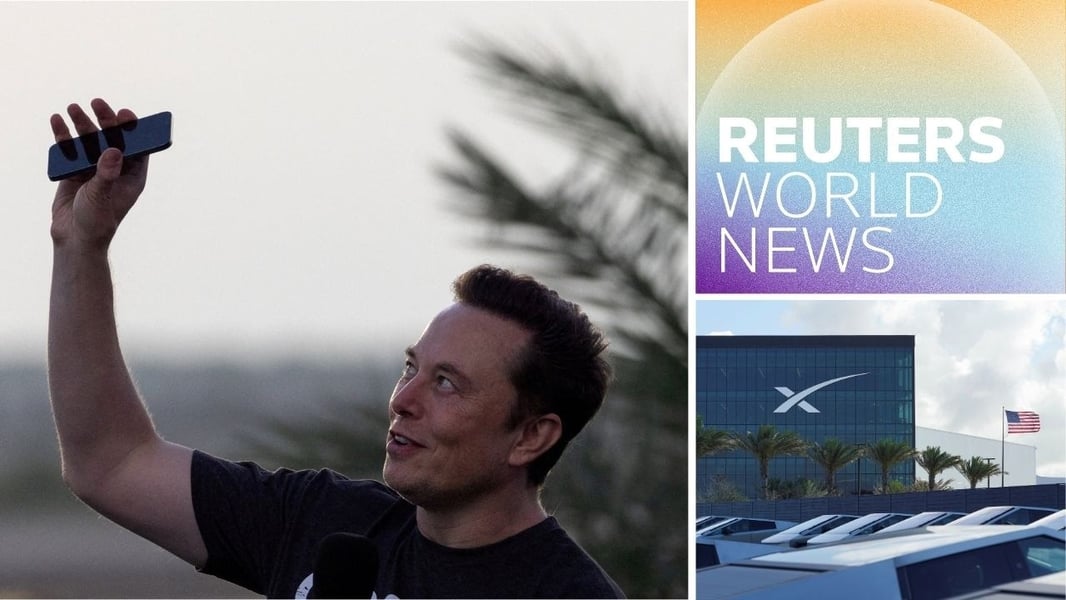

NEW YORK — On Friday afternoon, Elon Musk’s net worth crossed $1 trillion. Nobody had ever gotten there before.
The moment arrived when SpaceX — Musk’s rocket company, satellite internet operator, and artificial intelligence developer — completed its market debut on the Nasdaq, finishing the day at $160.95 a share after pricing its IPO at $135. The company’s market capitalization reached $2.11 trillion. Combined with his stake in Tesla, Musk’s total paper wealth crossed approximately $1.2 trillion, according to the Forbes Real-Time Billionaires list — enough to make him the world’s first trillionaire, comfortably ahead of rivals including Jeff Bezos, Larry Ellison, and Larry Page.
The IPO raised approximately $75 billion, pricing 555.6 million Class A shares under the ticker SPCX. It was, by a wide margin, the largest initial public offering in history.
SpaceX was founded in 2002 in a warehouse in El Segundo, California, with the stated goal of making humanity multiplanetary. “It is certainly hard to believe that a little company that started in a warehouse in El Segundo is now going public with the largest IPO ever,” Musk said in a statement. The company completed its first successful orbital launch in 2008 and has since completed over 650 orbital missions. Its Starlink satellite internet division, now profitable, serves customers across more than 100 countries.
SpaceX as it went public encompasses more than rockets. The company includes xAI, Musk’s artificial intelligence division and developer of the Grok chatbot, as well as X, the social media platform formerly known as Twitter that Musk acquired in 2022. X’s advertising revenue has fallen sharply since the acquisition — from $4.5 billion in 2021 to $1.8 billion in 2025 — and xAI reported an operating loss of $6.36 billion on $3.2 billion in revenue during 2025. Starlink’s profitability provided a counterweight that carried significant weight with investors bidding up SPCX on its first day of trading.
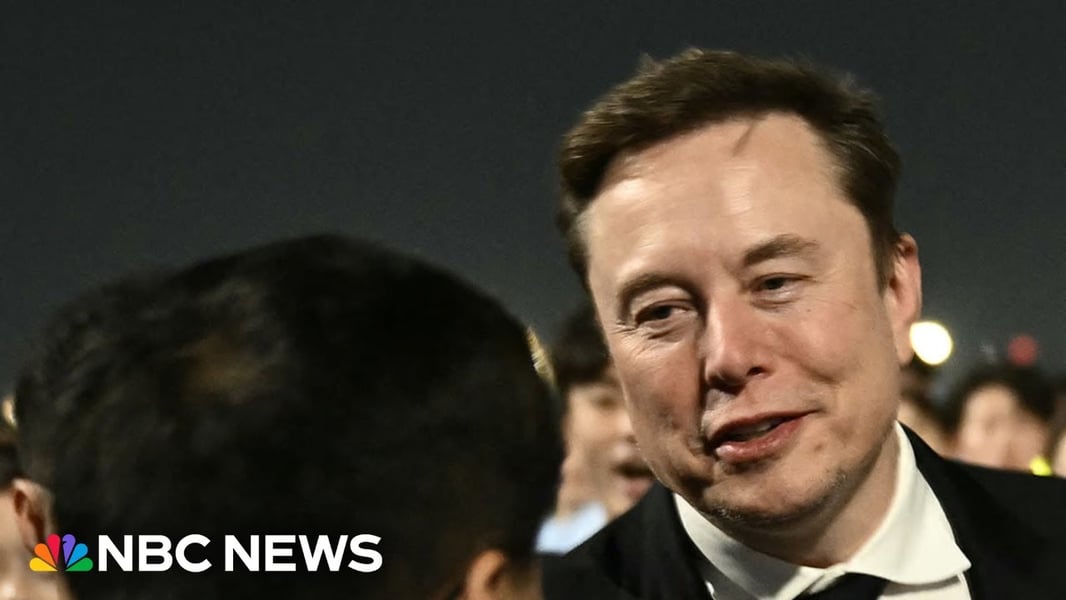
The valuation did not go unchallenged. Variety reported that Morningstar’s research analysts put SpaceX’s fair value at $63 a share — roughly $830 billion for the company — and noted that at Friday’s close, SpaceX was trading at approximately 94 times revenue, compared to Meta at 22 times and Amazon at 18 times. The skepticism centers on two fronts: the commercial viability of Starship, SpaceX’s heavy-lift reusable rocket still in development, and whether xAI can scale its data center infrastructure to compete with established AI players.
The response to Musk’s new financial status was, predictably, political. Senator Bernie Sanders of Vermont issued a statement noting that “today, Elon Musk, a trillionaire, pays the same amount into Social Security as someone making $184,500” and called for lifting the income cap on Social Security contributions. Deadline reported on the broader public reaction to Musk’s milestone.
Musk’s arrival at $1 trillion comes at a moment when he remains one of the most polarizing figures in American public life. He spent much of 2025 in an advisory role to the federal government heading the Department of Government Efficiency — an unofficial body that became a flashpoint in debates about private-sector influence over public institutions. His ownership of X has made him a dominant force in political discourse and a regular target of criticism from figures across the political spectrum.
Musk is subject to a one-year lockup period, meaning he cannot sell his SpaceX shares until June 2027. His paper fortune, substantial as it is, will remain theoretical for at least that long. Shares opened at $150, peaked at $176.52 intraday, and closed at $160.95 — a 19.34 percent gain over the $135 IPO price on the first day of trading.
SpaceX’s listing is not the last major technology IPO expected in 2026. Both Anthropic, the AI safety company, and OpenAI have been widely expected to pursue public offerings later this year, in what is shaping up to be the most significant IPO season in more than a decade.