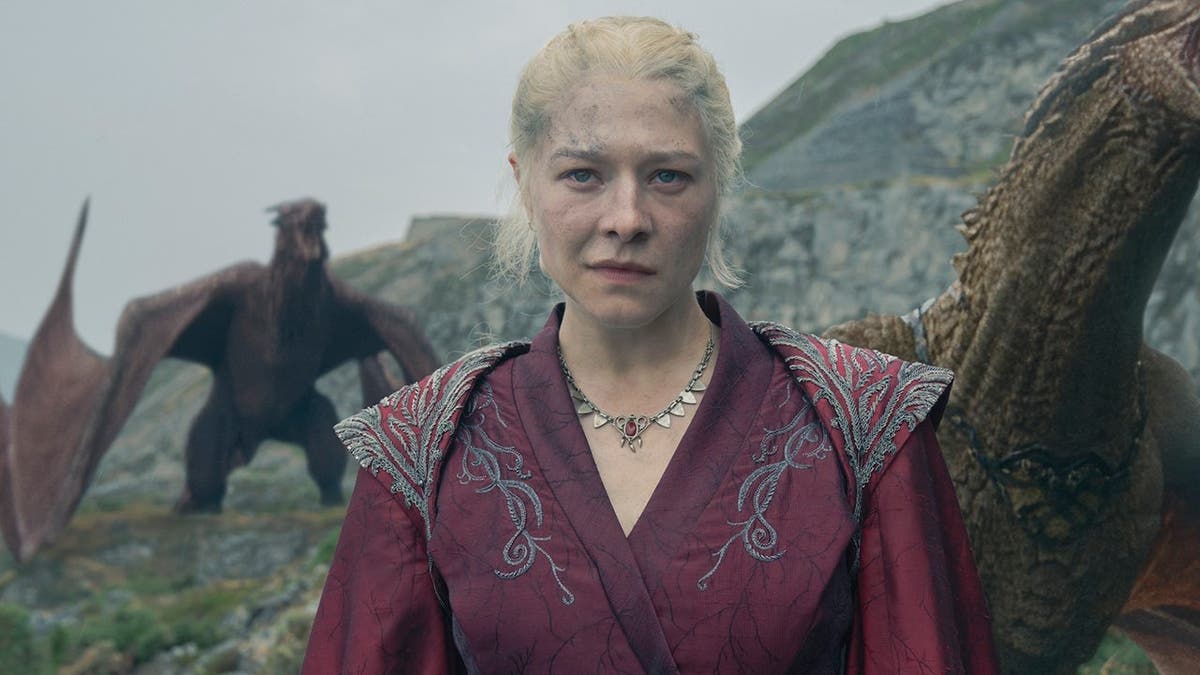

LOS ANGELES – The Battle of Tumbleton finally reached HBO on Sunday, and House of the Dragon chose to honor the event by changing its most politically dangerous moment.
Season 3 concluded with Episode 8, titled “The Treasons at Tumbleton,” the name itself an acknowledgment that betrayal matters more than the fighting. Viewers who had read George R.R. Martin’s 2018 source chronicle “Fire and Blood” came into the finale knowing the book’s version of what happens at Tumbleton: a battle, then a reckoning, then a dead king who crowned himself before anyone could stop him. The show staged the battle. It rethought the king.
Daeron Targaryen, the youngest Green prince and the only member of the Hightower-aligned Targaryen faction to distinguish himself without cruelty, does not survive the hour. His dragon Tessarion falls alongside him. Confirmed across multiple outlets as the episode aired Sunday night, Daeron’s death eliminates the last figure in King Aegon’s camp who might have steered the conflict toward something other than mutual annihilation. Three seasons of writing had established him as the exception inside a faction of zealots and schemers, a soldier capable of restraint in a war that rewarded neither. He dies having failed to prevent the worst, which in a story like this is the only way someone like him can die.
What the episode chooses to do with Hugh Hammer is the more consequential creative decision. In “Fire and Blood,” the blacksmith-born dragonrider who switched sides at Tumbleton does not simply fight and fall. After the battle ends, Hugh Hammer crowns himself. He declares kingship, asserting that a Targaryen bastard with a dragon has as much standing to rule as any trueborn prince. The claim lasts briefly. The lords of the Reach, unwilling to follow a man born to a forge rather than a castle, arrange his murder alongside Ulf the White’s in a conspiracy that functions as a class correction, the established order reasserting itself against someone who presumed to rise beyond his station. That kingship claim is Hugh’s defining scene in the source material, the moment where the war’s questions about birth, power, and the legitimacy of the Iron Throne become most explicit and most personal.
The Season 3 finale does not give him that moment. The fan site Winter is Coming, which covers the series closely, ran the headline “House of the Dragon robbed Hugh the Hammer of his most important moment” after the episode aired. Available coverage suggests the show compresses Hugh’s arc into the battle itself, forgoing the political chaos of the aftermath in favor of a cleaner dramatic resolution. The kingship declaration, with everything it implies about smallfolk ambition and aristocratic violence, does not survive the translation to the screen.
The logic of that decision is legible even without a showrunner explaining it. A character who declares himself king creates a narrative problem that requires resolution across at least one additional episode. Martin dispenses with the claim in a paragraph; prestige television needs the space to stage a conspiracy, an execution, a reckoning with what it meant. The writers appear to have concluded that Hugh Hammer served this season better as a battlefield threat than as a political complication extending into a fourth year. What is lost is the sequence that captures something essential about how wars like the Dance of Dragons end: not in victory, but in the quiet disposal of men who miscalculated how far they could push.
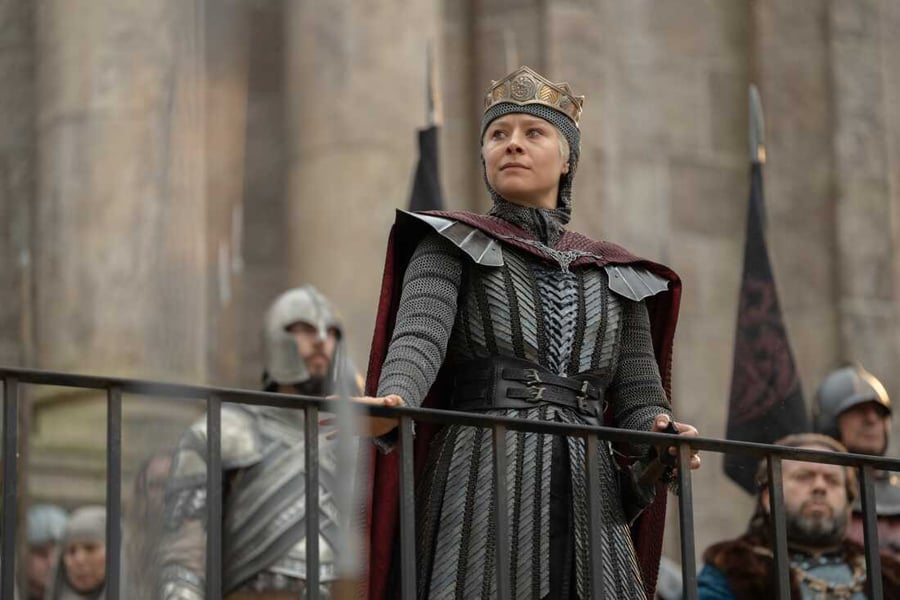
Ulf the White, who switched sides alongside Hugh at Tumbleton, appears prominently in the finale. Mashable’s coverage characterized Ulf’s role as bookending Season 3, a framing that positions him as thematic counterweight to Hugh’s delusions, the dragonrider who betrayed his side for reasons that look contemptible where Hugh’s, however mistaken, had a kind of coherence.
The emotional anchor of the episode is Rhaenyra Targaryen’s response to Tumbleton. The Ringer’s recap described what it called her “crash-out,” a phrase that positions the queen’s reaction as something between a breakdown and a decisive shift in her moral calculus. Three seasons of sustained loss, including her sons, her father’s memory, and now her battlefield position, have produced a character operating at the edge of the constraints she began the series with. Emma d’Arcy, who has played Rhaenyra since Season 2, carries the weight of an arc that has been building toward this kind of rupture since the opening episodes of the Dance.
The broader Season 3 established the ground for this finale. Sunfyre’s return from apparent death in Episode 7 reset the war’s arithmetic while Alicent Hightower’s confrontation with Aemond at Harrenhal shifted the Green faction’s internal dynamics. The finale lands inside a story that has spent six episodes dismantling every stable arrangement in its universe. Tumbleton is not an escalation so much as a collapse, the moment when the scale of the violence finally outruns the purposes it was supposed to serve.
The deaths at Tumbleton, and whoever survives them, also announce a meaningful cast shakeup heading into Season 4. Just Jared confirmed significant changes to the show’s lineup as a direct consequence of the finale’s events. Readers of “Fire and Blood” will recognize the general shape of those changes, though the show has already demonstrated its willingness to depart from the chronicle on the specific terms of how those departures occur. The elimination of Daeron Targaryen in particular forecloses one of the book’s more morally complex figures before the final season can use him.
What Season 3 has accomplished across eight episodes is a prestige drama willing to spend its spectacle early rather than hoard it for a single finale set piece. Four dragons appeared simultaneously in Episode 7, a franchise first across the 15-year history of Game of Thrones and its successors. The finale’s battle sequences build on that foundation rather than trying to exceed it, which is the right instinct for an episode that needs its human consequences to land as heavily as its dragon spectacle. Whether the season as a whole has justified those ambitions is the conversation that runs from Sunday night into Monday morning reviews. The changes to Hugh Hammer’s arc are where the most pointed version of that conversation begins.
House of the Dragon Season 3 airs on HBO and streams on Max. No premiere date has been announced for Season 4.