
LOS ANGELES – The dragon everybody thought was dead didn’t come back quietly.
House of the Dragon‘s third season corrected an assumption about its own war in Episode 7, aired Sunday on HBO. Sunfyre, the gold-scaled dragon bonded to King Aegon Targaryen, had been written off since the catastrophic battle at Rook’s Rest. He returned in “The Dragon in Winter,” lunging from apparent oblivion into a crowd of enemy soldiers while Aegon watched from the side and laughed like a man who had never stopped believing his animal was alive.
The moment rewrites what audiences understood about the war. For the Green faction in the Targaryen civil war known as the Dance of Dragons, Sunfyre had been a lost asset, a symbol of the damage the conflict had already inflicted. His return functions less as a hopeful development than as an explosion inside an already unstable conflict, arriving precisely as Alicent Hightower, the queen dowager and Aegon’s mother, appears to have turned against Aemond, the acting Green commander.
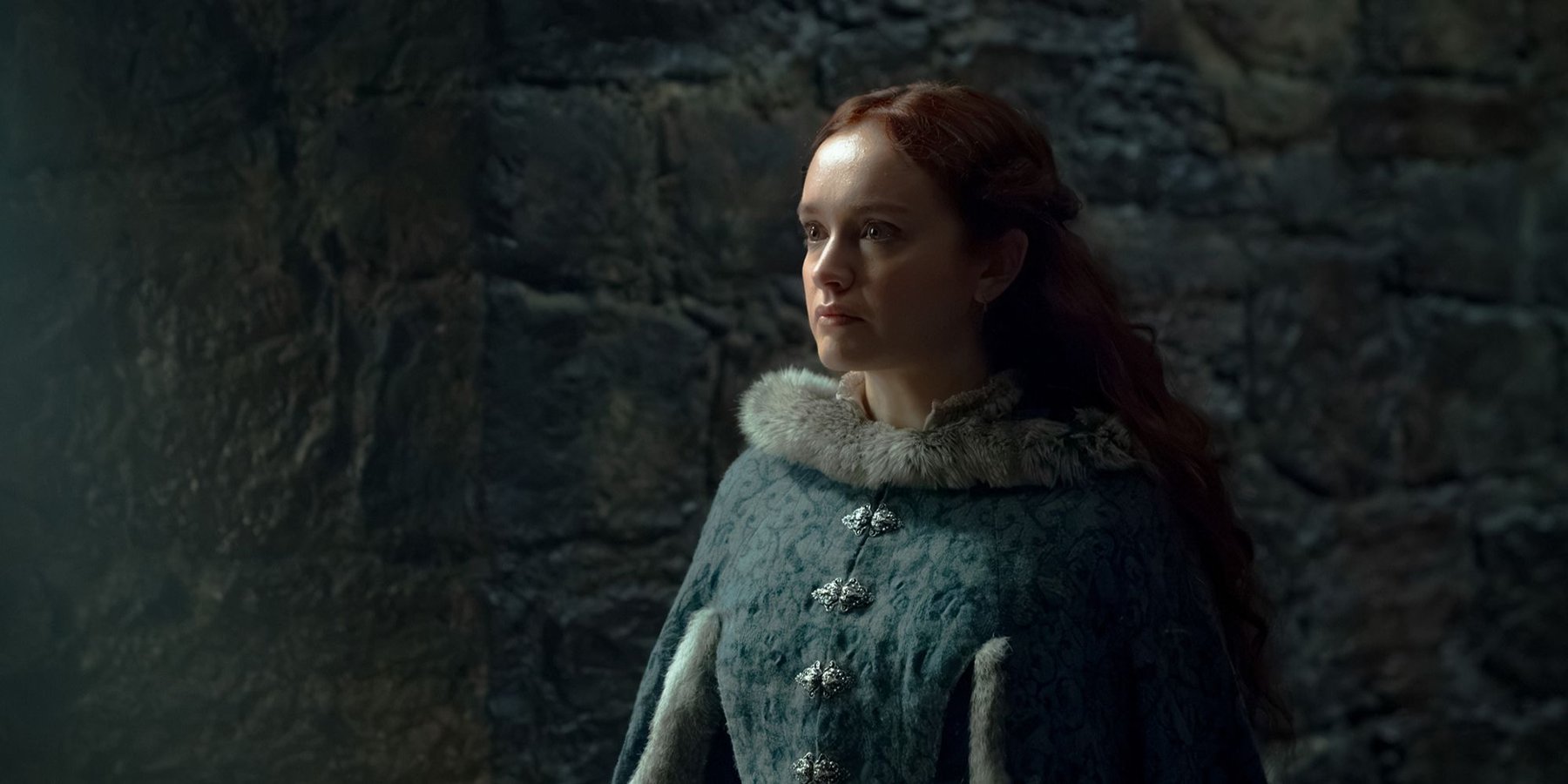
That confrontation at Harrenhal anchors the episode’s second half. Alicent travels to face her son Aemond, the one-eyed prince played with cold precision by Ewan Mitchell throughout the third season. The show stages an unnerving vision sequence before making clear Aemond is actually present. Alicent faces a crucial decision about her allegiance. Co-directors Clare Kilner and Geeta Patel hold on the uncertainty rather than resolving it. What she decides will arrive in the finale, which airs next Sunday.
The episode’s headline production achievement belongs to the scale of its dragon work. For the first time in the 15-year history of the Game of Thrones franchise, four dragons appear in a single episode. Sunfyre joins Sheepstealer, Syrax, Caraxes, and Seasmoke in an hour that commits to sustained aerial and ground combat at a scope the series has approached but never fully staged. Collider‘s review of the episode described the battle sequence as “a very visually impressive battle” and noted it was “nice to see a full-on duel between dragons on this scale.”
Helaena Targaryen’s contribution to the dragon count does not come from waking life. Phia Saban’s performance as the fractured, prophetic princess has been one of the season’s quieter rewards, and in Episode 7 she enters a dream sequence in which she rides her dragon Dreamfyre. The creature responds to Helaena’s “dracarys” command, setting attackers ablaze in a vision the show leaves deliberately ambiguous. Whether the dream is prophecy, wish fulfillment, or warning – and whether it connects to the four tragedies Helaena’s visions have been signaling across the season – remains unanswered.
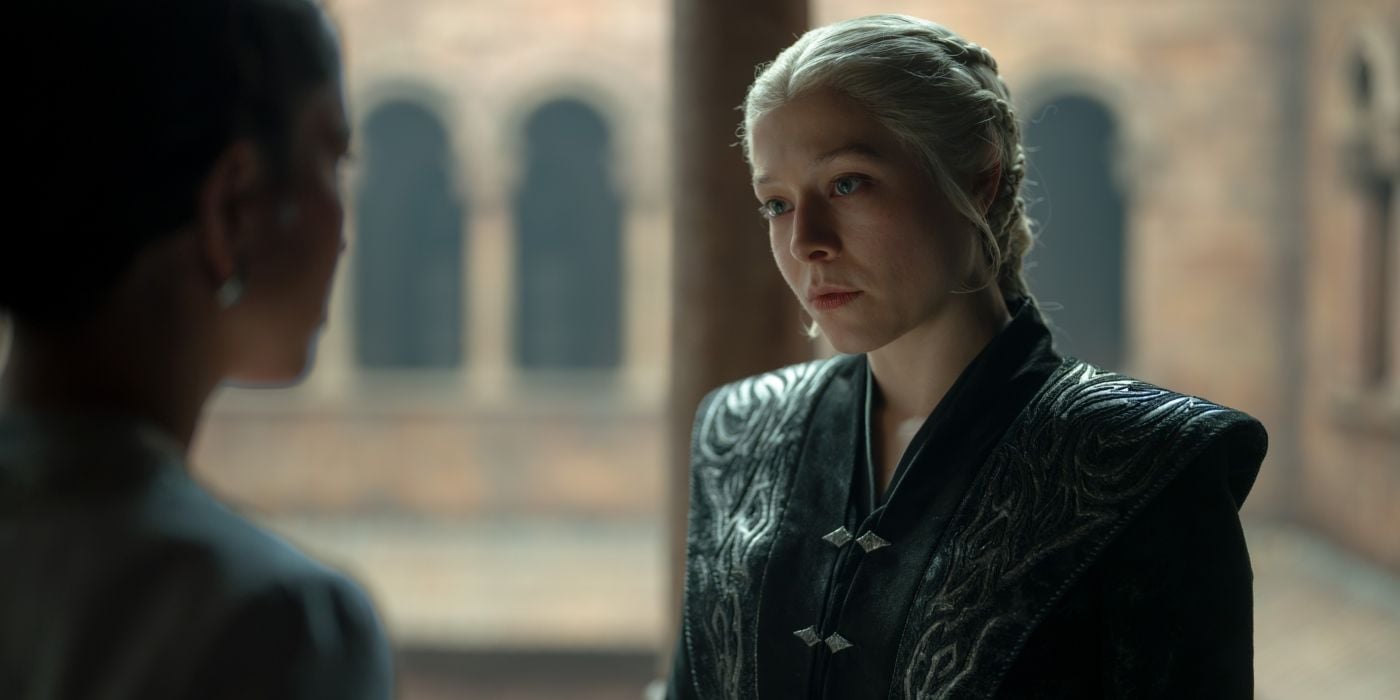
Ulf the White’s defection to the Greens adds another piece to a very crowded board. Ulf, who had been aligned with the Black faction after bonding with the dragon Silverwing, switches sides in a development that further scrambles the war’s arithmetic. House of the Dragon, as an adaptation of George R.R. Martin‘s fictional history book “Fire and Blood,” has always treated its own conflict with the detachment of a chronicle. The accumulation of betrayals in this episode reads less like dramatic convenience than like the cascading instability that precedes historical collapse.
Criston Cole, who dominated several earlier episodes this season as the Green field commander, is absent from this episode. His death, confirmed in Episode 6, receives one brief reference. He is called “the realm’s greatest warrior,” and then the episode moves on. The decision reflects where the season stands: the war has outgrown its field commanders, and the final reckoning will be settled by dragons and the decisions of those who ride them.
Season 3 has been the show’s most consequential year since it premiered in 2022. After a second season that critics largely received as an overstuffed setup, the third has moved at speed and committed to large production sequences early rather than saving everything for a finale. Bringing four dragons into a single penultimate episode signals a production willing to spend everything it has before the curtain falls.
Critical response has divided along familiar lines. The A.V. Club rated “The Dragon in Winter” C+, with the review arguing the show “buckles under the heat” of its own ambitions. Collider’s review found the dragon battle and Sunfyre’s resurrection compelling while noting the episode functions largely as a vehicle delivering pieces into finale position. Both readings are accurate assessments of a penultimate episode that pulls its threads taut rather than resolving them.
HBO has spent the years since “Game of Thrones” ended in 2019 expanding its Westeros portfolio. Multiple prequel and spinoff projects are in development, with House of the Dragon serving as the franchise’s primary series. Whether Season 3 ends in a way that justifies a fourth year is the question the finale must answer. “The Dragon in Winter” does not close that question. It argues, through a scale of dragon spectacle that no other production can match, that the show intends to earn the answer.
House of the Dragon Season 3 airs Sundays on HBO and is available to stream on Max.