The moon phase today, August 18, 2026, is a Waxing Crescent, about 34 percent illuminated and six days into the current lunar cycle. It is already above the horizon by early afternoon in most of the world, and it sits well up in the southwest once the sky darkens. This is the last comfortable evening for earthshine before the crescent gets too bright to show it.
Yesterday the same moon was a quarter lit at 25 percent. It has gained roughly nine percentage points in twenty four hours, which is close to the fastest the lit fraction ever changes. The cycle opened on August 12 with a new moon and a total solar eclipse, and it is now most of the way to first quarter.
Moon phase today at a glance
| Date | Tuesday, August 18, 2026 |
|---|---|
| Moon phase | Waxing Crescent |
| Illumination | About 34 percent (31 to 37 percent depending on location and time of day) |
| Moon age | About 6 days (5.3 days at 00:00 UTC, 6.2 days by midnight) |
| Distance from Earth | Roughly 395,000 km, increasing toward apogee on August 22 |
| Zodiac sign | Scorpio, all day |
| Best viewing | Southwest, from dusk until moonset |
| Next phase | First Quarter, August 20 at 02:46 UTC |
The illumination figure moves all day, from about 30 percent at midnight UTC to nearly 39 percent by the end of it. That is why two websites can quote you two different numbers for the moon phase today and both be right. Anything between 31 and 37 percent is a defensible answer for August 18, depending on your time zone and the moment the calculation was run.
What the moon phase today means: the waxing crescent explained
Waxing means the lit fraction is growing. The moon is now about 72 degrees east of the sun along the sky, which is why it no longer chases the sun down to the horizon the way it did last week. It is up in daylight through the afternoon, and it stays up for two to four hours after dark.
At a third lit, the crescent has enough width to show real surface detail. The terminator, the line dividing lunar day from night, runs through Mare Crisium and the crater fields to its south, and low sunlight there throws long shadows off crater rims. A pair of binoculars is enough to see them. This is genuinely a better view than a full moon gives you, because at full phase the sun is directly overhead on the lunar surface and the shadows that reveal terrain disappear.
For observers north of the equator the lit edge faces right. South of it, the lit edge faces left, and near the equator the crescent lies on its back like a bowl. Same moon, different viewing angle, which is worth remembering before you decide a photograph from the other hemisphere looks wrong.
Moonrise and moonset times for August 18, 2026
Knowing the moon phase today is only half of it. The other half is knowing when the moon is above your horizon. All times below are local, calculated for the city centre by the US Naval Observatory’s rise, set and twilight service, and they shift by a few minutes across a large metropolitan area.
| City | Moonrise | Moonset | Illumination |
|---|---|---|---|
| New York | 12:42 | 22:31 | 36% |
| Chicago | 12:43 | 22:23 | 37% |
| Los Angeles | 12:30 | 22:50 | 37% |
| Toronto | 13:13 | 22:44 | 36% |
| London | 13:08 | 21:52 | 34% |
| Dubai | 11:11 | 22:17 | 33% |
| New Delhi | 11:16 | 22:11 | 32% |
| Mumbai | 11:18 | 22:46 | 32% |
| Singapore | 11:17 | 23:35 | 31% |
| Tokyo | 10:38 | 21:11 | 31% |
| Sydney | 09:14 | 23:16 | 31% |
| Johannesburg | 09:50 | 23:33 | 34% |
Moonrise slipped by more than an hour in the northern cities between yesterday and today, which is a larger jump than the usual fifty minutes. That happens because the moon is running south in declination through Scorpio at the moment, and for northern observers a southbound moon rises progressively later and stays up for a shorter stretch. In Sydney the effect runs the other way, which is why the moon is up there for fourteen hours today.
How to see the moon phase today
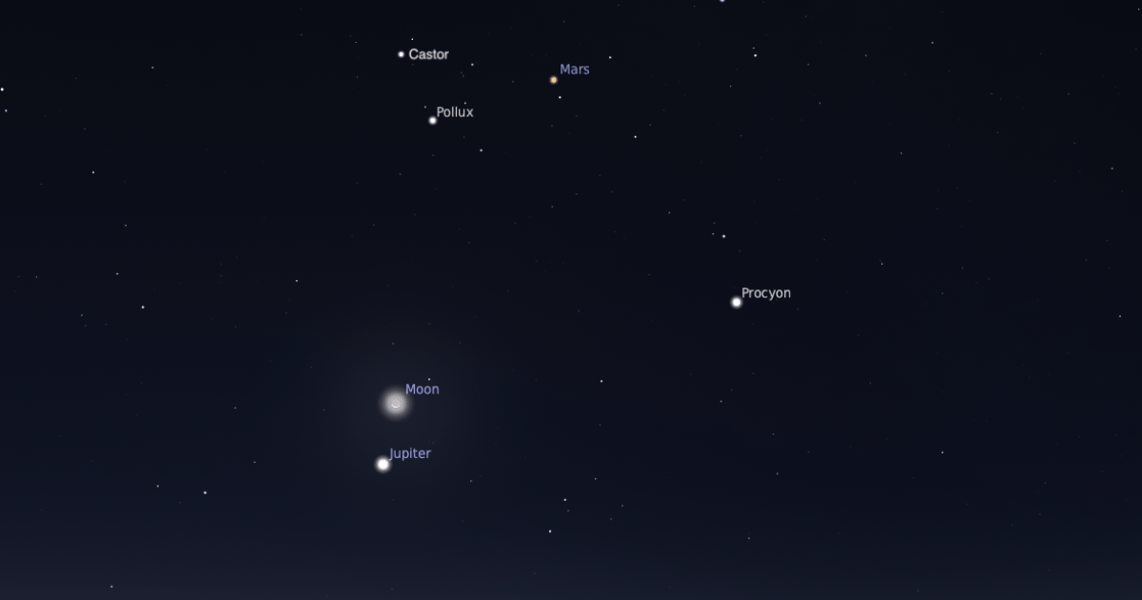
Look southwest as soon as the sky goes properly dark. The moon is high enough now that you do not need the clear flat horizon a thin crescent demands.
Earthshine is still visible tonight, but this is close to the end of it. The faint grey glow filling in the unlit part of the disc is sunlight that bounced off Earth’s clouds and oceans before reaching the moon, and it fades from view as the bright crescent widens and overwhelms it. Past about 40 percent illumination it is effectively gone for the month. Binoculars will show it more clearly than the naked eye, and it photographs well if you expose for the dark limb and let the crescent blow out.
This is also the last genuinely dark week for everything that is not the moon. A third-lit crescent that sets before midnight still leaves most of the night unspoiled for faint objects. By the weekend that window closes.
First quarter arrives August 20, and it is a small one
The First Quarter falls on August 20 at 02:46 UTC, when exactly half the visible disc is lit. That is a little over a day and a half from now.
There is something slightly unusual about this one. The moon reaches apogee, its farthest point from Earth in this orbit, on August 22 at roughly 404,600 km. First quarter arrives less than two days before that, which means Thursday’s half moon happens with the moon very near its greatest distance and therefore close to its smallest apparent size of the month. Nobody will notice by eye, because there is no full moon alongside it for comparison and the difference from an average quarter is only a few percent of the disc’s width. But if you are photographing the phases across a lunation and lining the frames up afterwards, this is the one that will look undersized.
What comes after: the Sturgeon Moon and a 96 percent eclipse
The Full Moon, August’s Sturgeon Moon, follows on August 28 at 04:18 UTC, and it is the event worth planning around.
Earth’s shadow will fall across it in a deep partial lunar eclipse covering about 96 percent of the lunar disc at maximum. The partial phase begins at 02:33 UTC and greatest eclipse comes at 04:13 UTC, with the whole sequence running roughly five and a half hours. At 96 percent it will look very nearly total, with the immersed portion turning the copper red of sunlight filtered through Earth’s atmosphere and only a thin bright sliver left along one edge.
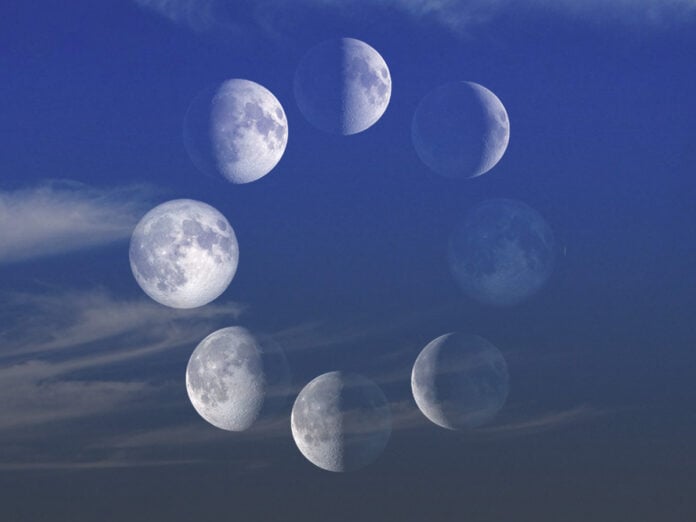
Viewing is best across most of the Americas, where the moon sits high in the sky throughout. Across Africa and Europe the eclipse falls near moonset, so a clear western horizon is necessary. It is the companion to the solar eclipse that opened this cycle, which The Eastern Herald covered when totality crossed Spain for the first time since 1905. Solar and lunar eclipses arrive in pairs about a fortnight apart, because that is how long the moon needs to travel from one node of its orbit to the other. NASA’s overview of the eight lunar phases sets out the full sequence for anyone tracking the cycle from new moon to new moon.
Where the moon sits in the zodiac today
The moon spends the whole of August 18 in Scorpio, having crossed in late yesterday evening, and it does not reach Sagittarius until the 19th.
In astrological practice a waxing crescent is read as a phase of building momentum, the point where intentions set at the new moon start demanding action, and a Scorpio moon is associated with intensity, privacy and a reluctance to leave things half said. Our daily horoscope tracks the transits in detail.
That is a separate tradition from the astronomy, and the two are worth keeping apart. The observable facts behind the moon phase today are the illumination, the age, the distance, the rise and set times and the eclipse geometry. What those positions are taken to mean belongs to a different discipline with a different history.
Moon phase today: frequently asked questions
What is the moon phase today, August 18, 2026?
The moon phase today is a Waxing Crescent, about 34 percent illuminated and roughly six days past the new moon of August 12.
Why do sites disagree on the moon phase today illumination?
Because the figure changes continuously. On August 18 the lit fraction climbs from about 30 percent at 00:00 UTC to nearly 39 percent by day’s end. Different sites calculate at different reference moments and in different time zones, so anything from 31 to 37 percent is a legitimate answer for the same date.
When is the next full moon?
August 28, 2026 at 04:18 UTC. It is the Sturgeon Moon, and it coincides with a deep partial lunar eclipse covering about 96 percent of the lunar disc.
When is the first quarter moon?
August 20, 2026 at 02:46 UTC. It falls less than two days before lunar apogee, so it is one of the smallest first quarter moons of the year in apparent size.
When is the next new moon?
September 11, 2026. That closes the cycle that began with the total solar eclipse of August 12.
Can I still see earthshine tonight?
Yes, but only just. At about a third illumination the crescent is nearly bright enough to drown it out. Look in the half hour after twilight fades, use binoculars, and expect it to be gone within a couple of nights.
How far away is the moon today?
Roughly 395,000 km and increasing. It reaches apogee, its farthest point in this orbit, on August 22 at about 404,600 km.
Why did moonrise jump more than an hour since yesterday?
The average day to day delay is about fifty minutes, but it varies with the moon’s declination. The moon is moving south through Scorpio at the moment, and for northern observers a southbound moon rises noticeably later each day. Southern hemisphere observers see the opposite.
Is a waxing crescent good for stargazing?
Still reasonably good. At a third lit the moon sets before or around midnight in most places, leaving the later hours dark. That advantage disappears quickly as the moon fills toward the August 28 full moon.
The moon phase today changes by roughly one percentage point of illumination every ninety minutes at this stage of the cycle, so this page is accurate for August 18, 2026. Check back tomorrow for the next update in the series.