
The rocket is seven stories tall, built almost entirely from carbon composite, and its engines came out of a 3D printer rather than a traditional forge. None of that is the most important fact about Vikram-1. The most important fact is who is not launching it: for the first time in India’s history, a national space milestone will be attempted by a private company instead of the government agency that has owned every previous one.
Skyroot Aerospace announced a launch window of July 12 to August 4 for Vikram-1, the flight the company is calling Mission Aagaman, Sanskrit for “arrival.” The rocket will lift off from the Satish Dhawan Space Centre at Sriharikota, the same launch complex the Indian Space Research Organisation has used for decades, but this time under Skyroot’s own vehicle and Skyroot’s own risk. If it reaches orbit, Vikram-1 will be the first privately built and privately launched orbital rocket in Indian history.
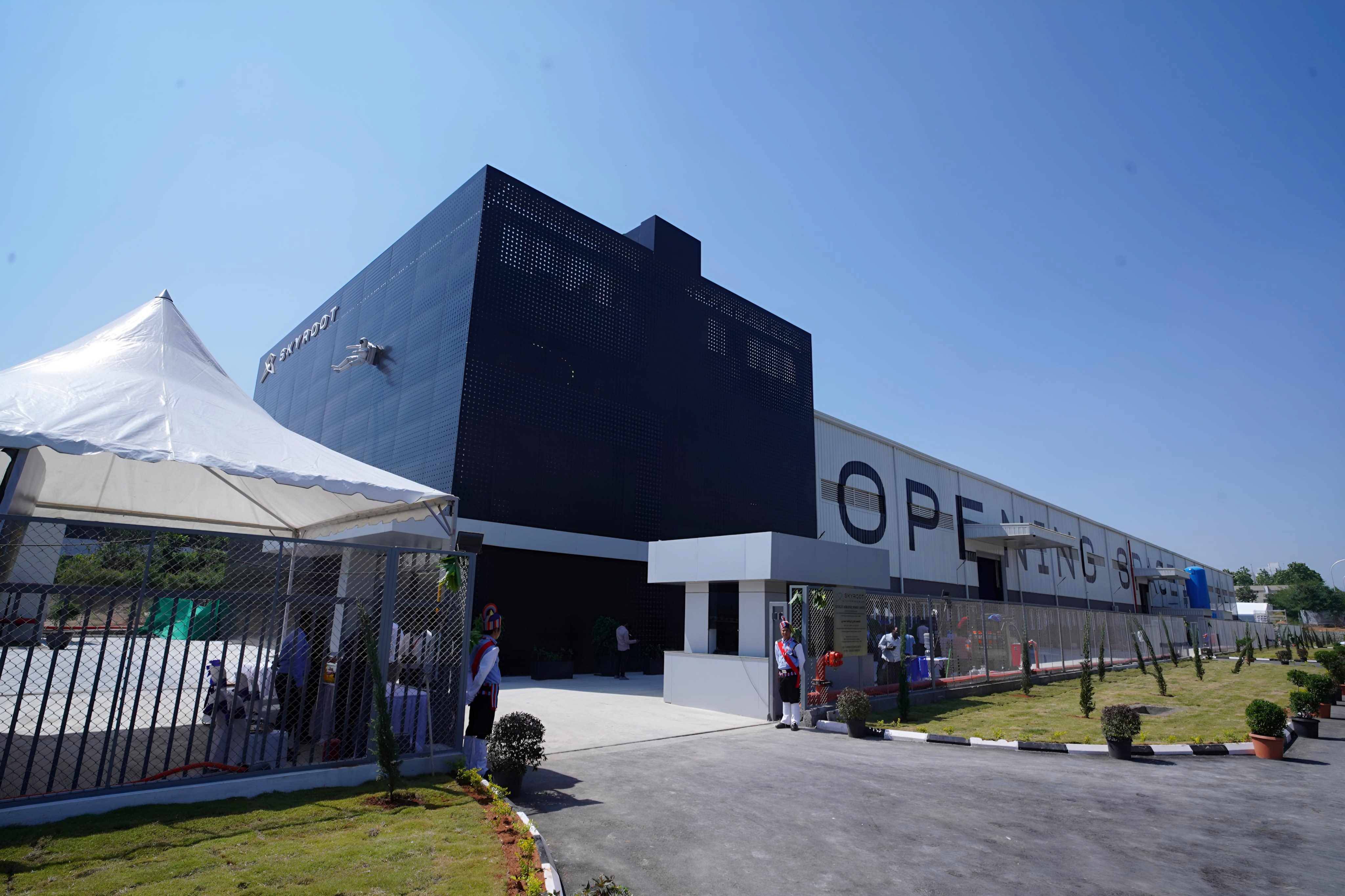
The specifications describe a genuinely small vehicle by global standards. Vikram-1 is a three-stage launcher capable of carrying up to 350 kilograms to low Earth orbit, targeting an altitude of 450 kilometers at a 60-degree inclination. Its structure is built from carbon composite rather than the aluminum alloys most orbital rockets still rely on, and its engines are 3D-printed, a manufacturing approach that shortens production timelines and cuts part counts compared to conventionally machined combustion chambers. Skyroot calls its business model “Cab to Space,” dedicated small-satellite rides rather than the rideshare arrangements that have become standard for companies without their own launch vehicle.
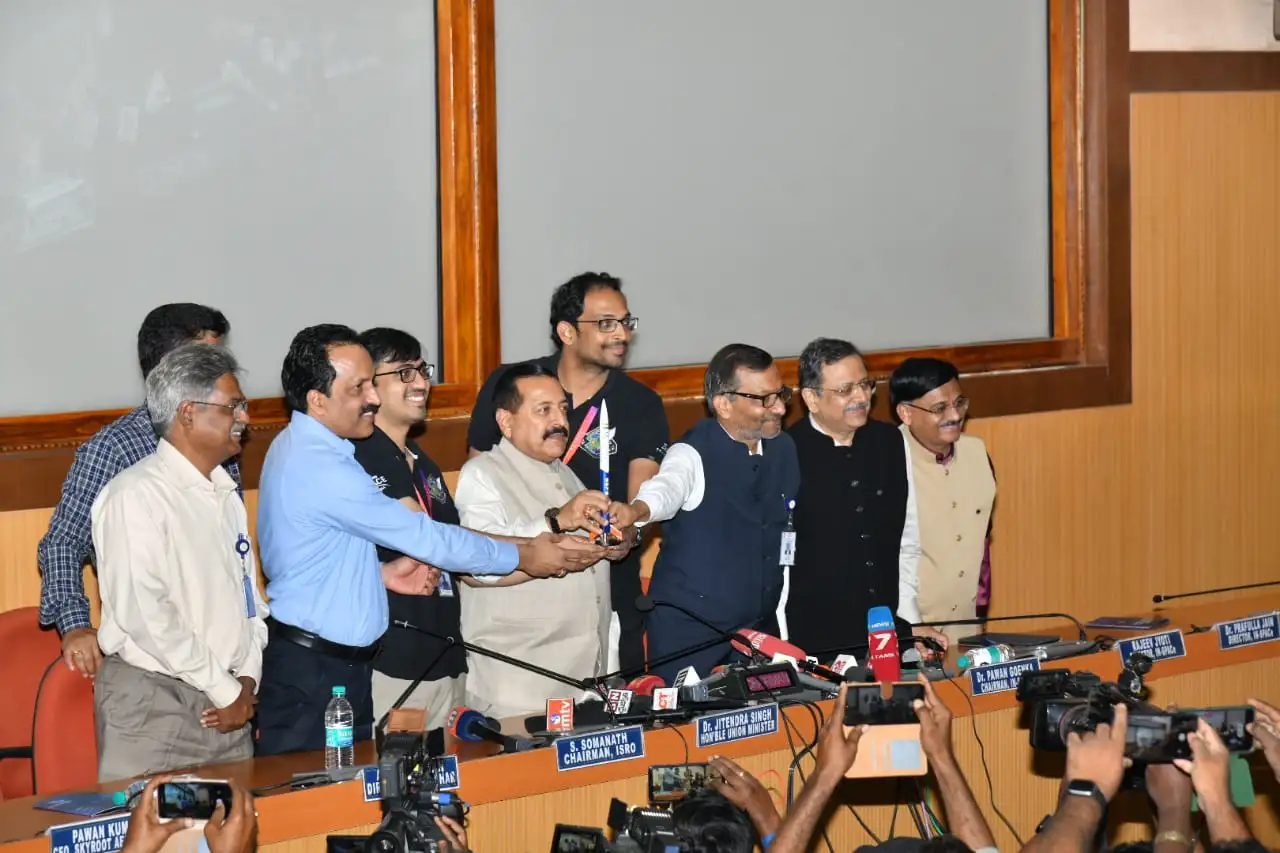
Skyroot is not launching this rocket from a standing start. The company, founded in 2018 by former ISRO engineers Pawan Kumar Chandana and Naga Bharath Daka, successfully flew a suborbital demonstrator called Vikram-S in November 2022, the first Indian private rocket to reach space at all. That flight validated some of the company’s propulsion and structural choices without the far higher demands of achieving stable orbit, a threshold that has proven difficult even for well-funded private launch companies elsewhere in the world.
The financial backing behind this attempt is substantial for the sector. Skyroot crossed a $1.1 billion valuation in May after raising $60 million, $50 million in primary equity and $10 million in structured debt, becoming India’s first space technology unicorn. Sherpalo Ventures and GIC led the round, and Ram Shriram, an Alphabet board member and Sherpalo’s founder, joined Skyroot’s board as part of the deal. The valuation more than doubled the company’s 2023 mark, a jump that reflects investor confidence in exactly the milestone Skyroot is now attempting to clear.
What makes the timing pointed rather than incidental is ISRO’s recent run of results. India’s state space agency has suffered two consecutive launch failures in the recent stretch leading into Skyroot’s attempt, setbacks that have raised uncomfortable questions inside India’s space establishment about reliability at precisely the moment the country is trying to position itself as a serious commercial launch destination. A successful private orbital flight, arriving in that specific window, would do more than validate Skyroot’s engineering. It would suggest that India’s path to reliable orbital access runs increasingly through companies the government does not directly control.
None of that makes Vikram-1 a commercial mission in the way the phrase usually implies. Mission Aagaman is explicitly a technology demonstration flight, designed to prove the vehicle works rather than to deliver a paying customer’s satellite to a guaranteed orbit. The distinction matters for expectations: a partial failure on a demonstration flight is a data point companies like Skyroot can absorb and iterate from. A failure on a contracted commercial mission carries reputational and financial consequences of a different order entirely, which is presumably why Skyroot chose to clear this threshold on its own terms first.
The regulatory path that makes any of this possible traces back to 2020, when the Indian government opened the space sector to private launch providers through what became known as the IN-SPACe reforms, ending ISRO’s exclusive hold on Indian orbital access. Skyroot and its rival Agnikul Cosmos, which conducted the country’s second private rocket launch from its own privately built launchpad in 2024, are the most visible products of that policy shift so far. India’s semiconductor sector has followed a similar arc, private capital and foreign technical partners building capability the state alone had not delivered, in a domain the government had previously treated as strategically too important to leave outside its own hands.
Whether the July window holds is not yet certain. Skyroot’s own language leaves room for slippage: the company has said final timing depends on vehicle assembly completion, systems testing, weather conditions at Sriharikota, and range safety clearance from the launch facility, any one of which could push the window later without changing the fundamentals of the attempt. What Skyroot cannot control, and what the coming weeks will actually test, is whether a company built by engineers who left ISRO can do reliably, on a compressed timeline and a fraction of the government’s budget, what ISRO itself has just failed to do twice.